Student Loan Basics Every College Student Should Know
Student Loan Basics: What Every College Student Should Know
Paying for college is one of the biggest financial decisions many students ever make, and for a lot of families, student loan basics become essential very quickly. Scholarships, grants, work-study, and savings can help cover costs, but loans often fill the gap between what college costs and what you can afford today.
That gap matters because borrowing for school can affect your budget long after graduation. The good news is that understanding how student loans work does not have to be complicated. If you learn the key terms, loan types, repayment rules, and borrowing strategies early, you can make smarter choices and avoid unnecessary stress later.
This guide breaks down the student loan basics every college student should know before signing anything.
Student Loan Basics: How Student Loans Work
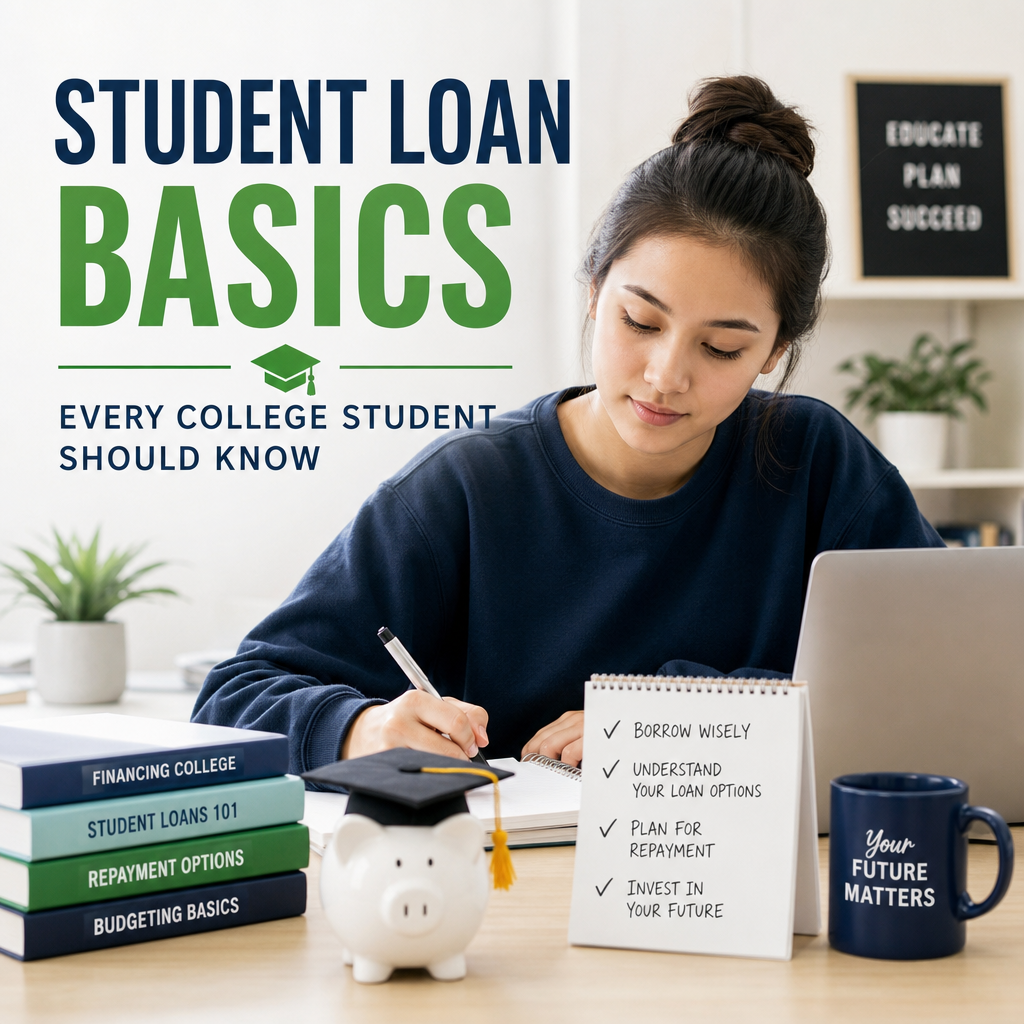
A student loan is money borrowed to pay for education-related expenses. Like any loan, it must usually be repaid with interest. Many students use loans for tuition, room and board, books, transportation, and other approved school costs.
When you take out a loan, three things matter most:
- Principal: the amount you borrow
- Interest rate: the cost of borrowing the money
- Repayment terms: how and when you must pay it back
Understanding these terms helps you compare options and estimate what your monthly payment may look like after school.
Why Student Loans Are Different From Other Loans
Student loans often have features that make them more flexible than credit cards or personal loans. For example, some federal loans do not require payments while you are enrolled at least half-time in school. Others may offer income-driven repayment plans or deferment options if you run into financial trouble.
Still, student loans are not “free money.” Borrowing too much can create a long-term burden, especially if your future income is lower than expected.
The Main Types of Student Loans
One of the most important parts of student loan basics is knowing the difference between federal and private loans. These two categories work very differently.
Federal Student Loans
Federal loans come from the U.S. Department of Education. For most students, these loans should be the first borrowing option to consider because they usually offer more protections and repayment flexibility.
Common federal loan types include:
- Direct Subsidized Loans: Available to eligible undergraduate students with financial need. The government pays interest while you are in school at least half-time, during the grace period, and during deferment.
- Direct Unsubsidized Loans: Available to undergraduate and graduate students. Interest starts accruing as soon as the loan is disbursed.
- Direct PLUS Loans: Available to graduate students and parents of dependent undergraduates, usually after a credit check.
Private Student Loans
Private student loans come from banks, credit unions, and online lenders. They often depend on credit history, and many students need a co-signer to qualify.
Private loans can help cover remaining costs, but they usually have fewer borrower protections than federal loans. Interest rates may be fixed or variable, and repayment terms can be less flexible.
In general, it is wise to exhaust federal aid options before considering private borrowing.
How to Apply for Student Loans
Most students begin with the FAFSA, or Free Application for Federal Student Aid. This form helps determine your eligibility for federal loans, grants, and work-study.
Steps to Get Started
- Complete the FAFSA
- Submit it as early as possible each year.
- Use accurate income and family information.
- Review your aid offer
- Your school will send a financial aid package that shows grants, scholarships, work-study, and loan options.
- Accept only what you need
- You do not have to take the full amount offered.
- Complete entrance counseling
- First-time federal loan borrowers usually need to complete this online.
- Sign a Master Promissory Note
- This is the legal agreement to repay your federal loan.
For private loans, you usually apply directly with the lender and may need to submit income, credit, and school information.
Interest, Fees, and Capitalization
Many students focus on the amount borrowed and overlook the extra costs that come with loans. That can lead to surprises later.
Interest Explained
Interest is the fee charged for borrowing money. It is usually calculated as a percentage of your loan balance. Even a small difference in interest rate can make a big difference over time.
For example:
- A loan with a lower interest rate generally costs less overall
- Unsubsidized loans begin accruing interest right away
- Private loans may have variable rates, which can rise over time
Loan Fees
Some loans also charge origination fees, which are taken out before the money reaches your school. That means if you borrow $5,000, you may receive slightly less than $5,000 after fees.
What Is Capitalization?
Capitalization happens when unpaid interest gets added to your principal balance. After that, future interest is charged on the larger amount.
This can happen when:
- You leave school
- Your grace period ends
- A deferment or forbearance ends
The result is simple: unpaid interest can make your loan more expensive over time.
Borrowing Smart: How Much Should You Take?
One of the most practical parts of student loan basics is learning how to borrow carefully. Just because you are approved for a certain amount does not mean you should take it all.
A Few Smart Borrowing Rules
- Borrow only what you need for educational expenses
- Use grants and scholarships first
- Consider part-time work if it helps reduce borrowing
- Compare total costs, not just monthly payments
- Estimate post-graduation earnings before borrowing heavily
A helpful rule of thumb is to think ahead about what your first job after college might pay. If your debt load is too high relative to expected income, repayment can become difficult fast.
Example: Borrowing With a Plan
Suppose your school offers you enough financial aid, but you still have a $4,000 gap for the year. Instead of borrowing more than you need, you might:
- Use a small federal loan
- Pay part of the gap from summer savings
- Take on a campus job
- Reduce nonessential expenses
That kind of approach can keep your total debt manageable.
Repayment: When and How Loans Get Paid Back
Repayment does not start the day you graduate. But it does begin sooner than many students expect, so it helps to know the timeline.
Common Repayment Milestones
- In-school period: Many federal loans do not require payments while you are enrolled at least half-time
- Grace period: Some federal loans give you a short period after leaving school before repayment begins
- Repayment period: Monthly payments are required
- Deferment or forbearance: Temporary pauses may be available in certain situations
Repayment Plans for Federal Loans
Federal loans offer several repayment plans, including:
- Standard repayment
- Graduated repayment
- Extended repayment
- Income-driven repayment plans
Income-driven plans can lower monthly payments based on income and family size. That can be helpful if your starting salary is modest, but it may increase the time you spend repaying the loan.
What Happens If You Miss Payments?
Missing student loan payments can lead to serious consequences, including:
- Late fees
- Damage to your credit
- Collection activity
- Loss of eligibility for certain relief options
If you are struggling, contact your loan servicer as soon as possible. Waiting usually makes the problem worse.
Federal Loan Protections You Should Know
Another important piece of student loan basics is understanding borrower protections. Federal loans often come with options that private loans may not offer.
Helpful Federal Loan Features
- Deferment: temporary postponement of payments in certain situations
- Forbearance: a temporary reduction or pause in payments
- Income-driven repayment: payment based on income
- Public Service Loan Forgiveness: potential forgiveness for eligible borrowers who work in qualifying public service jobs and meet program rules
- Death and disability discharge: may eliminate remaining debt in certain circumstances
These protections do not erase the importance of careful borrowing, but they can provide valuable support if your finances become difficult.
How to Compare Loan Offers
If you are considering private loans or comparing borrowing options, do not focus on the interest rate alone. A slightly lower rate does not always mean a better loan.
What to Compare
- Fixed vs. variable interest rate
- Federal vs. private loan protections
- Repayment start date
- Grace period length
- Fees and penalties
- Co-signer requirements
- Options for deferment or hardship relief
A Simple Comparison Checklist
Before accepting a loan, ask:
- Is this loan federal or private?
- What is the interest rate?
- Are there fees?
- When does repayment start?
- Can I lower my payment if I struggle later?
- Do I really need this much?
These questions can help you avoid borrowing more than you can reasonably repay.
Common Student Loan Mistakes to Avoid
Even responsible students make mistakes when dealing with loans. Knowing the most common ones can save you time and money.
Mistakes That Can Cost You
- Borrowing the maximum amount instead of only what you need
- Ignoring interest while in school
- Choosing private loans too early
- Forgetting to read loan terms carefully
- Missing FAFSA deadlines
- Not updating your contact information with your servicer
- Assuming all repayment plans work the same way
A little attention now can prevent bigger problems later.
Building a Loan Strategy That Fits Your Future
Student loans are not just about getting through this semester. They are part of your larger financial future.
Questions to Ask Yourself
- What is my likely major and career path?
- How much can I realistically afford to repay after graduation?
- Can I reduce borrowing by choosing a lower-cost school or living arrangement?
- Do I understand all the terms before signing?
If you treat borrowing like a long-term decision instead of a quick fix, you will be in a much stronger position.
Good Habits to Build in College
- Track every loan you borrow
- Save copies of financial aid documents
- Review your balance at least once a semester
- Make small interest payments if possible
- Stay in contact with your school and loan servicer
These habits are simple, but they make a real difference.
Frequently Asked Questions
1. What is the difference between subsidized and unsubsidized federal loans?
Subsidized federal loans are based on financial need, and the government pays the interest while you are in school at least half-time, during the grace period, and during deferment. Unsubsidized loans are not based on need, and interest starts adding up as soon as the money is disbursed.
2. Should I always choose federal loans before private loans?
In most cases, yes. Federal loans usually offer better borrower protections, more flexible repayment options, and easier access to relief if you face financial hardship. Private loans may be useful when federal aid is not enough, but they should generally come after federal options.
3. Do I have to borrow the full amount offered to me?
No. You can usually accept part of your loan offer instead of the full amount. Borrowing only what you need is one of the best ways to keep college debt manageable.
4. What happens if I leave school before graduating?
Your repayment timeline may begin sooner than expected. Many federal loans have a grace period after you leave school, but that period is limited. You should contact your loan servicer and school financial aid office to understand your exact repayment schedule.
5. Can student loans be forgiven?
Some federal student loans may qualify for forgiveness under certain programs, such as Public Service Loan Forgiveness or income-driven repayment forgiveness after meeting program rules. Private loans are much less likely to offer forgiveness options.
Official Resources
- Federal Student Aid: Studentaid.gov
- U.S. Department of Education
- Consumer Financial Protection Bureau: Student Loans
- Federal Trade Commission: Student Loans
- National Consumer Law Center
Conclusion
Understanding student loan basics gives you more control over one of the biggest financial choices of your college years. When you know the difference between federal and private loans, how interest works, what repayment really looks like, and how to borrow only what you need, you can make decisions with confidence instead of pressure.
The best student loan strategy is usually the simplest one: use free aid first, borrow carefully, keep track of every loan, and stay informed about your repayment options. That approach can reduce stress now and protect your financial future later.
If you are heading into college or already borrowing, take a few minutes to review your aid package, estimate your total debt, and understand the terms before you sign. The more you learn today, the fewer surprises you will face after graduation. Smart borrowing starts with clear information, and that can make a real difference for years to come.