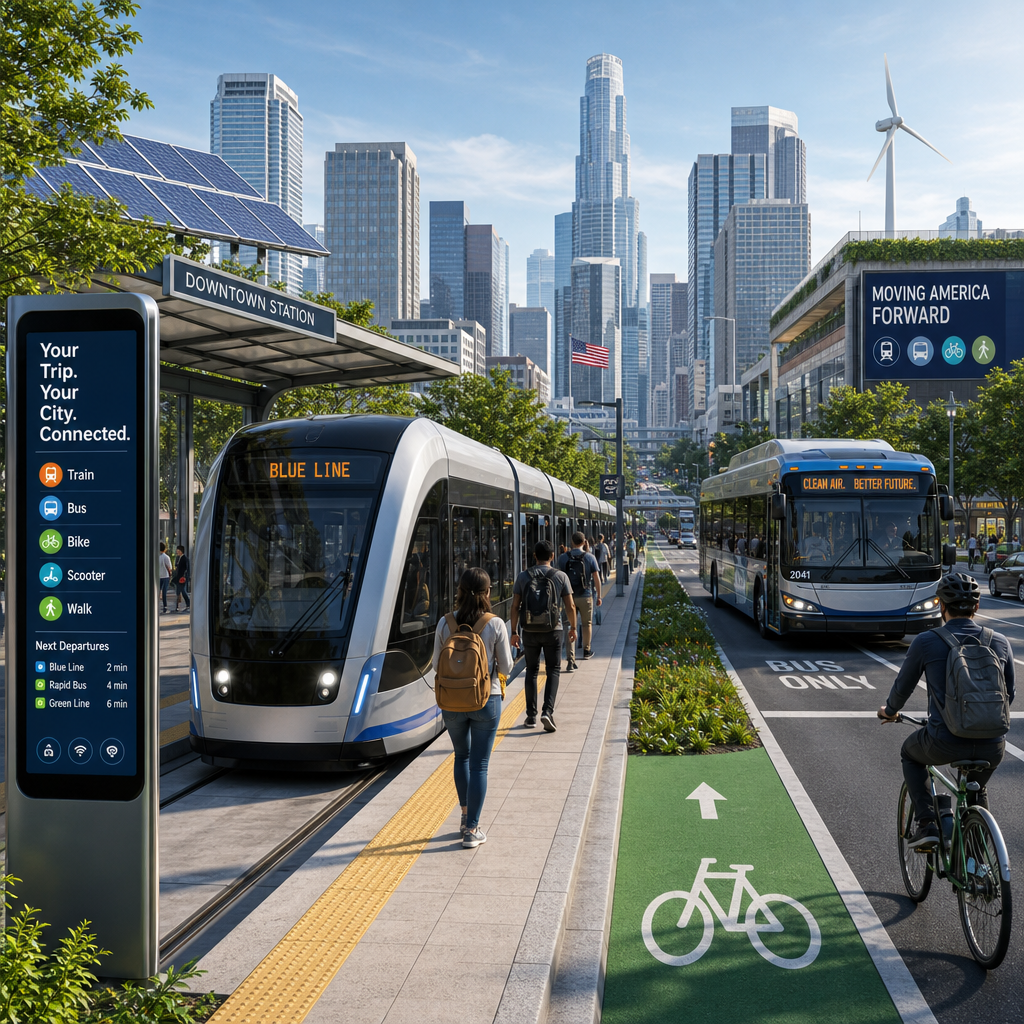
The Future of Public Transportation in the United States
Public transportation in the United States is entering a new era, driven by cleaner technology, smarter systems, and growing demand for reliable mobility. As cities and suburbs adapt, the choices made today will shape how millions of people travel, connect, and thrive tomorrow.
By: Peter B on July 25, 2026
Public transportation in the United States is changing fast. As cities grow, climate goals become more urgent, and technology continues to reshape daily life, the future of public transportation is becoming a major topic for planners, commuters, and policymakers alike. From cleaner buses to smarter rail systems and more flexible first-mile and last-mile options, the next era of transit will look different from the one many Americans know today.
The big question is not whether public transit will evolve. It already is. The real question is how quickly agencies, local governments, and private partners can build systems that are reliable, accessible, affordable, and prepared for the needs of the next generation.
Why the Future of Public Transportation Matters
Public transportation affects far more than commuting. It influences access to jobs, education, healthcare, and community life. When transit works well, it can reduce congestion, support economic mobility, and create more livable cities and suburbs. When it falls short, people spend more time, money, and energy just getting around.
The future of public transportation in the United States will likely be shaped by a few major forces:
Rising demand for dependable mobility options
Shifts in work patterns, including hybrid schedules
Environmental pressures to reduce emissions
Aging infrastructure that needs major upgrades
New technology, including electric fleets and digital fare systems
These trends are pushing transit agencies to think beyond traditional bus and rail service. They are also encouraging more collaboration between government, technology providers, and community organizations.
The Biggest Trends Shaping Public Transit
Electrification of Bus Fleets
One of the most visible changes in public transportation is the move toward electric buses. Many transit agencies are replacing diesel vehicles with battery-electric models to reduce tailpipe emissions and operating noise. This shift can improve air quality, especially in dense neighborhoods and near busy corridors.
Electric buses also fit into broader sustainability plans. However, agencies must plan carefully for charging infrastructure, vehicle range, maintenance training, and utility coordination. The transition is promising, but it requires long-term investment and operational discipline.
Smarter Transit Through Technology
Digital tools are becoming central to the future of public transportation. Riders increasingly expect real-time arrival updates, mobile ticketing, trip planning apps, and contactless payment options. These tools make transit easier to use, especially for occasional riders or visitors.
For agencies, technology can help improve service planning and efficiency. Data from GPS, fare systems, and ridership trends can reveal where service is strongest, where delays occur, and where adjustments may be needed.
Examples of helpful tech include:
Real-time bus and train tracking
Mobile fare payment and reloadable transit cards
Open data feeds for third-party trip planners
Smart traffic signal priority for buses
Predictive maintenance systems for vehicles and equipment
Microtransit and Flexible Service Models
Not every community can support high-frequency rail or large bus routes. That is where microtransit and other flexible service models come in. These options usually rely on smaller vehicles, app-based booking, or on-demand routing.
Microtransit can be especially useful in low-density neighborhoods, suburban areas, and as a feeder service to major transit hubs. It may not replace traditional transit, but it can complement it well when designed carefully.
The key is integration. If flexible services are disconnected from the larger transit network, they may create confusion. If they are built into a coordinated system, they can improve access and coverage.
Better Focus on Equity and Accessibility
The future of public transportation must address long-standing equity challenges. For many riders, transit is not optional. It is the only affordable way to get to work, school, medical appointments, and essential services. That makes accessibility a core issue, not a side feature.
Agencies are increasingly considering:
Wheelchair accessibility at stations and stops
Easier fare structures for low-income riders
Language access and multilingual information
Safer stops and better lighting
More service in historically underserved communities
Accessibility also includes digital access. If fare tools or trip planners only work on newer smartphones or fast internet connections, some riders may be left behind. Good transit design has to work for everyone.
How Infrastructure Investment Will Shape the Future of Public Transportation
A modern transit system depends on more than buses and trains. It needs tracks, stations, signals, maintenance yards, shelters, sidewalks, and bike connections. Much of this infrastructure in the United States is aging, which makes reinvestment essential.
Maintenance Will Be Just as Important as Expansion
It is tempting to focus only on big new projects like rail extensions or high-speed rail corridors. Those projects matter, but maintaining existing systems is often the best way to protect service quality. Delayed maintenance can lead to breakdowns, slower trips, and higher costs over time.
Transit agencies that prioritize life-cycle planning tend to make better use of funding. That means budgeting not just for new vehicles, but also for repairs, replacements, and system upgrades.
Transit-Oriented Development Will Keep Growing
The future of public transportation is closely tied to how communities grow. Transit-oriented development, or TOD, places homes, offices, shops, and public spaces near transit stops. This approach can make transit more efficient because more people live and work within easy reach of service.
TOD can also reduce dependence on cars, support walkable neighborhoods, and create more vibrant local economies. Still, it must be implemented carefully to avoid displacing existing residents. Community input, affordable housing protections, and thoughtful zoning are essential.
The Role of Rail in the Future of Transit
Rail will remain an important part of public transportation in the United States, especially in dense metropolitan regions. Commuter rail, light rail, subway systems, and intercity rail all serve different needs.
Urban Rail Systems
In major cities, rail offers speed, capacity, and reliability when compared with congested roads. Future improvements may include:
More frequent service
Modern signaling systems
Better station accessibility
Seamless transfers with buses and micromobility
Cleaner, quieter train fleets
Intercity Rail Growth
Interest in intercity passenger rail has also increased. Many travelers want an alternative to driving long distances or flying short routes. While large-scale rail expansion takes time and funding, better intercity connections could improve regional mobility and economic ties.
A stronger national rail network would not eliminate the need for cars or planes, but it could fill important gaps between major cities and reduce travel stress for many passengers.
What Riders Will Expect in the Next Generation of Transit
Passenger expectations are rising. In the future, people will compare transit not just to other public systems, but to the convenience of ride-hailing, delivery apps, and navigation platforms.
That means public transportation must deliver more than basic access. Riders will likely expect:
Clean, safe vehicles
Accurate arrival predictions
Simple fare payment
Consistent service
Good station and stop amenities
Clear communication during delays
Reliability may become the single most important factor. Even if transit is affordable and environmentally friendly, riders are less likely to use it if it is unpredictable. Agencies that improve on-time performance and service consistency will earn trust more quickly.
Challenges That Could Slow Progress
The future of public transportation in the United States is promising, but several obstacles remain.
Funding Gaps
Transit systems often depend on a mix of fare revenue, local support, state aid, and federal funding. That can make planning difficult, especially when budgets fluctuate. Agencies need stable, long-term funding to support operations and capital projects.
Workforce Shortages
Transit does not run itself. Drivers, mechanics, dispatchers, planners, and maintenance workers are essential. Agencies facing labor shortages may struggle to provide frequent, reliable service. Investing in training, competitive wages, and retention can help address this issue.
Political and Regional Differences
Transit priorities vary widely across the country. A strategy that works well in New York or Chicago may not fit a smaller city or suburban region. Successful planning must reflect local travel patterns, population density, and community goals.
Public Trust
Some people have had disappointing transit experiences and may not believe improvements will last. Building trust takes time. Agencies need to communicate clearly, deliver visible improvements, and involve riders in planning.
Practical Examples of What the Future Could Look Like
To understand the future of public transportation more clearly, imagine a few realistic scenarios:
A suburban commuter takes an electric shuttle from a neighborhood hub to a regional rail station.
The shuttle arrives on demand, is wheelchair accessible, and connects directly to a train with coordinated timing.
A city rider uses one app to plan, pay for, and track a bus and rail trip.
Real-time updates reduce uncertainty, and fare capping ensures the rider never pays more than the cost of a pass.
A small town adds flexible transit service for medical visits and grocery trips.
The service is integrated with nearby regional routes, giving residents more mobility without needing a personal vehicle.
A downtown corridor gets faster bus service with signal priority and dedicated lanes.
Travel times improve, and ridership grows because the bus becomes a practical alternative to driving.
These examples show that the future of transit is not one single technology. It is a mix of better planning, better design, and better service.
How Public Transportation Can Support a More Sustainable Future
Public transportation is one of the most effective tools cities have for supporting sustainability. When more people can choose transit instead of driving alone, communities can reduce traffic congestion and lower emissions from transportation.
But sustainability is about more than the vehicles themselves. It also includes:
Compact land use
Walkable access to stops and stations
Energy-efficient facilities
Reusable and durable materials
Smart service planning that avoids waste
A truly sustainable transit system balances environmental goals with affordability and equity. That balance will define the future of public transportation in the United States.
What Policymakers and Agencies Should Prioritize
To build stronger transit systems, decision-makers should focus on actions that deliver long-term value.
1. Invest in Reliability First
Frequent service, on-time performance, and dependable maintenance often matter more to riders than flashy new features.
2. Expand Access
Transit should serve people of different ages, incomes, languages, and abilities. Accessibility should be built in from the start.
3. Modernize the Rider Experience
Easy payment, real-time information, and simple trip planning can make transit feel usable and current.
4. Support Clean Fleet Transitions
Electrification should move forward in a way that is practical, phased, and backed by infrastructure.
5. Align Transit With Housing and Land Use
If homes are built far from transit, ridership suffers. Coordinated planning can make systems more effective.
Frequently Asked Questions
1. What is the future of public transportation in the United States likely to look like?
The future of public transportation will likely include cleaner buses, better digital tools, more flexible service models, and stronger connections between transit and housing. Agencies are also expected to focus more on accessibility, reliability, and sustainability. Rather than replacing traditional transit completely, new approaches will work alongside buses and rail to create a more integrated mobility network.
2. Will electric buses replace diesel buses everywhere?
Electric buses are likely to become much more common, but a full nationwide replacement will take time. Transit agencies must invest in charging infrastructure, vehicle procurement, staff training, and utility coordination. In some places, battery-electric buses will be the best fit. In others, different low-emission technologies or phased transitions may make more sense.
3. How will technology improve public transit for riders?
Technology can make transit easier and more predictable. Riders benefit from real-time arrival tracking, mobile fare payment, trip planning apps, and service alerts. Agencies can also use data to improve schedules, identify problem areas, and reduce maintenance surprises. The best technology improves the rider experience without making service harder to use.
4. Why is transit equity such an important issue?
Transit equity matters because many people rely on public transportation for daily needs. If service is limited, expensive, or inaccessible, it can deepen existing barriers to opportunity. Equity-focused planning helps ensure that low-income communities, older adults, people with disabilities, and non-drivers have fair access to jobs, healthcare, and education.
5. What role will rail play in the future of transit?
Rail will remain essential in many large metropolitan areas and may grow in importance for intercity travel as well. Urban rail systems provide high-capacity service in dense corridors, while intercity rail can connect cities more efficiently than driving in certain regions. Future improvements will likely focus on reliability, accessibility, and smoother transfers with buses and other modes.
The future of public transportation in the United States will not be defined by one breakthrough. It will be shaped by many practical improvements that work together: cleaner vehicles, smarter technology, better maintenance, stronger accessibility, and transit systems designed around real people’s daily needs. The most successful systems will be those that are reliable enough to earn trust, flexible enough to serve different communities, and forward-looking enough to adapt to changing travel patterns.
For riders, that future means more choices and fewer barriers. For cities and towns, it means stronger connections between mobility, economic growth, and quality of life. And for policymakers, it means treating transit as essential infrastructure, not an afterthought. The path forward will require sustained investment and clear priorities, but the payoff is significant: a public transportation system that works better for more Americans.
Peter B holds a degree in Journalism and has 5 years of experience covering U.S. economic policy, labor markets, and financial news. He writes data-driven news content on topics like inflation, interest rates, and employment trends.