Student Loan Repayment in 2026: Programs, Forgiveness, Borrower Guide
Student Loan Repayment in 2026: Updated Programs, Forgiveness Options, and What Borrowers Should Know
Student loan repayment in 2026 looks different from just a few years ago. Federal repayment rules, income-driven plans, and forgiveness pathways continue to evolve, and borrowers need clear, practical guidance to keep up. Whether you’re starting repayment, trying to lower your monthly bill, or working toward forgiveness, understanding the latest student loan repayment options can help you make smarter decisions.
This guide breaks down the major repayment programs, the forgiveness options that may be available, and the steps borrowers should take to stay on track in 2026. It’s written to help you navigate your choices with confidence and avoid costly mistakes.
Student Loan Repayment in 2026: What Has Changed and Why It Matters
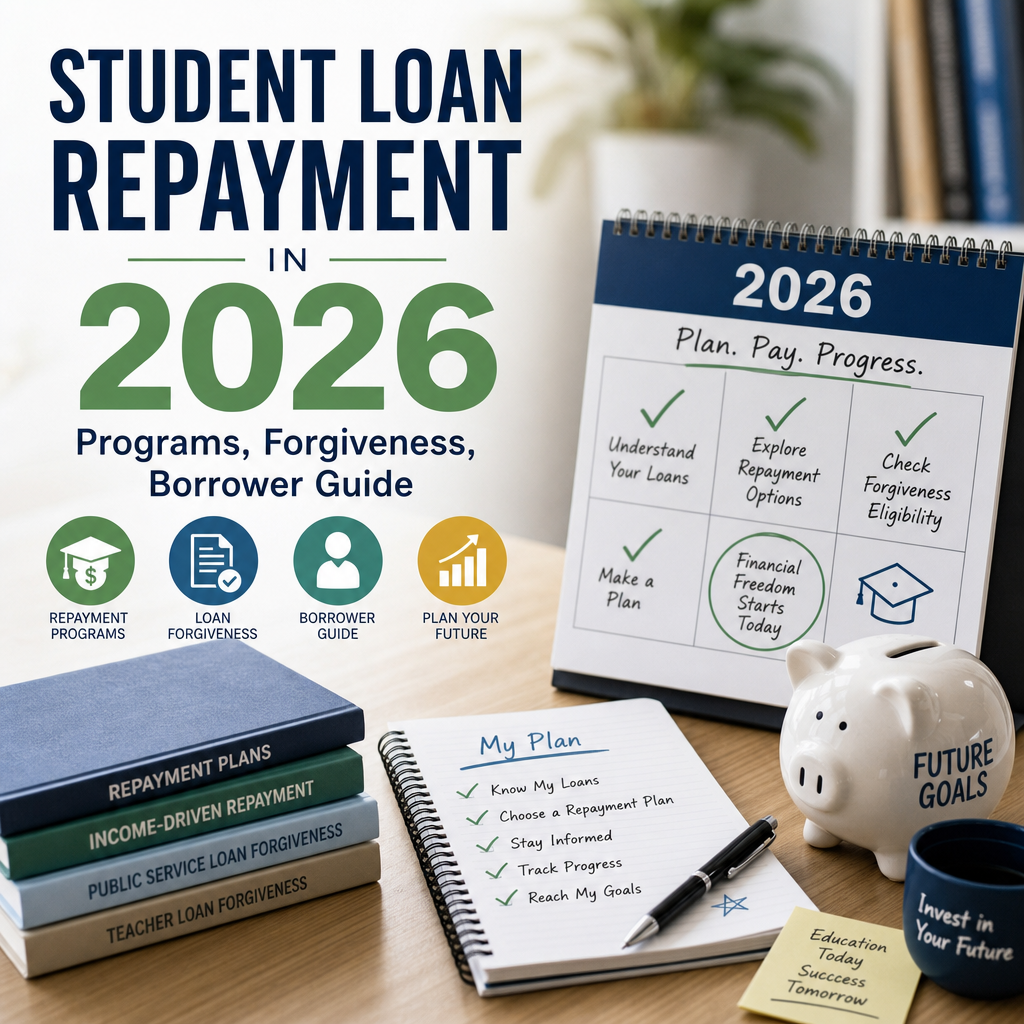
Student loan repayment in 2026 is shaped by a mix of standard repayment plans, income-driven repayment options, and targeted forgiveness programs. For many borrowers, the biggest challenge is not simply making payments—it’s knowing which program fits their situation.
The most important thing to understand is that your repayment strategy should match your income, loan type, career goals, and long-term financial plans. A plan that works for a high earner with stable federal employment may be a poor fit for a borrower with fluctuating income or a large balance relative to salary.
Why borrowers should review their plan now
Even if your current payment feels manageable, it’s worth revisiting your repayment setup if:
- Your income changed
- Your family size increased
- You work in public service or nonprofit employment
- You have federal Direct Loans and want to pursue forgiveness
- You’re unsure whether you’re in the right repayment plan
- You have older loans that may not qualify for newer benefits
A quick review can reveal whether you’re paying more than necessary or missing a path to forgiveness.
The Main Federal Repayment Options in 2026
Most borrowers with federal student loans will use one of several repayment structures. The right choice depends on whether you want the lowest monthly payment, the fastest payoff, or a path to eventual forgiveness.
Standard Repayment Plan
The Standard Repayment Plan generally divides your loan into fixed monthly payments over 10 years. This option often works well if:
- You want to pay less interest over time
- You have a stable income
- You can afford a higher monthly payment
- You want to become debt-free faster
The downside is simple: the monthly payment can be higher than income-driven plans, making it harder for some borrowers to stay current.
Graduated Repayment Plan
A Graduated Repayment Plan starts with lower payments and increases them over time, usually every two years. This may appeal to borrowers early in their careers who expect their income to rise.
However, because payments increase, this plan can become less attractive if your income doesn’t grow as expected.
Extended Repayment Plan
If you have more than $30,000 in federal Direct Loans or FFEL loans, you may qualify for an Extended Repayment Plan. This stretches payments over a longer period, which can lower your monthly bill.
This plan can help with cash flow, but you’ll likely pay more interest over the life of the loan.
Income-Driven Repayment Plans
Income-driven repayment plans are often the most important student loan repayment option for borrowers in 2026. These plans set your monthly payment based on your income and family size, not just your loan balance.
Common goals of income-driven plans include:
- Reducing monthly payments
- Avoiding default
- Creating a path to forgiveness after a set number of qualifying payments
Depending on your loan type and eligibility, you may be able to choose among different income-driven plans. Because rules can change, borrowers should confirm eligibility through the Federal Student Aid website before enrolling.
Forgiveness Options Borrowers Should Know About
Forgiveness is one of the most searched topics in student loan repayment in 2026, but it’s also one of the most misunderstood. Forgiveness is not automatic, and different programs come with different rules.
Public Service Loan Forgiveness (PSLF)
Public Service Loan Forgiveness remains one of the most valuable options for eligible borrowers. It is designed for people who work full-time for qualifying government or nonprofit employers.
To benefit from PSLF, borrowers generally need to:
- Work for a qualifying employer
- Have eligible federal Direct Loans
- Make qualifying monthly payments
- Be enrolled in an eligible repayment plan
- Submit employment certification and track progress carefully
PSLF can be a strong option for teachers, nurses, public defenders, government workers, and nonprofit employees. The key is to document everything and confirm that your loans and payments qualify.
Income-Driven Repayment Forgiveness
Some income-driven repayment plans offer forgiveness after a long repayment period, often 20 or 25 years of qualifying payments, depending on the plan and loan type.
This path can be useful for borrowers with lower incomes relative to their debt. But it’s important to remember:
- You must remain in an eligible repayment plan
- You need to recertify income when required
- Missed paperwork can delay forgiveness
- Forgiven balances may have tax implications depending on the law at the time
Teacher Loan Forgiveness
Teachers who work in low-income schools or educational service agencies may qualify for Teacher Loan Forgiveness after meeting certain service requirements. This program is separate from PSLF and may apply to some borrowers who teach full-time in qualifying settings.
Because eligibility rules are specific, teachers should review the program carefully before relying on it as their only strategy.
Total and Permanent Disability Discharge
Borrowers with a total and permanent disability may qualify for a discharge of federal student loans. Documentation is required, and the application process usually involves medical evidence or related eligibility records.
This discharge is not based on employment or income-driven repayment. It is intended for borrowers who cannot maintain substantial gainful activity because of a disability.
Closed School and Borrower Defense Discharge
Some borrowers may qualify for loan relief if their school closed while they were enrolled or soon after they withdrew, or if they were misled by their school’s actions.
These are narrower programs, but they matter for affected borrowers. If your institution shut down or you believe you were harmed by misconduct, it’s worth reviewing these discharge options.
What Borrowers Should Check Before Choosing a Plan
Not every repayment plan works for every borrower. Before you choose a strategy, review the details of your loan portfolio and your financial picture.
1. Know whether your loans are federal or private
This is one of the most important distinctions in student loan repayment in 2026.
- Federal loans may qualify for income-driven repayment, deferment, forbearance, and forgiveness programs
- Private loans usually do not offer the same protections or forgiveness paths
If you have both, you may need to manage them differently.
2. Identify your loan type
Federal loan programs can depend on whether you have Direct Loans, FFEL loans, Perkins loans, or consolidated loans. Some forgiveness and income-driven repayment options apply only to certain loan categories.
3. Review your income and family size
Income-driven repayment plans rely on this information. If your household changed because of marriage, divorce, childbirth, or a job switch, your payment may change too.
4. Look at your long-term goal
Ask yourself whether you want:
- The lowest monthly payment
- The fastest payoff
- The best chance at forgiveness
- Stability while your income fluctuates
Your answer should influence your plan.
Common Mistakes That Can Delay Relief
Borrowers often lose time or money because of small but important errors. Avoid these common mistakes in student loan repayment in 2026.
Missing recertification deadlines
Income-driven plans usually require periodic income updates. Missing that deadline can cause your payment to increase or your plan to change.
Assuming all payments count toward forgiveness
Not every payment qualifies. To count, payments often must meet specific rules about loan type, repayment plan, employment, and payment timing.
Ignoring loan consolidation consequences
Consolidation can simplify repayment, but it may also reset progress toward forgiveness in some situations. Before consolidating, confirm how it will affect your timeline.
Focusing only on the monthly payment
A low monthly payment sounds appealing, but it may not always be the best financial move if it increases total interest dramatically or delays forgiveness progress.
Not tracking documentation
Keep records of:
- Payment history
- Employment certifications
- Income recertifications
- Loan statements
- Emails and letters from your servicer
These records can protect you if an issue comes up later.
Practical Strategies to Manage Student Loan Repayment in 2026
A strong repayment plan does more than lower your bill. It helps you stay organized and avoid surprises.
Build your repayment strategy around your career path
If you expect to stay in public service, PSLF may be worth pursuing. If you plan to move to the private sector or want to pay off debt aggressively, a standard or extended plan may work better.
Automate payments when possible
Autopay can reduce the risk of late payments and may even qualify you for a small interest rate reduction with some loans.
Reevaluate your plan annually
A year can bring major changes in income, family size, tax filing status, and job eligibility. Review your plan at least once a year, or sooner if your situation changes.
Consider refinancing carefully
Refinancing may lower your interest rate, especially for private loans or strong-credit borrowers. But refinancing federal loans into a private loan typically means giving up federal protections and forgiveness opportunities.
That tradeoff should be weighed carefully.
Keep communication open with your servicer
If you struggle to make payments, contact your servicer before you miss one. You may qualify for a temporary adjustment, forbearance, or another solution depending on your loan type and situation.
How to Stay Organized and Avoid Default
Default can create serious long-term consequences, including damaged credit and collections. The best defense is staying proactive.
Set reminders for key dates
Important dates may include:
- Income recertification deadlines
- Employer certification submissions
- Loan servicing notices
- Payment due dates
Review your online loan account regularly
Check balances, interest accrual, and payment allocation. Mistakes do happen, and catching them early can save you time and stress.
Ask questions before making major changes
If you’re thinking about consolidating, switching repayment plans, or applying for forgiveness, make sure you understand the effect on your timeline and eligibility.
Frequently Asked Questions
1. What is the best student loan repayment plan in 2026?
There is no single best plan for everyone. The right choice depends on your income, loan type, job, and long-term goals. If you want the lowest monthly payment, an income-driven plan may be best. If you want to pay off debt faster, a standard plan may work better. Borrowers seeking forgiveness should focus on plans that count qualifying payments toward that goal.
2. Do private student loans qualify for forgiveness?
In most cases, no. Private student loans generally do not qualify for federal forgiveness programs like PSLF or income-driven repayment forgiveness. Some private lenders may offer hardship options, but those are not the same as federal forgiveness programs. Always read your loan agreement carefully.
3. How do I know if I qualify for Public Service Loan Forgiveness?
You may qualify for PSLF if you work full-time for a qualifying government or nonprofit employer, have eligible federal Direct Loans, and make qualifying payments under an eligible repayment plan. The safest approach is to submit employer certification regularly and confirm your loan and payment status through your federal loan servicer and the Federal Student Aid system.
4. Can consolidation hurt my forgiveness progress?
Yes, it can in some cases. Federal consolidation may affect your payment count toward forgiveness, depending on the program and the loans involved. Before consolidating, review how it could change your eligibility and timeline. If you are pursuing PSLF or income-driven forgiveness, this step deserves special attention.
5. What should I do if I can’t afford my student loan payment?
Contact your servicer as soon as possible. You may be able to switch to an income-driven plan, request a temporary forbearance, or explore another repayment option. Ignoring the problem can lead to delinquency or default, so taking action early is usually the best move.
Official Resources
- Federal Student Aid – StudentAid.gov
- Public Service Loan Forgiveness (PSLF) Help Tool
- Consumer Financial Protection Bureau – Student Loan Help
- U.S. Department of Education – Loan Repayment
- Internal Revenue Service – Tax Information for Student Loan Forgiveness
Conclusion
Student loan repayment in 2026 requires more than making monthly payments on time. Borrowers need to understand the differences between federal and private loans, choose the right repayment plan, and stay alert to forgiveness opportunities that may fit their careers and financial goals. For some, the best path is a standard plan and an aggressive payoff strategy. For others, income-driven repayment or PSLF may offer real long-term relief.
The most important step is to review your situation carefully and act before problems pile up. Check your loan types, confirm your repayment plan, and keep documentation organized. If your income has changed or you’re unsure whether your current plan still fits, now is the right time to reassess. Student loan debt can feel overwhelming, but a clear strategy makes it far easier to manage. The more you understand your options, the more control you have over your repayment journey and the stronger your financial future can become.