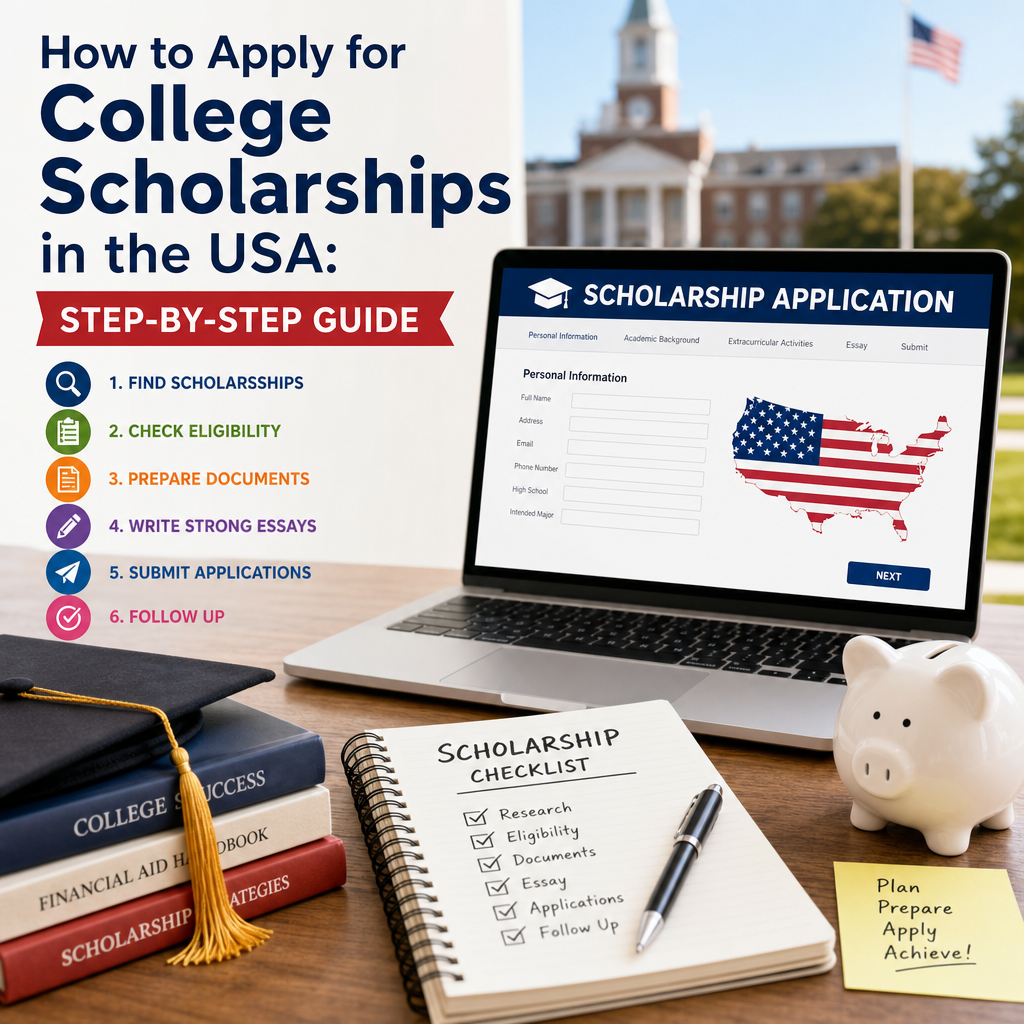
How to Apply for College Scholarships in the USA: Step-by-Step Guide
Applying for college scholarships in the USA is easier when you break the process into simple steps and start early. With the right plan, you can find college scholarships that fit your goals, strengthen your application, and boost your chances of winning funding.
By: Jennifer on July 24, 2026
Paying for college can feel overwhelming, but scholarship opportunities can make a real difference. If you’re wondering how to apply for college scholarships in the USA, the process becomes much easier when you break it into manageable steps. Scholarships can help reduce tuition costs, cover books, and sometimes even pay for housing or other school expenses. The key is to start early, stay organized, and apply strategically.
This guide walks you through the scholarship application process step by step, so you can build a strong profile, find legitimate opportunities, and submit polished applications that stand out.
How to Apply for College Scholarships in the USA: Start with a Clear Plan
Before you begin filling out forms, it helps to understand what scholarship committees are looking for. Most scholarships reward a combination of academic achievement, community involvement, leadership, financial need, talents, or a specific background or interest.
A smart scholarship plan usually includes:
Identifying the types of scholarships you qualify for
Creating a list of deadlines
Collecting key documents in advance
Writing strong application essays
Requesting recommendations early
Submitting applications carefully and on time
Scholarships are competitive, but the students who prepare well often have the best results.
Step 1: Understand the Types of Scholarships Available
The first part of learning how to apply for college scholarships in the USA is knowing what kinds of scholarships exist. Not every scholarship works the same way, and you should target those that match your strengths and goals.
Merit-Based Scholarships
These are awarded for academic performance, test scores, extracurricular activities, or other achievements. Students with strong grades, leadership experience, or special talents often qualify.
Need-Based Scholarships
These scholarships are based on financial need. You may need to complete the FAFSA or provide additional financial documentation.
Athletic Scholarships
Many colleges offer scholarships to student-athletes. These are often tied to specific sports and require communication with coaches and athletic departments.
Identity-Based or Background Scholarships
Some scholarships support students from specific communities, including:
First-generation college students
Minority students
Women in certain fields
Students with disabilities
Veterans or military families
Major-Specific Scholarships
If you plan to study nursing, engineering, education, computer science, or another field, look for scholarships connected to your intended major.
Local and Community Scholarships
These are often less competitive than national awards. Check with:
High schools
Local businesses
Community foundations
Religious organizations
Civic groups
Step 2: Build a Scholarship Search Strategy
Once you know the types of scholarships available, create a search system that helps you stay focused. A targeted search saves time and improves your chances.
Where to Search
Start with trusted sources such as:
Your high school counselor
College financial aid offices
Official college websites
Local community foundations
Employer-sponsored programs
Professional associations
Government and nonprofit scholarship databases
Use Filters Wisely
When searching, narrow results by:
GPA requirements
State or region
Intended major
Application deadline
Essay requirement
Financial need
Grade level
Avoid Scholarship Scams
A real scholarship should never require you to pay an application fee or share sensitive information without a clear reason. Watch out for offers that promise guaranteed awards or ask you to “act now” with pressure tactics.
Step 3: Organize Your Documents Early
One of the biggest mistakes students make is waiting until the last minute. Scholarship applications often ask for many of the same materials, so prepare a basic application packet you can reuse.
Common Documents You May Need
Academic transcript
Resume or activity list
FAFSA Student Aid Report, if applicable
Financial information
Proof of enrollment or acceptance
Letters of recommendation
Personal essay or statement
Standardized test scores, if required
Create a Master File
Keep digital copies of everything in one folder. Name documents clearly, such as:
Transcript_Fall2025.pdf
Resume_Scholarship.docx
Recommendation_Letter_Johnson.pdf
This makes it easier to apply quickly when deadlines approach.
Step 4: Read the Scholarship Instructions Carefully
A strong scholarship application begins with careful reading. Many students lose opportunities simply because they miss a small requirement.
Before applying, check:
Eligibility rules
Deadline date and time
Required documents
Word count limits
Formatting instructions
Submission method
Whether the scholarship is renewable
If the instructions say the essay must be 500 words or fewer, do not submit 700. If they require a PDF attachment, do not upload a Word document instead. Attention to detail shows professionalism and respect.
Step 5: Write a Strong Personal Essay
Many scholarships ask for a personal statement or essay. This is your chance to show who you are beyond grades and test scores. A great essay answers the prompt directly while revealing your character, goals, and motivation.
What Makes a Good Scholarship Essay?
A strong essay is:
Specific
Honest
Well-organized
Personal
Clear and concise
How to Structure It
Use a simple structure:
Introduction: Start with a memorable hook or direct response to the prompt.
Body: Explain your experiences, challenges, goals, and values.
Conclusion: Tie everything together and connect your story to the scholarship’s purpose.
Example Approach
If a scholarship asks about leadership, don’t just say you were a club president. Describe:
What the role involved
A challenge you faced
What you learned
How the experience shaped your future plans
This kind of detail makes your essay more compelling and believable.
Step 6: Request Strong Recommendation Letters
Recommendation letters can support your application by showing how others view your abilities and character. Ask people who know you well and can speak specifically about your strengths.
Who to Ask
Good options include:
Teachers
Counselors
Coaches
Employers
Club advisors
Volunteer supervisors
How to Ask
Ask early, ideally at least two to three weeks before the deadline. Be polite and provide useful materials, such as:
Your resume
The scholarship description
Your deadlines
Points you’d like highlighted
Make It Easy for Them
When you help recommenders understand your goals, they can write a more relevant and effective letter. Always thank them afterward.
Step 7: Complete the FAFSA and Other Required Forms
For many scholarships, especially need-based awards, completing the FAFSA is essential. The FAFSA helps schools and organizations assess financial need and may also make you eligible for state or institutional aid.
Why It Matters
Many colleges use FAFSA information to determine both federal aid and scholarship eligibility. Some scholarships require it directly, while others consider it indirectly.
Other Forms to Watch For
Depending on the scholarship, you may also need:
The CSS Profile
State aid applications
School-specific forms
Tax documents or income verification
Complete all required forms accurately and early to avoid delays.
Step 8: Tailor Each Application
A common mistake is sending the same essay or materials to every scholarship. While you can reuse some basic documents, each application should still feel customized.
Personalize the Following
Essay responses
Cover letters
Activity descriptions
Short-answer responses
Goal statements
Match the Scholarship’s Mission
If a scholarship supports community service, emphasize volunteer work. If it supports future STEM students, highlight science or math achievements. Tailoring your application shows that you understand the organization’s goals.
Step 9: Proofread Everything
Even a strong applicant can lose points for spelling errors, grammar mistakes, or incomplete answers. Proofreading helps your application look polished and professional.
Proofreading Checklist
Before submitting, check for:
Typos and grammar issues
Missing attachments
Incorrect names or dates
Word count compliance
Formatting problems
Unanswered questions
Helpful Tip
Read your essay out loud. This often helps you catch awkward wording and repetitive sentences. It also makes it easier to spot places where your message sounds unclear.
Step 10: Submit Before the Deadline
Deadlines matter. Some scholarships stop accepting applications the moment the clock hits midnight, while others use a postmark date or a portal deadline. Don’t wait until the last day.
Best Submission Practices
Submit a few days early when possible
Save confirmation emails or screenshots
Double-check file uploads
Review your completed application before final submission
If a portal allows you to preview your application, use it. Small mistakes are easier to fix before submission than after.
Step 11: Apply Broadly, But Strategically
When learning how to apply for college scholarships in the USA, it’s important to apply to more than one opportunity. The more scholarships you pursue, the better your chances of success.
A Balanced Scholarship List Might Include
A few large national scholarships
Several school-specific awards
Local community scholarships
Scholarships tied to your major or interests
Awards with smaller applicant pools
Some smaller scholarships are easier to win and can still help meaningfully reduce college costs. A mix of awards often works better than relying on one large scholarship.
Step 12: Track Your Applications
Staying organized makes the entire process less stressful. Create a spreadsheet or simple checklist to monitor your progress.
What to Track
Scholarship name
Eligibility requirements
Deadline
Materials needed
Submission status
Award amount
Follow-up actions
Result or renewal requirements
A tracking system helps you avoid duplicate work and ensures you never miss a deadline.
Step 13: Prepare for Interviews, If Required
Some scholarships include an interview stage. If you’re invited, treat it like an important opportunity to strengthen your application.
How to Prepare
Review your essay and application
Practice answering common questions
Be ready to explain your goals
Dress appropriately
Speak clearly and confidently
Common Interview Questions
You may be asked:
Why do you deserve this scholarship?
What are your academic and career goals?
How have you shown leadership or service?
What challenge have you overcome?
How will this scholarship help you?
Think of the interview as a conversation, not a test. Be honest and respectful.
Practical Tips to Improve Your Chances
Winning scholarships takes persistence. A few simple habits can make a big difference:
Start early in junior year or even sooner
Apply for scholarships every month
Focus on quality, not just quantity
Reuse your strongest materials wisely
Ask for help from counselors, teachers, or mentors
Keep improving your essays and resume
Even if you don’t win every award, each application helps you become more prepared for the next one.
Common Mistakes to Avoid
Knowing what not to do is just as important as knowing the steps.
Avoid These Errors
Missing deadlines
Ignoring eligibility rules
Submitting generic essays
Failing to proofread
Forgetting required attachments
Using weak or inappropriate recommenders
Relying only on large national scholarships
These mistakes are preventable with planning and attention to detail.
Frequently Asked Questions
1. When should I start applying for college scholarships?
You should start as early as possible, ideally during junior year of high school or earlier. Many scholarships have deadlines before college begins, and some are available to younger students. Starting early gives you more time to gather documents, write better essays, and apply for multiple awards.
2. Do I need perfect grades to win scholarships?
No. While strong grades help with merit-based scholarships, many awards consider leadership, community service, financial need, personal background, talents, or career goals. There are scholarships for a wide range of students, so don’t assume you’re unqualified based on grades alone.
3. How many scholarships should I apply for?
There’s no exact number, but a good strategy is to apply to as many relevant scholarships as you can realistically manage. Focus on opportunities that match your profile and where you meet the eligibility criteria. Quality applications are more effective than rushing through dozens of weak ones.
4. Are scholarship applications different from college applications?
Yes, though they often overlap. Scholarship applications may require essays, transcripts, recommendation letters, or financial information, but they usually focus on a specific theme, eligibility category, or mission. College applications are broader and determine admission, while scholarship applications determine funding.
5. Can international students apply for scholarships in the USA?
Some can, but eligibility varies by scholarship and institution. Many scholarships are open only to U.S. citizens or permanent residents, while others welcome international students. Always check the official requirements carefully before applying.
Learning how to apply for college scholarships in the USA is one of the smartest steps you can take to make college more affordable. The process becomes much easier when you break it into clear actions: identify the right scholarships, organize your documents, read instructions carefully, write thoughtful essays, request recommendations early, and submit polished applications before the deadline.
The most successful students don’t just apply once and stop. They build a system, track opportunities, and keep improving with each application. Even small scholarships can add up and reduce the financial pressure of college in meaningful ways. If you stay consistent, apply strategically, and focus on opportunities that match your strengths, you can greatly improve your chances of earning aid.
Start now, stay organized, and treat every application as a chance to present your best self. The effort you put in today can pay off throughout your college journey.
Jennifer, M.Ed., holds a degree in Higher Education Administration, with
a focus on U.S. college financial aid, admissions policy, and student
support systems. She researches and writes about scholarships, federal
aid programs, and the college planning process to help students and
families make informed, well-supported decisions.