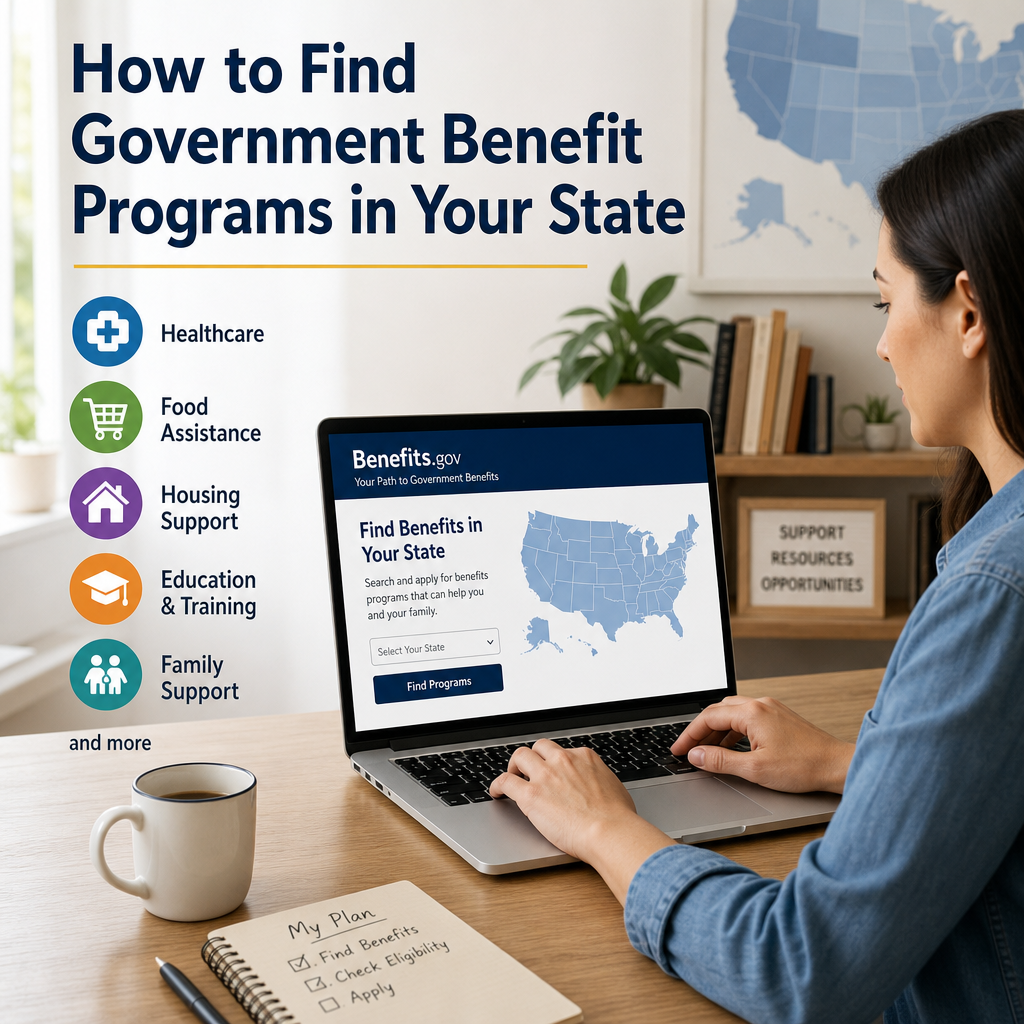
How to Find Government Benefit Programs in Your State
Finding help doesn’t have to be overwhelming. With the right tools and a little know-how, you can quickly locate government benefit programs in your state and see which ones fit your needs.
By: Emilly Adams on July 25, 2026
How to Find Government Benefit Programs Available in Your State
If you’re trying to figure out how to find government benefit programs available in your state, you’re not alone. Many people qualify for help but never apply simply because they don’t know where to start. The good news is that state and federal benefit programs are easier to locate than they used to be—if you know which resources to use and what information to gather first.
From food assistance and Medicaid to housing support, child care help, utility relief, and unemployment benefits, each state offers a different mix of programs. Some are run by state agencies, while others are federally funded and administered locally. That means your best strategy is to use official sources, verify eligibility rules, and compare programs based on your situation.
This guide walks you through practical ways to find benefits in your state, avoid common mistakes, and apply with confidence.
How Government Benefit Programs Work
Government assistance programs are designed to help people meet basic needs, maintain stability, and recover from temporary hardship. Some programs support low-income households, while others help seniors, people with disabilities, veterans, students, families with children, or workers who lost a job.
Common types of benefit programs include:
Food assistance such as SNAP and WIC
Health coverage such as Medicaid and CHIP
Cash assistance such as TANF or state emergency aid
Housing support such as rental assistance or public housing
Utility assistance for heating, cooling, or electric bills
Child care assistance for working families
Unemployment benefits for eligible workers
Transportation, legal aid, and workforce services
Because programs vary by state, a benefit available in one place may look different—or not exist at all—somewhere else. That’s why learning how to search locally matters.
Start With Official State and Federal Sources
The most reliable way to find government benefit programs available in your state is to use official websites first. These sources are more likely to have current eligibility rules, application steps, and contact information.
1. Visit your state’s benefits or human services website
Most states have a central portal run by the Department of Human Services, Department of Social Services, or a similar agency. These sites often list programs by category and provide links to apply online.
Look for sections such as:
“Benefits”
“Assistance Programs”
“Public Assistance”
“Family Services”
“Apply for Help”
Many states also have screening tools that let you answer a few questions and see which programs you may qualify for.
Benefits.gov is a federal benefits finder that helps people identify programs based on personal circumstances. You can search by category, such as:
Food and nutrition
Healthcare
Housing
Education and training
Energy assistance
Disability support
Family and caregiver help
While Benefits.gov does not process every application directly, it’s one of the best starting points for learning about programs that may exist in your state.
3. Check your state’s 211 service
Dialing 211 or visiting your local 211 website can connect you with community resources and government benefit programs. These services are often staffed by trained specialists who can point you toward state, county, and nonprofit help.
This is especially useful if you need urgent support with:
Food
Rent
Utility shutoff prevention
Emergency shelter
Senior services
Mental health referrals
Search by the Kind of Help You Need
If you’re overwhelmed, don’t try to search for every program at once. Start with the problem you need to solve. This makes the search faster and more manageable.
Food assistance
If you need help buying groceries, search for:
SNAP in your state
WIC for pregnant people, infants, and young children
School meal programs
Food banks and pantry locators
SNAP applications are usually handled by the state human services agency. WIC is commonly managed through local health departments.
Health coverage
For health insurance help, explore:
Medicaid
CHIP for children
State health insurance marketplaces
Prescription assistance programs
Eligibility often depends on income, household size, pregnancy status, age, disability, or family composition.
Housing and rent help
Housing assistance can include:
Rental assistance
Eviction prevention
Emergency shelter
Public housing
Housing vouchers
Homelessness prevention services
These programs may be handled by local housing authorities, county agencies, or nonprofit partners funded by the state or federal government.
Utility and energy support
If utility bills are hard to manage, search for:
LIHEAP
State energy assistance programs
Weatherization support
Payment plans offered through utility companies
These programs often have seasonal application windows or limited funding, so it’s smart to check early.
Use a Benefits Screener to Narrow Your Search
A benefits screener is a short questionnaire that matches you with possible programs. It can save time and reduce confusion, especially if you’re unsure what you qualify for.
A good screener usually asks about:
Household size
Income
Age
Disability status
Employment status
Veteran status
Immigration or residency requirements
Whether you rent or own a home
Whether you have children or dependents
Why screeners help
Screeners can:
Identify hidden programs you might miss
Show which agencies to contact
Save time by focusing your search
Help you prepare documents before applying
Even if the results are not final, they give you a clear starting point.
Understand State, County, and Local Differences
One of the biggest challenges in finding government benefit programs available in your state is that the actual application path may depend on where you live within the state. Some services are statewide. Others are managed by counties, cities, or regional offices.
What to watch for:
A program may be state-funded but locally administered
Application deadlines may vary by county
Income limits may differ for certain local programs
Some benefits require in-person appointments
Waitlists can be handled at the local level
If a state website sends you to a county office or a local partner agency, follow that lead. It usually means the program is real, but the application happens closer to home.
Make a Simple List of Your Needs
Before applying, write down the support you need most. This helps you stay organized and avoid missing programs that fit your situation.
Example checklist:
Food support
Medical coverage
Rent help
Utility assistance
Child care help
Job training
Disability services
Transportation support
Then rank them in order of urgency. If you are facing a utility shutoff or housing issue, start there first. If you’re newly unemployed, check unemployment and job placement resources right away.
Gather the Documents You’ll Probably Need
Most benefit applications ask for similar paperwork. Preparing these documents in advance can speed up the process.
Common documents include:
Photo ID
Social Security numbers or proof of identity
Proof of address
Pay stubs or income statements
Tax returns, if needed
Bank statements
Lease or mortgage information
Utility bills
Proof of child care expenses
Medical records or disability documentation, if relevant
Helpful tip
Scan or photograph your documents and save them in a secure folder. Many state applications now allow online uploads, and having digital copies can save time.
Be Careful With Third-Party Websites
When searching online, you’ll likely see many websites that claim to help you find benefits. Some are useful, but not all are trustworthy. If a site asks for sensitive personal data before explaining what it does, proceed carefully.
Sites that imitate government branding but are not official
You should never pay a fee just to look for benefit programs.
Contact the Agency Directly if the Rules Are Unclear
Sometimes the website language is confusing or incomplete. If you’re unsure whether you qualify, call the agency or visit an office. Staff can often explain eligibility, required documents, and next steps.
Ask questions like:
What programs do I qualify for?
Is my county or city covered?
Can I apply online, by phone, or in person?
What documents do I need?
How long does it usually take to get a decision?
Is there a way to check application status?
Taking a few minutes to call can prevent delays or avoidable denials.
Apply Even If You’re Not Sure You Qualify
Many people assume they won’t qualify and never apply. That’s a mistake. Eligibility can be more flexible than expected, and program rules may include deductions, exceptions, or special categories.
Reasons to apply anyway:
Income limits may be higher than you expect
Household rules can affect eligibility
Temporary hardship may qualify you for emergency help
Some programs serve specific groups like veterans, seniors, or families with children
You may qualify for one benefit even if you do not qualify for another
If you’re near the cutoff, the only way to know for sure is to submit an application.
Keep Track of Deadlines and Recertifications
Many benefits are not one-time applications. You may need to renew, recertify, or report changes in income or household size. Missing a deadline can interrupt your benefits.
Stay organized by tracking:
Application date
Follow-up calls
Interview appointments
Renewal dates
Required documents
Notices from the agency
A simple calendar reminder can protect you from missed paperwork and unnecessary delays.
How to Find Government Benefit Programs Available in Your State Faster
If you want a streamlined approach, use this step-by-step process:
Start with your state human services or benefits website
Check county or city offices if the program is local
Gather documents before applying
Submit applications for every program you may qualify for
Follow up and keep records of all communication
This approach is practical, efficient, and based on official resources.
Real-Life Example: A Simple Search Strategy
Imagine a single parent in Ohio who recently lost work hours and is worried about food, health coverage, and rent.
A smart search might look like this:
Check the Ohio benefits portal for SNAP and Medicaid
Use Benefits.gov to look for child care and utility assistance
Contact 211 to find local food pantries and emergency rent help
Ask the county housing office about eviction prevention resources
Gather pay stubs, lease documents, and household information before applying
Instead of bouncing between random search results, this person focuses on trusted sources and takes action quickly.
Frequently Asked Questions
1. What is the best place to start when looking for government benefits in my state?
The best place to start is your state’s official human services or benefits website. From there, use federal tools like Benefits.gov and local services like 211 to narrow down programs that fit your situation.
2. Can I qualify for benefits if I work?
Yes. Many benefit programs are designed for working individuals and families. Eligibility usually depends on income, household size, and other factors—not simply whether you have a job. Programs such as SNAP, Medicaid, child care assistance, and utility support often serve people who are employed but still need help.
3. Do all states offer the same benefit programs?
No. Some programs are federal, but states often administer them differently. In addition, states may offer their own assistance programs that are not available elsewhere. That’s why it’s important to check your state-specific resources.
4. Is it safe to apply online for government benefits?
Yes, if you use official government websites or recognized agencies. Look for .gov websites, Benefits.gov, or trusted local agency portals. Avoid websites that charge fees, promise guaranteed approval, or ask for sensitive information without a clear purpose.
5. What should I do if I’m denied benefits?
If you’re denied, read the notice carefully. It should explain the reason and whether you can appeal. You may be able to submit missing documents, correct an error, or request a hearing. You can also ask the agency whether another program might fit your situation better.
Finding government benefit programs available in your state does not have to feel overwhelming. The key is to use official sources, focus on the type of help you need, and take the search one step at a time. Start with your state’s benefits portal, check Benefits.gov, and connect with 211 for local guidance. If you’re dealing with food costs, health coverage, housing pressure, utility bills, or child care expenses, there may be a program designed to help.
The most important thing is to act early and apply even if you’re unsure you qualify. Many programs have flexible rules, and a quick screening can reveal support you didn’t know existed. Keep your documents organized, watch deadlines carefully, and follow up when needed. A little preparation can make the process smoother and help you access the resources your household needs.
If you’re ready to move forward, begin with one trusted website, identify the top three programs that match your situation, and submit your first application today. Small steps can lead to meaningful support.
Emily A, holds a Master's degree in Public Administration (MPA) and has over 7 years of experience researching federal and state assistance programs. She writes educational content focused on government benefits, public policy, and community resources, using information from official agencies to help readers understand available programs and eligibility requirements.