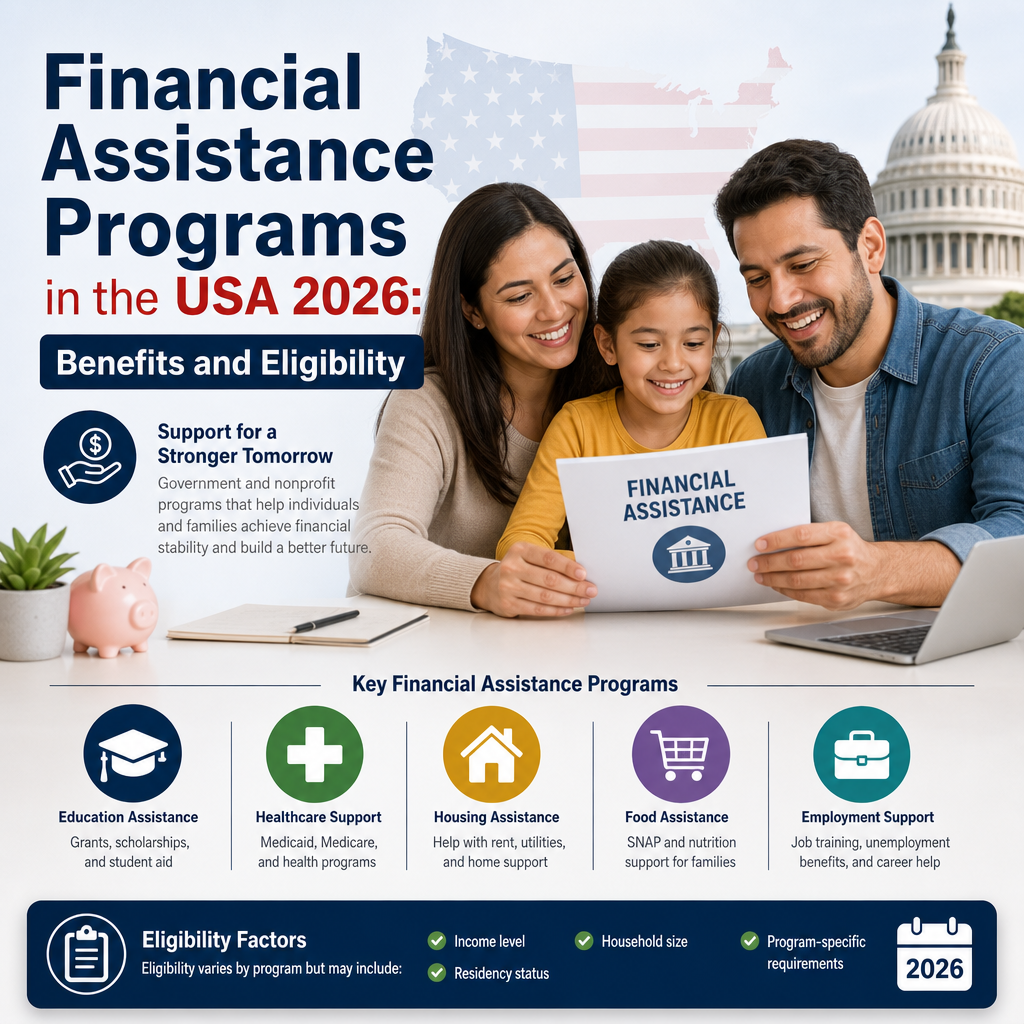
Financial Assistance Programs in the USA 2026: Benefits and Eligibility
Financial assistance programs in the USA 2026 can help ease the burden of rising living costs by covering essentials like food, rent, utilities, health care, and child care. This guide explains the key benefits, eligibility rules, and application steps so you can find the right support faster.
By: Mary Mitchell on July 24, 2026
Financial Assistance Programs in the USA 2026: Benefits, Eligibility, and How to Apply
Financial assistance programs in the USA 2026 continue to play a critical role for households facing rising costs, job changes, medical bills, housing stress, or unexpected emergencies. Whether you need help paying for food, rent, utilities, child care, health coverage, or education, there are public and nonprofit resources designed to reduce financial pressure and support stability.
The challenge is not just finding help—it is knowing which programs fit your situation, what the eligibility rules look like, and how to apply without delays. This guide breaks down the most important financial assistance programs in the USA 2026, the benefits they provide, and practical steps to improve your chances of getting approved.
What Financial Assistance Programs in the USA 2026 Cover
Financial assistance programs in the USA 2026 are not limited to cash payments. They include a wide range of supports for everyday needs and long-term stability.
Common types of assistance
Food assistance through SNAP and local food banks
Housing help including rental assistance and emergency shelters
Utility assistance for electric, gas, heating, and water bills
Health care support through Medicaid, CHIP, and ACA premium help
Cash assistance for very low-income families and individuals
Child care and family support
Education and training aid such as federal grants and workforce programs
Disability and senior support through federal and state benefits
These programs are often run by different agencies, so applicants may need to use more than one office or website to get full support.
Major Financial Assistance Programs in the USA 2026
Below are some of the most important programs people turn to when they need immediate or ongoing help.
SNAP: Food Assistance for Low-Income Households
The Supplemental Nutrition Assistance Program (SNAP) helps eligible households buy groceries with an EBT card. It remains one of the most widely used nutrition support programs in the country.
Who may qualify
Eligibility is usually based on:
Household size
Monthly income
Assets in some states
Citizenship or qualified immigration status
State-specific rules
What SNAP helps with
SNAP can be used for:
Fruits and vegetables
Meat, poultry, and fish
Dairy products
Bread, cereal, and other staples
Seeds and plants that produce food
It cannot be used for alcohol, tobacco, hot prepared foods in most cases, or non-food items.
How to apply
You typically apply through your state’s SNAP agency. Many states offer online applications, phone interviews, or local office appointments.
Medicaid and CHIP: Health Coverage Support
Medicaid provides health coverage for eligible low-income adults, children, pregnant people, seniors, and people with disabilities. CHIP, the Children’s Health Insurance Program, covers children in families that earn too much for Medicaid but still need affordable insurance.
Benefits of Medicaid and CHIP
These programs can cover:
Doctor visits
Hospital care
Prescription drugs
Preventive care
Pregnancy-related services
Pediatric care and dental services in many states
Eligibility basics
Eligibility varies by state, but it generally depends on:
Income
Household size
Age
Disability status
Pregnancy
Family status
Why this matters in 2026
Medical costs can quickly destabilize a household budget. Medicaid and CHIP are often the difference between delayed care and consistent treatment.
Housing Assistance Programs
Housing remains one of the biggest expenses for American households. Several financial assistance programs in the USA 2026 help with rent, homelessness prevention, and affordable housing access.
Section 8 Housing Choice Vouchers
The Housing Choice Voucher Program helps eligible families pay rent in the private market. In many cases, tenants pay a portion of rent based on income, and the voucher covers the rest up to program limits.
Public housing
Public housing is owned and managed by local housing authorities and provides reduced-rent units for eligible families, seniors, and people with disabilities.
Emergency rental assistance and local programs
Some communities offer temporary rental support for people facing eviction, job loss, or other hardship. These programs may help with:
Past-due rent
Late fees in some cases
Short-term housing stability services
Eviction prevention
What applicants usually need
Proof of income
Identification
Lease or housing documents
Household information
Proof of hardship, if applying for emergency aid
Utility Assistance and Energy Support
Keeping the lights on and the heat running is a basic need, not a luxury. Utility assistance programs can help households avoid shutoff notices and manage seasonal spikes in energy costs.
LIHEAP
The Low Income Home Energy Assistance Program (LIHEAP) helps eligible households pay heating and cooling bills. Some states also use it for crisis support, such as emergency repair or utility reconnection help.
Other utility aid options
Local energy company hardship programs
State emergency funds
Weatherization assistance
Municipal relief programs
Practical tip
If you have a shutoff notice, contact your utility provider immediately and ask about hardship options. Many companies can pause disconnection if you start the assistance process quickly.
TANF and Cash Assistance Programs
Temporary Assistance for Needy Families (TANF) provides cash assistance and work-related support to eligible low-income families with children. States administer TANF differently, so benefit amounts and requirements vary widely.
What TANF may help with
Basic living expenses
Job training
Work support services
Child care in some states
Emergency family needs
Eligibility
Common factors include:
Family income
Presence of children
Residency
Employment status
Participation in work activities, depending on state rules
TANF is often designed as short-term help, not a long-term income source.
Child Care Assistance
Child care costs can make it hard for parents to work, train, or attend school. Child care assistance programs help families afford licensed care while they stay employed or pursue education.
Typical benefits
Subsidized child care payments
Sliding fee scales
Support for infants, toddlers, and school-age children
Help finding approved providers
Who may qualify
Eligibility often depends on:
Household income
Work or school status
Age of children
State program rules
This type of support can be especially important for single parents and families with multiple children.
Unemployment Benefits
If you lost a job through no fault of your own, unemployment benefits may help replace part of your wages while you search for new work.
What unemployment benefits can provide
Temporary weekly payments
Access to job search resources
Reemployment services in some states
Basic eligibility
Most states require that you:
Were employed recently
Lost work through no fault of your own
Meet wage or work history rules
Are able and available to work
File weekly certifications
Unemployment rules vary by state, so it is important to file quickly after losing a job.
Education and Training Assistance
For people seeking better-paying work, education assistance can be a valuable long-term investment.
Federal Pell Grants
Pell Grants help eligible students pay for undergraduate education. They do not need to be repaid, which makes them a key resource for students with financial need.
Workforce training programs
Job centers and state workforce agencies may offer:
Career counseling
Tuition support
Skills training
Apprenticeship referrals
Resume and interview help
Why it matters
Sometimes the best financial assistance is not just a bill payment—it is a pathway to more stable income.
How to Know Which Financial Assistance Program Fits Your Situation
With so many financial assistance programs in the USA 2026, it helps to match the program to your need.
Quick guide by need
Need food help? Start with SNAP and local food banks.
Need health coverage? Check Medicaid or CHIP.
Need help with rent? Contact your local housing authority and ask about vouchers or emergency rental aid.
Need utility support? Apply for LIHEAP and call your utility company.
Lost your job? File for unemployment right away.
Need child care help? Look for state child care subsidies.
Need money for basic living costs? Check TANF and local emergency assistance.
Helpful documents to gather
Having documents ready can speed up the process:
Photo ID
Social Security numbers or proof of identity
Proof of income
Lease or mortgage statement
Utility bills
Bank statements, if requested
Birth certificates for children, if applicable
Immigration documents, if required by the program
How to Apply for Financial Assistance Programs in the USA 2026
The application process can feel overwhelming, but it becomes more manageable when you break it into steps.
Step 1: Identify the correct agency
Start with the official agency for the program you need:
SNAP and TANF: state human services or social services agency
Read the current requirements before applying. Income limits, household definitions, and document requirements can vary by state and program type.
Step 3: Complete the application fully
Incomplete applications often cause delays. Fill out every required field and be honest about your household size, income, and expenses.
Step 4: Submit supporting documents
Upload or provide documents promptly. If you cannot find a document, ask the agency whether another form of proof is acceptable.
Step 5: Respond quickly to follow-up requests
Many applications stall because applicants miss phone calls, mail notices, or requests for more information.
Step 6: Keep records
Save:
Confirmation numbers
Copies of forms
Screenshots of submissions
Names and dates of agency contacts
This can help if you need to follow up or appeal a decision.
Common Mistakes to Avoid
A simple mistake can slow down approval or lead to denial.
Mistakes that can delay your case
Leaving forms incomplete
Missing deadlines
Providing outdated income information
Failing to report all household members
Ignoring mail or voicemail from the agency
Applying for the wrong program
Assuming you do not qualify without checking current rules
Practical example
If you recently lost hours at work, you may still qualify for benefits even if you were over the income limit before. Program eligibility is often based on current or recent income, not last year’s earnings alone.
Where to Find Local Help
If you are unsure where to start, local organizations can guide you through the process.
Good places to look
Community action agencies
Legal aid offices
United Way referral services
Local housing authorities
Workforce development centers
Public libraries with benefits navigators
Faith-based charities and community nonprofits
These organizations can help you understand your options, gather documents, and apply correctly.
Frequently Asked Questions
1. Can I qualify for more than one financial assistance program at the same time?
Yes. Many people receive help from multiple programs at once. For example, a household might use SNAP for food, Medicaid for health care, and LIHEAP for energy bills. Each program has its own eligibility rules, so qualifying for one does not automatically mean you qualify for another.
2. Do I need to be unemployed to get financial assistance?
No. Many financial assistance programs in the USA 2026 support low-income workers, seniors, students, caregivers, and families with children. In fact, some programs are designed specifically for people who are employed but still cannot cover basic costs such as housing, food, or child care.
3. How long does it take to get approved?
It depends on the program and the completeness of your application. Some emergency programs move quickly, while others take longer because of income checks, interviews, or waiting lists. Submitting all documents promptly is one of the best ways to avoid delays.
4. What if my application is denied?
You may be able to appeal or reapply. First, review the denial notice to understand why the application was rejected. Sometimes the issue is missing paperwork or outdated information. If your situation changes, you may become eligible later. Many agencies also offer a fair hearing process.
5. Are benefits taxable?
Some benefits are not taxable, while others may have tax consequences depending on the program and how the funds are used. It is best to check with the agency that issued the benefit or consult a qualified tax professional if you are unsure.
Financial assistance programs in the USA 2026 offer a real safety net for people facing food insecurity, high housing costs, medical needs, job loss, and other financial challenges. The most important step is not waiting until a crisis becomes unmanageable. When you understand the major programs, the eligibility rules, and the application process, you can act faster and avoid common mistakes that delay help.
Start by identifying your most urgent need, then gather your documents and apply through official state or federal sources. If you qualify for one program, look into related supports as well, because combining benefits can create more stability than relying on a single source of aid. For many households, these programs are not just temporary relief—they are the foundation for getting back on track. Stay organized, follow up consistently, and keep learning about the resources available in your state and community.
Mary S, CFP®, is a Certified Financial Planner with over 12 years of experience in personal finance, retirement planning, and wealth management. She writes educational content that helps readers understand financial concepts and make informed decisions based on reliable information.