Unemployment Benefits USA: Eligibility Requirements and Application Guide
Unemployment Benefits in the USA: Eligibility Requirements and Application Guide
Losing a job can create instant stress, especially when bills keep coming and job searches take time. That’s where unemployment benefits in the USA can help. These benefits provide temporary income support for eligible workers while they look for new employment. But the rules can be confusing, and the application process varies by state.
This guide explains how unemployment benefits work, who may qualify, how to apply, and what to expect after filing a claim. If you’re navigating a layoff, reduced hours, or another work disruption, understanding the process can help you act quickly and avoid costly mistakes.
What Are Unemployment Benefits in the USA?
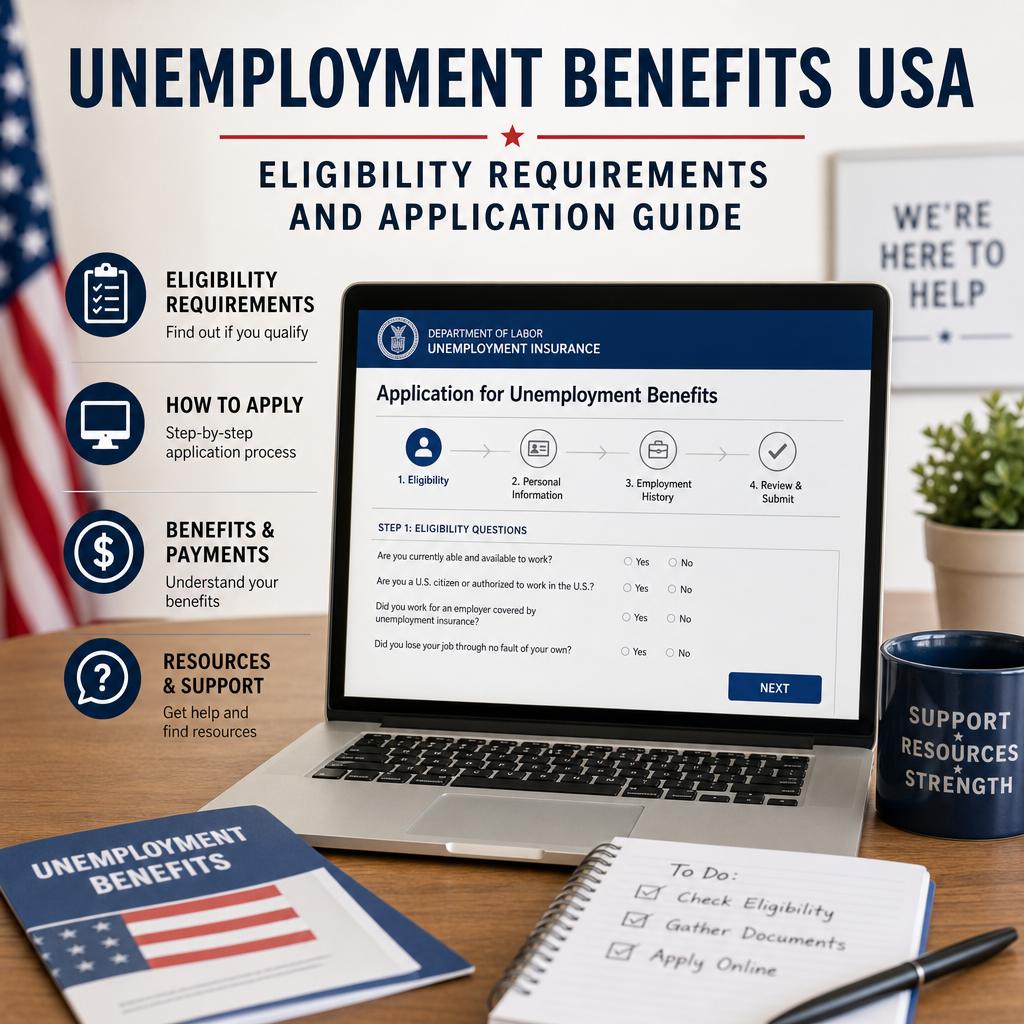
Unemployment benefits in the USA are cash payments generally funded through employer payroll taxes and administered by state workforce agencies. The program is designed to help people who lose work through no fault of their own and are actively looking for a new job.
While the federal government sets broad rules, each state manages its own unemployment insurance program. That means:
- Eligibility rules can differ by state
- Benefit amounts vary by prior earnings and state formulas
- Application systems and deadlines are not the same everywhere
- Requirements for continued eligibility may also change by location
In most cases, unemployment benefits are temporary. They are intended to provide a financial bridge, not a long-term income source.
Who May Qualify for Unemployment Benefits in the USA?
To qualify for unemployment benefits in the USA, you usually must meet several basic requirements. States may define these details differently, but the common factors are similar.
1. You Lost Your Job Through No Fault of Your Own
This is one of the most important eligibility rules. In general, you may qualify if you were:
- Laid off
- Separated due to lack of work
- Furloughed
- Released because your position was eliminated
You may not qualify if you quit voluntarily without a valid work-related reason or were fired for misconduct. That said, some situations are more nuanced. For example, leaving a job due to unsafe conditions, harassment, or serious medical issues may be treated differently depending on the state.
2. You Earned Enough Wages During the Base Period
Most states use a “base period” to determine eligibility. This is usually a specific 12-month period before you file your claim. During that time, you must have earned enough wages or worked enough hours to establish a valid claim.
The exact earnings threshold depends on state law. If you recently entered the workforce, changed jobs, or had inconsistent employment, this requirement may affect whether you qualify.
3. You Are Available and Able to Work
To receive unemployment benefits in the USA, you generally must be:
- Able to work
- Available for work
- Actively seeking employment
If you are too ill to work, traveling without job-search availability, or not ready to accept suitable work, your benefits may be delayed or denied. Some states also require you to register with a state job service or online labor exchange.
4. You Are Searching for Work
Most states require ongoing job search efforts. You may need to document:
- Employer names
- Dates you applied
- Job titles or positions
- Contact information
- Results of interviews or follow-ups
Failing to complete required work-search activities can jeopardize your benefits.
5. You Meet Any State-Specific Rules
Some states have additional requirements, such as:
- Attending job training or orientation sessions
- Filing weekly or biweekly certifications
- Accepting suitable work offers
- Reporting pension income, severance pay, or part-time earnings
Because rules differ, it’s essential to review your state unemployment agency’s guidance before and after filing.
Common Reasons a Claim May Be Denied
Understanding common denial reasons can help you avoid surprises. A claim may be denied if:
- You quit without good cause recognized by the state
- You were fired for misconduct
- You did not earn enough wages in the base period
- You are unavailable for work
- You missed deadlines or failed to certify weekly
- You did not complete the required job search
- You provided incomplete or inaccurate information
If your claim is denied, you may still have appeal rights. Many states allow you to challenge a decision within a set time frame.
How to Apply for Unemployment Benefits in the USA
Applying for unemployment benefits in the USA is usually done through your state’s unemployment website. The process is fairly standardized, but the exact steps vary by state.
Step 1: Gather Your Information
Before filing, collect the details you’ll likely need:
- Social Security number
- Government-issued ID
- Mailing address and phone number
- Email address
- Employment history for the last 18 months
- Employer names, addresses, and dates worked
- Reason for job separation
- Bank account information for direct deposit, if available
- Alien registration number, if applicable and required by your state
Having this information ready can make the application faster and reduce errors.
Step 2: File Your Initial Claim
Submit your claim online through your state unemployment insurance portal. Some states also allow filing by phone or in person, but online filing is usually the fastest method.
When completing the application, answer carefully and honestly. The agency may contact your former employer to verify your separation reason and wage history.
Step 3: Complete Any Required Identity Verification
Many states require identity verification to prevent fraud. You may need to upload documents or complete verification through a secure portal.
Common documents include:
- Driver’s license or state ID
- Passport
- Social Security card
- Utility bill or other proof of address
If verification is requested, respond promptly. Delays can hold up your payments.
Step 4: Wait for a Determination
After filing, the state will review your claim and determine whether you qualify. This process may take days or weeks depending on workload, employer responses, and any issues needing review.
You may receive a notice explaining:
- Whether your claim was approved or denied
- Your weekly benefit amount
- Your benefit duration
- Your work-search requirements
- How to appeal if necessary
Step 5: Certify for Benefits Regularly
Approval does not mean automatic payment forever. Most states require you to certify weekly or every two weeks that you:
- Remain unemployed or partially employed
- Are able and available to work
- Completed your work-search requirements
- Reported any earnings, severance, or other income
If you miss a certification, payment may be delayed or stopped.
What Factors Affect the Benefit Amount?
The amount you receive depends on state law and your prior wages. In general, states calculate benefits based on your earnings during the base period.
Factors that may affect your payment include:
- Your highest earning quarter or average wages
- State maximum and minimum benefit limits
- Part-time earnings while collecting benefits
- Severance, vacation pay, or pension income
- Dependents in some states
Each state publishes its own benefit calculator or formula. If you want to estimate your payment, check your state agency’s official site rather than relying on general online calculators.
How Long Do Benefits Last?
The duration of unemployment benefits in the USA also varies by state and current economic conditions. In many states, eligible workers may receive benefits for up to a set number of weeks, often around 26 weeks under standard programs. However, state law, work history, and special program rules can affect the actual duration.
Extended benefits may sometimes become available during periods of high unemployment, but these are not guaranteed and can change over time.
What to Do If Your Situation Changes
Once you begin receiving benefits, you must report changes that could affect eligibility. This may include:
- Starting a new job
- Working part-time
- Moving to another state
- Becoming unavailable for work
- Receiving severance or vacation pay
- Returning to school full-time
- Refusing an offer of suitable work
Reporting changes quickly helps you avoid overpayments, penalties, or later repayment demands.
Tips to Strengthen Your Claim and Avoid Delays
A successful claim depends not just on eligibility but also on accuracy and follow-through. These practical steps can help:
- Apply as soon as you become unemployed. Waiting can delay your first payment.
- Read your state’s instructions carefully. Small mistakes can lead to denials or processing delays.
- Keep copies of everything. Save confirmations, screenshots, letters, and weekly certifications.
- Track your job search. Use a notebook, spreadsheet, or app to document applications.
- Respond to agency requests quickly. Missing a deadline can interrupt benefits.
- Report earnings honestly. Partial reporting can create overpayment problems later.
- Check your mail and email often. Important notices may arrive through either channel.
Unemployment Benefits and Other Support Options
Unemployment benefits in the USA may not cover all expenses, so it can help to look at additional support programs if needed. Depending on your circumstances, you may also qualify for:
- SNAP food assistance
- Medicaid or state health coverage
- Housing assistance
- Utility assistance programs
- Workforce retraining and job placement services
- Local nonprofit support or emergency aid
Your state workforce agency or local American Job Center may be able to connect you with these resources.
Frequently Asked Questions
1. Can I get unemployment benefits if I was fired?
Possibly, but it depends on the reason. If you were fired for misconduct, you may be disqualified. If you were let go for performance issues, lack of work, or a reason not considered misconduct under state law, you may still qualify. State agencies review these cases individually.
2. What if I quit my job because of a bad work environment?
You may qualify in some cases if you quit for “good cause” recognized by your state, such as unsafe working conditions, harassment, or other serious issues. You will usually need documentation or a clear explanation showing why leaving was necessary.
3. Do I have to keep applying for jobs while receiving benefits?
Yes, in most states you must actively search for work and document your efforts. Requirements vary, but you may need to submit multiple job contacts each week and remain available for suitable employment.
4. Can I collect unemployment if I work part-time?
You may be able to receive partial unemployment benefits if your part-time earnings are below a certain level. You must report all earnings when you certify for benefits. The state will decide how your wages affect your weekly payment.
5. What should I do if my claim is denied?
Review the denial notice carefully and check the appeal deadline. If you believe the decision is wrong, file an appeal on time and provide supporting documents. You may want to gather pay records, termination letters, emails, or witness statements that support your case.
Official Resources
- U.S. Department of Labor: Unemployment Insurance
- CareerOneStop: State Unemployment Benefits
- U.S. Department of Labor: State Unemployment Insurance Agencies
- USA.gov: Unemployment Benefits
- Benefits.gov: Unemployment Insurance Benefits
Conclusion
Understanding unemployment benefits in the USA can make a difficult transition far more manageable. While every state has its own rules, the basics are consistent: you generally must be unemployed through no fault of your own, have enough recent wages, be able and available to work, and keep up with job-search and certification requirements. The key is to apply quickly, answer carefully, and stay organized throughout the process.
If you’ve recently lost your job, don’t wait to learn the rules after the fact. Visit your state unemployment agency’s website, gather your documents, and file as soon as you can. Even if you’re unsure whether you qualify, submitting a claim is often the best way to get an official decision. And if your claim is denied, you may still have the right to appeal.
With the right information and timely action, unemployment benefits can provide a critical financial cushion while you focus on your next opportunity.