Temporary Assistance for Needy Families (TANF): Eligibility and How It Works
Temporary Assistance for Needy Families (TANF): Who Qualifies and How It Works
Temporary Assistance for Needy Families (TANF) is one of the most important public benefit programs in the United States for families facing financial hardship. If you’re trying to understand Temporary Assistance for Needy Families (TANF), who qualifies, and how the program works, you’re not alone. The rules can feel confusing because TANF is federally funded but administered by each state, which means eligibility and benefits can vary depending on where you live.
At its core, TANF provides short-term cash assistance and support services to help low-income families meet basic needs while working toward financial stability. That may include help with rent, utilities, child care, job training, and employment services. For many households, TANF serves as a bridge during a difficult period—not a long-term solution, but a practical support system that can help families get back on their feet.
What Is TANF?
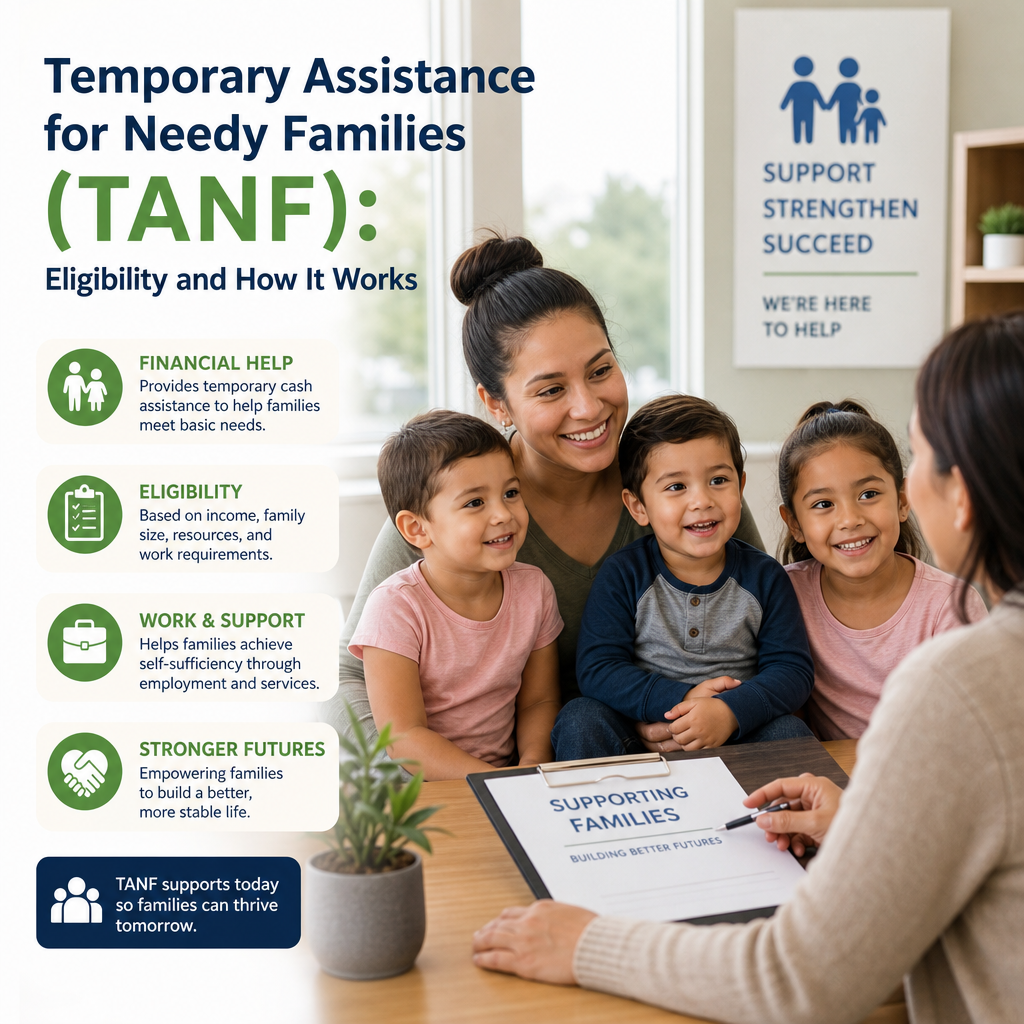
TANF stands for Temporary Assistance for Needy Families, a federal block grant program created in 1996. It replaced the earlier Aid to Families with Dependent Children (AFDC) program and shifted more control to the states. Instead of one national benefit formula, states design and run their own TANF programs within federal guidelines.
That flexibility means TANF can look different from state to state. One state may focus heavily on job placement and work participation, while another may offer more robust child care support or emergency assistance. Still, the basic goal is the same: help low-income families with children achieve economic self-sufficiency.
What TANF Typically Provides
Depending on your state, TANF may offer:
- Monthly cash assistance
- Job search and employment support
- Vocational training
- Child care assistance
- Transportation help
- Work readiness services
- Emergency support in some situations
Because each state administers its own version of TANF, the amount of assistance and available services can vary widely.
Who Qualifies for TANF?
Eligibility for Temporary Assistance for Needy Families (TANF) depends on several factors, including your income, household size, state rules, and immigration status. While the details differ by state, most programs are designed for families with children who have limited financial resources.
Basic Eligibility Requirements
In general, you may qualify if you:
- Live in the state where you’re applying
- Have a child under 18 in the household, or meet another qualifying family structure
- Have low income and limited countable assets
- Are a U.S. citizen or meet qualified non-citizen requirements
- Cooperate with child support rules, if applicable
- Agree to work or participate in approved activities, unless you qualify for an exemption
Some states also allow pregnant individuals to receive TANF in certain situations, especially near the end of pregnancy or after the child is born.
Income and Asset Limits
TANF is means-tested, which means your household income and assets are reviewed to determine whether you qualify. States set their own thresholds, but they usually look at:
- Earned income from jobs
- Unearned income such as child support or unemployment benefits
- Cash on hand or money in bank accounts
- Vehicles and other assets, depending on state rules
Some states disregard certain income or assets when calculating eligibility, which can help families qualify even if they have a small amount of savings or part-time work income.
Family Composition Matters
Most TANF programs prioritize households with dependent children. This often includes:
- Parents or guardians caring for children
- Single-parent households
- Two-parent households with limited income
- Relatives caring for children, such as grandparents or other kin caregivers
In some states, child-only TANF cases are available when a child lives with a relative or guardian who is not included in the assistance unit.
How TANF Works
Understanding how Temporary Assistance for Needy Families (TANF) works can make the application and approval process less overwhelming. While the details vary by state, the general steps are similar.
1. Apply Through Your State Agency
You typically apply for TANF through your state or county human services agency, Department of Social Services, or local welfare office. Many states let you apply online, by mail, in person, or over the phone.
During the application, you’ll likely need to provide:
- Identification
- Proof of residence
- Social Security numbers, if available
- Proof of income
- Rent or housing information
- Information about children in the household
- Bank statements or other asset records
- Immigration or citizenship documentation, if needed
2. Complete an Interview or Verification Process
Most states require an interview or follow-up review. The agency may ask questions to verify your household size, income, work status, and expenses. If documents are missing, they may give you time to submit them.
Being organized can help speed up the process. Keep copies of everything you send and note deadlines carefully.
3. Receive a Eligibility Decision
If you qualify, the state will tell you:
- Whether you’re approved
- How much cash assistance you’ll receive
- How long benefits may last
- What work or reporting requirements apply
If you’re denied, you usually have the right to appeal.
4. Meet Ongoing Requirements
TANF is not usually a “set it and forget it” benefit. Families often must complete periodic recertification and report changes such as:
- Increased income
- A new household member
- A change in address
- Changes in child care or custody
- Employment status changes
If you fail to report required information on time, your benefits could be reduced or stopped.
Work Requirements and Participation Rules
A major feature of Temporary Assistance for Needy Families (TANF) is its emphasis on work and self-sufficiency. Many adult recipients must participate in approved work-related activities unless they qualify for an exemption.
Common Work Activities
States may require participation in activities such as:
- Paid employment
- Job search
- Job readiness training
- Vocational education
- Community service
- On-the-job training
- Work experience programs
The exact rules depend on the state and on your personal situation.
Exemptions and Special Circumstances
Some recipients may be exempt from work requirements, including people who:
- Care for a very young child
- Have a disability
- Are experiencing domestic violence
- Face temporary barriers such as serious illness
- Are otherwise unable to participate under state rules
These exemptions are not automatic in every state, so it’s important to ask your local agency about your options.
What Happens If You Don’t Meet Requirements?
If you fail to meet work or reporting obligations, your TANF benefits may be reduced, suspended, or terminated. Many states call this a sanction.
If you’re struggling to comply, contact your caseworker as soon as possible. Sometimes a missed appointment, transportation issue, or child care problem can be addressed before your benefits are affected.
How Long Can You Receive TANF?
TANF is intended to be temporary assistance, and federal law generally limits how long a family can receive federally funded cash aid. In many cases, this time limit is 60 months over a lifetime, but states can impose shorter limits or stricter rules.
Some states use the full 60 months, while others may limit benefits for adult recipients sooner. Certain hardship exceptions may apply, depending on state policy and individual circumstances.
Because time limits can be complicated, it’s smart to keep track of:
- Your approval date
- Monthly benefit notices
- Any sanctions or interruptions
- Exemptions or extensions you may receive
If you think you’re nearing a time limit, contact your agency early to ask about extension policies or alternate supports.
What TANF Does Not Cover
Although TANF can be very helpful, it has limits. It does not replace a full income or solve every financial problem. In many states, TANF cash benefits are modest, and families often need to combine TANF with other resources.
TANF may not cover:
- All rent or mortgage costs
- Full child care needs
- Major medical bills
- Long-term income support
- Every household expense
That’s why TANF often works best as part of a broader support plan that may include SNAP, Medicaid, housing assistance, child care subsidies, and local nonprofit resources.
How TANF Fits With Other Benefits
Families often use TANF alongside other public assistance programs. In fact, TANF may help connect you to broader support.
Common Programs That May Work Alongside TANF
- SNAP: Helps with grocery expenses
- Medicaid or CHIP: Provides health coverage for eligible families and children
- Child care assistance: Helps working parents afford care
- Housing assistance: Can reduce rent burden
- WIC: Supports pregnant people, infants, and young children with nutrition needs
A caseworker or benefits navigator can help you understand how one program may affect another. For example, receiving TANF may automatically qualify you for certain related services in your state.
Practical Tips for Applying
Applying for Temporary Assistance for Needy Families (TANF) can feel stressful, especially when you’re already under financial pressure. These practical tips can make the process smoother:
- Gather documents early
Collect IDs, pay stubs, lease information, and child-related records before you apply. - Be honest and complete
Report income and household details accurately. Incomplete information can delay your case. - Keep copies of everything
Save application forms, letters, notices, and proof of submissions. - Check deadlines often
Missed deadlines can affect approval, renewals, or sanctions. - Follow up with your caseworker
If something is unclear, ask questions right away. - Ask about related supports
You may also qualify for SNAP, Medicaid, or child care help.
Example: A Single Parent Returning to Work
Imagine a single mother with two children who recently lost a steady job. She finds part-time work but still cannot cover rent, groceries, and child care. TANF may provide short-term cash assistance while she looks for full-time employment. The state might also connect her to job training and child care support so she can transition into a more stable income stream.
That’s a common example of how TANF is intended to work: temporary help paired with employment-focused services.
Common Reasons Applications Get Delayed or Denied
Even when a family may qualify, TANF applications can be delayed. Common reasons include:
- Missing documents
- Unverified income
- Incomplete household information
- Failure to attend an interview
- Not meeting state residency rules
- Not satisfying citizenship or immigration requirements
- Exceeding income or asset limits
If your application is denied, read the notice carefully. It should explain the reason and tell you how to appeal. In some cases, a simple document correction can change the outcome.
Frequently Asked Questions
1. Is TANF the same in every state?
No. TANF is a federal program, but each state runs its own version. That means eligibility rules, benefit amounts, work requirements, and time limits can differ significantly. Always check with your state agency for the most accurate information.
2. Can you get TANF if you work?
Yes, in many cases. TANF is designed for low-income families, including working families whose earnings are still too low to cover basic needs. Your income must fall within your state’s limits, and working recipients may still need to meet participation or reporting rules.
3. Do you have to repay TANF?
Usually, no. TANF cash assistance is not a loan. However, if you received benefits you were not eligible for due to an error or unreported change, the state may seek repayment in some situations.
4. Can grandparents or relatives apply for TANF for a child?
Yes, in many states. Relative caregivers may qualify for child-only TANF cases if they are caring for a dependent child. In those cases, the child may receive benefits even if the caregiver’s income is not counted the same way as a parent’s income.
5. What should I do if my TANF case is denied or closed?
Read the notice carefully and act quickly. The notice should explain why the case was denied or closed and describe your appeal rights. You may also be able to submit missing documents, request a fair hearing, or reapply if your circumstances change.
Official Resources
- U.S. Department of Health & Human Services: Temporary Assistance for Needy Families (TANF)
- Benefits.gov: Temporary Assistance for Needy Families
- National Conference of State Legislatures: TANF Overview
- USA.gov: Government Benefits and Financial Help
- Congressional Research Service: TANF Program
Conclusion
Temporary Assistance for Needy Families (TANF) can be a vital resource for families who are working through unemployment, low wages, or a temporary financial setback. While the program is not the same in every state, its purpose is consistent: provide short-term help and connect families to services that support long-term stability.
If you’re considering applying, start by reviewing your state’s eligibility rules, gathering the documents you’ll need, and understanding any work or reporting requirements. If you’re already receiving benefits, keep up with recertification deadlines and report changes promptly so you can avoid disruptions. TANF works best when families use it as part of a broader plan that may include child care assistance, health coverage, nutrition support, and employment services.
For families in crisis, that combination of cash assistance and support services can make a real difference. The next step is simple: learn your state’s TANF rules, confirm whether you qualify, and take action early so you can get the help you need without unnecessary delays.