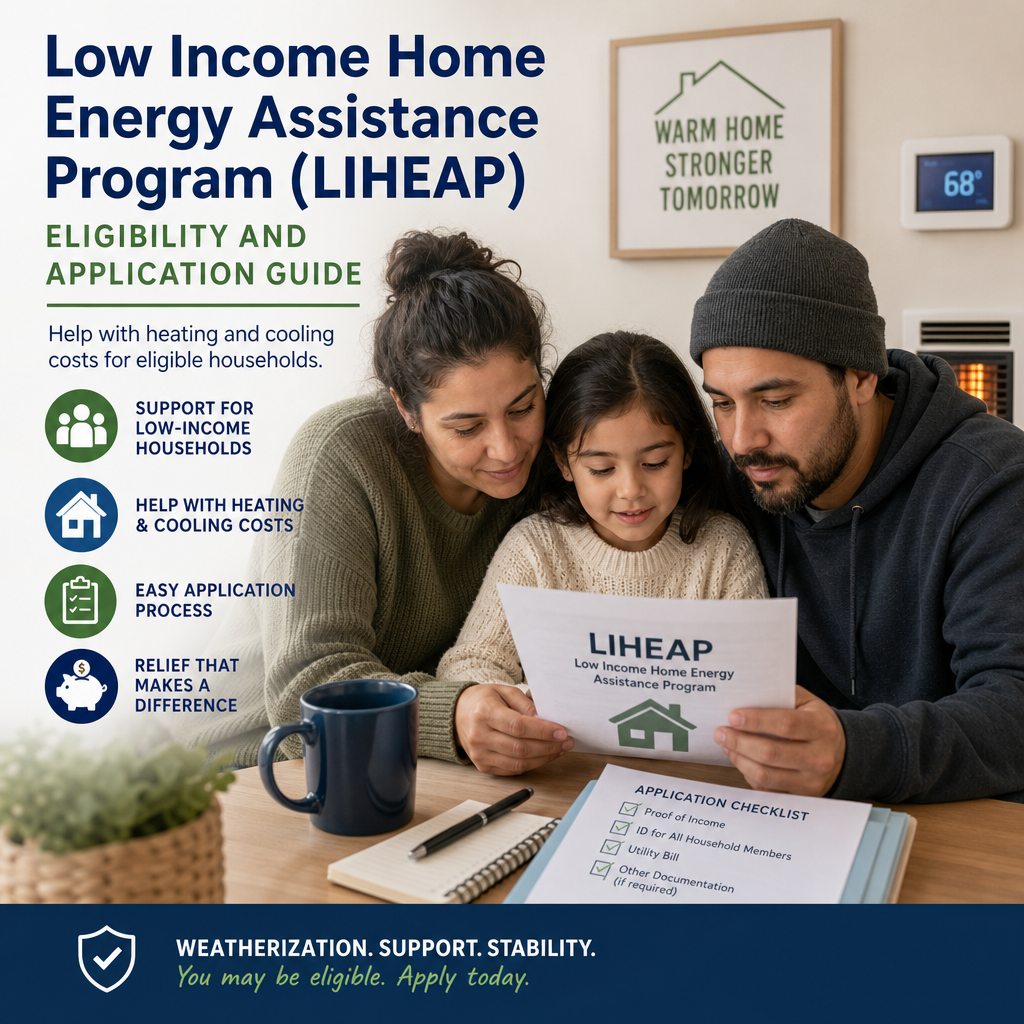
Low Income Home Energy Assistance Program (LIHEAP) Eligibility and Application Guide
LIHEAP can help eligible households cover heating and cooling bills, prevent shutoffs, and manage energy emergencies without taking on debt. Learn how LIHEAP eligibility works, what benefits you may qualify for, and how to apply in your area.
By: Emilly Adams on July 25, 2026
If you’re struggling to keep up with heating or cooling bills, the Low Income Home Energy Assistance Program (LIHEAP) may be one of the most important resources available to you. This federal program helps eligible households pay for home energy costs, avoid utility shutoffs, and in some cases make weather-related repairs that improve energy efficiency.
Because LIHEAP is administered by states, tribes, and territories, the exact rules can vary. That can make the process feel confusing at first. This guide breaks down how the Low Income Home Energy Assistance Program (LIHEAP) works, who typically qualifies, how to apply, and what to expect after you submit an application.
What Is the Low Income Home Energy Assistance Program (LIHEAP)?
The Low Income Home Energy Assistance Program (LIHEAP) is a federally funded assistance program designed to help low-income households manage energy expenses. It is not a loan, and in most cases, it does not need to be repaid.
LIHEAP can help with:
Heating bills
Cooling costs
Utility arrears or past-due balances
Emergency energy crises
Certain weatherization or minor energy-related home repairs, depending on local rules
States and local agencies run the program, so benefits, eligibility rules, and application windows can differ by location. Some areas focus heavily on winter heating assistance, while others offer help with summer cooling or emergency shutoff prevention.
How LIHEAP Helps Households
The Low Income Home Energy Assistance Program serves households facing energy insecurity in several ways. Understanding these services can help you know what kind of help to ask for.
Regular Energy Bill Assistance
Many households use LIHEAP to offset seasonal energy costs. This may be a one-time benefit applied directly to your utility account or paid to your heating vendor.
Crisis Assistance
If you are at risk of losing heat, electricity, or another essential energy service, LIHEAP may offer emergency assistance. This can help prevent shutoff or restore service more quickly.
Cooling Assistance
In warmer climates or during summer months, some LIHEAP programs help with electricity costs related to cooling. In extreme heat, this support can be especially important for older adults, young children, and people with medical needs.
Weatherization and Energy-Related Repairs
Some LIHEAP-funded programs may help improve your home’s energy efficiency through insulation, sealing leaks, or addressing minor repairs tied to energy loss. These services can reduce energy waste and may lower future bills.
LIHEAP Eligibility: Who Can Qualify?
Eligibility for the Low Income Home Energy Assistance Program (LIHEAP) generally depends on income, household size, and residency. However, because programs are administered locally, the exact standards vary.
Income Requirements
Most LIHEAP programs use household income limits based on the federal poverty level, state median income, or another local guideline. In general, applicants must have a low enough household income to qualify.
Your household income usually includes:
Wages and salaries
Self-employment income
Social Security benefits
Unemployment benefits
Pension income
Certain other sources of countable income
Some programs also automatically qualify households that already participate in certain public benefit programs, but this is not universal.
Household Size Matters
A larger household often has a higher income limit than a smaller one. LIHEAP agencies typically compare your total household income to a guideline based on the number of people living in the home.
Residency Rules
To qualify, you usually must live in the state, tribe, or territory where you apply. You may also need to provide proof that you are responsible for the heating or cooling bill, though some programs assist renters whose utilities are included in rent.
Priority Groups
Many LIHEAP offices give priority to households that include:
Older adults
Young children
People with disabilities
Individuals with serious medical conditions
Households facing utility disconnection or fuel shortages
If you are in immediate danger of losing heat or electricity, mention that when you apply. Emergency cases are often handled differently from standard applications.
Documents Commonly Needed for LIHEAP
Before you start the application, gather your paperwork. Having everything ready can help avoid delays.
Typical Documents
Most LIHEAP offices ask for some combination of:
Photo identification for the applicant
Proof of residence, such as a lease, utility bill, or mail
Social Security numbers or other identification for household members, if required locally
Proof of income for all household members
Recent utility bills or shutoff notices
Heating fuel statements, if you use propane, oil, wood, or another delivered fuel
Proof of benefits, if you receive assistance such as SNAP or SSI
Rental agreement, if utilities are included in rent
If You Have No Utility Bill in Your Name
Some renters do not receive a utility bill directly. In that case, your local agency may accept a lease, rent receipt, landlord verification, or another form of proof showing that you pay for energy costs indirectly.
How to Apply for the Low Income Home Energy Assistance Program
Applying for LIHEAP is usually straightforward, but the process depends on where you live. Most states offer online, mail, in-person, or phone application options.
Step 1: Find Your Local LIHEAP Office
The first step is to locate the agency that serves your area. Since LIHEAP is administered locally, your state human services department or community action agency will usually handle the application.
Step 2: Check the Application Period
Some places accept applications year-round, while others open at specific times for winter heating or summer cooling assistance. If you miss the application window, you may need to wait for the next cycle.
Step 3: Gather Your Documents
Prepare the required documents before you apply. Missing paperwork is one of the most common reasons for delays.
Step 4: Submit the Application
Depending on your location, you may be able to apply:
Online through a state portal
By mail
In person at a local office
By phone with a caseworker
Be sure to answer all questions carefully and completely. If you’re unsure how to report income or household members, ask the local office before submitting.
Step 5: Follow Up if Needed
After submission, you may be asked to provide additional documents or clarification. Respond as quickly as possible to avoid delays.
What Happens After You Apply?
Once your application is received, the agency reviews your household information, income, and utility situation. If approved, your benefit is usually sent directly to the utility company or fuel vendor, or applied to your account.
Possible Outcomes
You may receive:
A heating or cooling benefit
Crisis assistance for shutoff prevention
Support for emergency fuel delivery
Weatherization or repair referrals, if available
If you are denied, the agency should explain why. In many cases, you can appeal or reapply if your situation changes.
Tips for a Strong LIHEAP Application
A complete and accurate application can make a big difference. Keep these practical tips in mind:
Apply as early as possible. Funding can be limited in some areas.
Double-check income details. Report all required income sources accurately.
Keep copies of everything. Save your application, proof of income, and utility bills.
Respond quickly to requests. Delays often happen when additional documents are needed.
Ask about emergency options. If you are facing shutoff, make that clear right away.
Update your contact information. Missed phone calls or letters can slow down the process.
LIHEAP and Other Energy Assistance Programs
The Low Income Home Energy Assistance Program (LIHEAP) is only one form of support. Depending on where you live, you may also qualify for additional help through:
Utility company payment plans
State emergency energy funds
Weatherization Assistance Program services
Local nonprofit energy relief programs
Fuel assistance from community action agencies
If LIHEAP does not cover everything you need, ask local providers about other programs that may work alongside it.
Common Mistakes to Avoid
Many applicants run into avoidable problems. Watch out for these issues:
Leaving Out Household Members
If someone lives in your home and should be counted in the household, include them unless your local rules say otherwise.
Reporting Incomplete Income
Be sure to include all required income sources. Forgetting unemployment benefits, self-employment income, or a part-time job can delay processing.
Missing Deadlines
LIHEAP often operates with limited funding and application periods. Waiting too long can mean missing the chance to apply.
Ignoring Requests for More Information
If the agency asks for additional documents, send them promptly. An otherwise eligible application may sit idle if paperwork is incomplete.
Understanding LIHEAP Benefits by Household Situation
Different households may need LIHEAP for different reasons.
Homeowners
Homeowners may use LIHEAP to help pay heating bills, avoid shutoff, or cover fuel deliveries. Some homeowners may also qualify for weatherization support.
Renters
Renters may qualify if they pay utilities directly or indirectly through rent, depending on local program rules. A lease or landlord statement may be needed.
Households With Delivered Fuel
If you use oil, propane, kerosene, or wood, you may need to show fuel tank levels, vendor statements, or delivery invoices. Crisis benefits can be especially helpful for these households in cold weather.
Households Facing Medical Risks
If someone in your home has a health condition that makes stable temperatures important, tell the LIHEAP office. You may be asked to provide documentation if local policy gives priority to medical needs.
Frequently Asked Questions
1. Is LIHEAP the same in every state?
No. The Low Income Home Energy Assistance Program is federally funded, but states, tribes, and territories decide how to run it locally. That means income limits, application methods, and benefit amounts can differ depending on where you live.
2. Can renters apply for LIHEAP?
Yes, many renters can apply for LIHEAP. If utilities are included in rent or not billed in the tenant’s name, you may still qualify in some areas. You may need to provide a lease, rent receipt, or landlord verification.
3. Does LIHEAP only help with heating bills?
No. While heating assistance is a major part of the program, LIHEAP may also help with cooling costs, utility arrears, shutoff prevention, emergency fuel, and certain energy-related home repairs or weatherization services.
4. Do I have to repay LIHEAP benefits?
Usually no. LIHEAP is a grant-based assistance program, not a loan. In most cases, you do not repay the benefit if you qualify and receive help.
5. What should I do if I’m facing utility shutoff?
Apply for LIHEAP immediately and tell the local agency that your household is in crisis. Also contact your utility company right away to ask about payment arrangements, shutoff holds, or emergency protections while your application is being reviewed.
The Low Income Home Energy Assistance Program (LIHEAP) can be a crucial safety net for households that are trying to keep up with rising energy costs. Whether you need help with heating, cooling, a past-due bill, or an emergency shutoff threat, LIHEAP may provide relief when it matters most. The key is to understand your local rules, gather your documents early, and apply as soon as your program opens.
Because LIHEAP is run by states and local agencies, no two applications are exactly alike. Still, the basic process is similar: confirm eligibility, submit accurate information, and follow up quickly if the office asks for more details. If you are not sure where to start, your state human services office or local community action agency can point you in the right direction.
Taking the next step now can help you avoid a crisis later. If your household is struggling with energy costs, learning how the Low Income Home Energy Assistance Program works may be the practical support you need to stay safe, comfortable, and connected.
Emily A, holds a Master's degree in Public Administration (MPA) and has over 7 years of experience researching federal and state assistance programs. She writes educational content focused on government benefits, public policy, and community resources, using information from official agencies to help readers understand available programs and eligibility requirements.