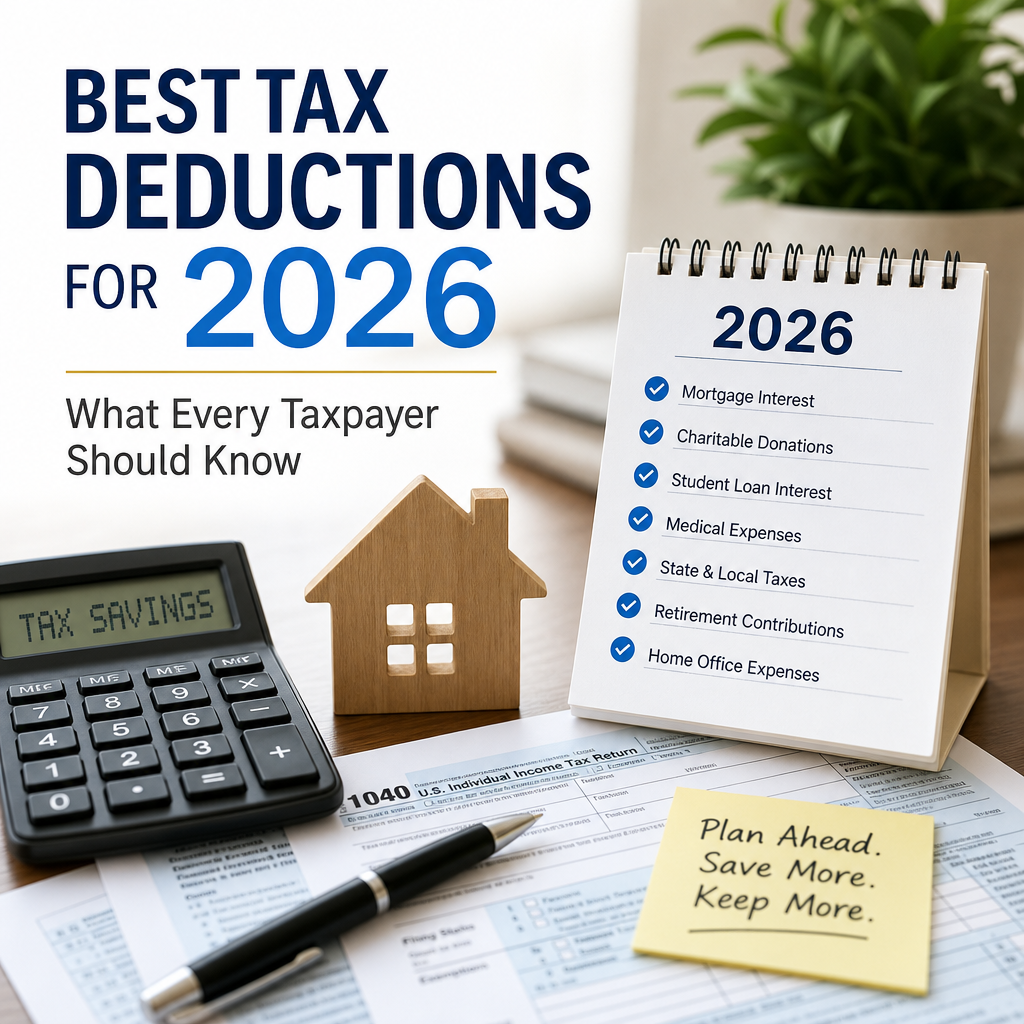
Best Tax Deductions for 2026: What Every Taxpayer Should Know
Looking for ways to lower your tax bill? The best tax deductions for the 2026 tax year can help reduce your taxable income and keep more money in your pocket, whether you’re an employee, freelancer, homeowner, or parent.
By: Mary Mitchell on July 24, 2026
Best Tax Deductions for the 2026 Tax Year: What Every American Taxpayer Should Know
Tax season can feel overwhelming, but understanding the best tax deductions for the 2026 tax year can make a real difference in how much you owe. Whether you’re a W-2 employee, a freelancer, a homeowner, a parent, or someone planning for retirement, knowing which deductions may apply to you helps you keep more of your hard-earned money.
The tax code changes often, and the rules for the 2026 tax year may look different from what you remember from prior filing seasons. That’s why it pays to focus on deductions that are well-established, commonly available, and worth reviewing carefully. In many cases, the biggest savings come from simply organizing your records and claiming the deductions you’re already entitled to.
This guide breaks down the best tax deductions for the 2026 tax year, explains who may benefit most, and shows how to approach them with confidence.
What Tax Deductions Actually Do
A tax deduction lowers your taxable income. That means you may not be reducing your tax bill dollar for dollar, but you are reducing the amount of income the IRS uses to calculate your taxes.
For example, if you earn $80,000 and qualify for $10,000 in deductions, you may be taxed on a lower amount of income, depending on your filing situation and whether you itemize or take the standard deduction.
Deductions vs. Credits
It helps to understand the difference:
Tax deductions reduce taxable income.
Tax credits reduce your tax bill directly.
Both matter, but deductions are often the first place taxpayers look when trying to lower their liability.
Best Tax Deductions for the 2026 Tax Year
Below are some of the most valuable deductions taxpayers should review for the 2026 filing season. Some apply broadly, while others depend on your job, family situation, or spending habits.
1. Standard Deduction
The standard deduction is one of the most important tax benefits for most Americans. Instead of itemizing individual expenses, many taxpayers can claim a flat deduction amount based on filing status.
For many people, this is the simplest and most beneficial option.
Why it matters
You generally want to compare:
Your itemized deductions
Your standard deduction amount
If your itemized total is higher, itemizing may save you more. If not, the standard deduction is usually the better choice.
Who benefits most
Taxpayers with fewer deductible expenses
Renters
People without large mortgage interest, medical bills, or charitable donations
Busy filers who want a simpler return
2. Mortgage Interest Deduction
If you own a home and itemize, the mortgage interest deduction can be one of the biggest deductions available.
This deduction may apply to interest paid on:
A primary residence
A second home, in some situations
Mortgage debt that meets IRS requirements
What to keep in mind
You typically need IRS Form 1098 from your lender. Also, the amount you can deduct may depend on when your mortgage was taken out and how the debt is structured.
Practical example
If you paid a significant amount of interest during the year, especially early in your mortgage term, itemizing could be worthwhile.
3. State and Local Tax Deduction
The state and local tax deduction, often called the SALT deduction, may apply to:
State income taxes
State and local property taxes
Sales tax, in some cases instead of income tax
This deduction can be especially useful for homeowners and taxpayers in states with higher taxes.
Important limitation
There is a cap on how much state and local tax you can deduct. Because of that, high-income households and property owners should review the rules carefully before assuming they can deduct everything they paid.
Good recordkeeping matters
Keep:
Property tax statements
State tax payment records
Sales tax records if you claim sales tax instead of income tax
4. Charitable Contributions
If you give to qualified charities, the charitable contributions deduction may help reduce your taxable income.
This can include donations of:
Cash
Clothing
Household goods
Certain noncash items
Appreciated assets, in some situations
Best practices
To support your deduction, keep:
Donation receipts
Bank statements
Written acknowledgments for larger gifts
Records of donated items and their condition
Example
If you regularly donate during the holidays or clean out your closet each year, those contributions can add up. Just be sure the organization is a qualified charity and your records are complete.
5. Medical and Dental Expenses
Medical costs can be expensive, and some medical and dental expenses may be deductible if you itemize and your total qualified expenses are high enough under IRS rules.
This may include:
Doctor visits
Dental work
Prescription medications
Certain medical devices
Health insurance premiums paid with after-tax dollars, in some cases
What taxpayers often overlook
People sometimes forget they can include out-of-pocket expenses such as:
Copays
Mileage for medical travel, if allowed under IRS rules
Vision care
Long-term care-related expenses, when eligible
Tip
Track medical bills throughout the year. If you had a major procedure or ongoing treatment, these deductions can become more valuable than expected.
6. Retirement Contributions
Contributions to certain retirement accounts may lower your taxable income, depending on the account type and your eligibility.
Common accounts include:
Traditional IRA
Traditional 401(k)
SEP IRA
Solo 401(k), for self-employed individuals
SIMPLE IRA
Why this matters
Retirement contributions help you in two ways:
They can reduce current taxable income.
They help you build long-term financial security.
Best for
Employees with workplace retirement plans
Freelancers and small business owners
Taxpayers who want to reduce taxable income before filing
7. Self-Employment and Business Expenses
If you freelance, run a side hustle, or own a business, self-employment deductions can be some of the most valuable tax breaks available.
Common deductible business expenses may include:
Home office costs, if you qualify
Internet and phone use for business
Business software
Office supplies
Advertising and marketing
Professional fees
Travel related to business
Vehicle expenses, if used for business
Home office deduction
The home office deduction is often misunderstood. To qualify, the space generally must be used regularly and exclusively for business.
That means a kitchen table used for both family meals and work usually does not qualify, while a separate room used only as an office may.
Good records are essential
The IRS expects accurate documentation, so keep:
Receipts
Mileage logs
Bank statements
Invoices
Digital records of business purchases
8. Student Loan Interest Deduction
If you’re paying off qualifying student loans, the student loan interest deduction may be worth reviewing.
This deduction can be especially helpful for:
Recent graduates
Young professionals
Parents who borrowed for education
Taxpayers still in the early stages of repayment
Why it matters
Student loan interest can pile up quickly, especially with longer repayment periods. Even a modest deduction can provide useful tax relief.
Keep in mind
You’ll need documentation from your loan servicer, and income limits may apply.
9. Health Savings Account Contributions
If you’re eligible for a Health Savings Account (HSA), contributions may be deductible or excluded from income depending on how they’re made.
HSAs are often powerful because they can offer:
Tax-deductible contributions
Tax-free growth
Tax-free withdrawals for qualified medical expenses
Who should pay attention
People enrolled in qualifying high-deductible health plans
Employees offered an HSA through work
Self-employed taxpayers with eligible coverage
Long-term benefit
An HSA can function like a tax-advantaged medical savings account, making it one of the most flexible tools available for healthcare planning.
10. Educator Expenses
Eligible teachers and certain school professionals may be able to deduct educator expenses for out-of-pocket classroom purchases.
These may include:
Books
Supplies
Classroom materials
Technology used in the classroom
Why this matters
Teachers often spend their own money to support students. This deduction helps offset some of those costs.
Keep receipts
Even small purchases can add up over the year, so save your receipts and track them as you go.
11. Job Search Expenses
For some taxpayers, job hunting can involve deductible costs, depending on current tax law and personal circumstances.
Potential expenses may have included:
Resume printing
Interview travel
Placement agency fees
Career-related costs
Important note
The treatment of job search expenses can change, and not all taxpayers qualify. Before claiming these costs, check the current rules for the 2026 tax year.
12. Moving Expenses for Eligible Members of the Military
Most taxpayers can no longer deduct moving expenses, but eligible military members may still be able to claim this deduction in qualifying situations.
If you’re in the armed forces and moved due to a military order, review the current rules closely.
Itemizing vs. Taking the Standard Deduction
A lot of taxpayers miss savings simply because they don’t compare both options carefully.
Ask yourself:
Do I own a home with significant mortgage interest?
Did I give substantial charitable donations?
Were my medical bills unusually high?
Do I pay a lot in state and local taxes?
Am I self-employed or do I have deductible business expenses?
If several of these apply, itemizing may make sense. If not, the standard deduction may be the smarter choice.
Smart Ways to Maximize Your Deductions in 2026
A few simple habits can make tax time much easier and help you avoid missed opportunities.
1. Track expenses all year
Don’t wait until tax season to sort through receipts. Use a spreadsheet, app, or folder system to organize deductible expenses monthly.
2. Separate personal and business spending
If you’re self-employed, use a dedicated business bank account and credit card. This makes it easier to identify deductible costs.
3. Save supporting documents
Keep records such as:
Receipts
Mileage logs
Bank and credit card statements
Donation acknowledgments
Form 1098
Form W-2 or 1099s
4. Review major life changes
A new home, marriage, child, job change, side business, or college expenses can all affect deductions.
5. Use tax software or a qualified tax professional
Tax rules can be nuanced. A professional can help you avoid mistakes, especially if your return includes home ownership, self-employment, investments, or multiple income sources.
Common Mistakes to Avoid
Even the best tax deductions for the 2026 tax year won’t help if you make avoidable errors.
Watch out for these issues:
Claiming expenses without receipts
Mixing personal and business costs
Forgetting about state tax rules
Overlooking HSA or retirement contributions
Assuming every donation is deductible
Missing filing deadlines or amended return opportunities
A careful, well-documented return is usually better than a rushed one.
When to Get Professional Help
You may want to work with a tax professional if you:
Own a business
Have rental property
Bought or sold a home
Received investment income
Had significant medical expenses
Lived or worked in multiple states
Experienced a major life event
Professional guidance can help you identify deductions you might miss on your own and reduce the chance of filing errors.
Frequently Asked Questions
1. What are the best tax deductions for the 2026 tax year?
The best deductions depend on your situation, but common high-value options include the standard deduction, mortgage interest, state and local taxes, charitable contributions, retirement contributions, business expenses, and HSA contributions. Self-employed taxpayers and homeowners often have the most opportunities.
2. Should I itemize or take the standard deduction?
Compare your itemized expenses against the standard deduction for your filing status. If your eligible itemized deductions are higher, itemizing may lower your tax bill more. If not, the standard deduction is usually the easier and better choice.
3. Can renters claim tax deductions?
Renters usually cannot deduct rent on a federal return, but they may still qualify for other deductions, such as retirement contributions, student loan interest, HSA contributions, educator expenses, or self-employment deductions if applicable. Some states also offer renter-specific tax benefits.
4. What records should I keep for tax deductions?
Keep receipts, bank statements, Form 1098, donation acknowledgments, mileage logs, and any documents that support your claim. Good records are especially important for charitable giving, medical expenses, and business deductions.
5. Are side hustle expenses deductible?
Yes, if the expenses are ordinary and necessary for your business activity. Common examples include software, supplies, advertising, internet use, and business travel. Just make sure you keep clear records and separate business from personal spending.
Knowing the best tax deductions for the 2026 tax year can help you make smarter financial decisions long before you file your return. The biggest takeaway is simple: don’t assume you’re limited to the obvious deductions. Homeowners, business owners, students, retirees, teachers, and even taxpayers with high medical or charitable expenses may all have opportunities to reduce taxable income.
The key is preparation. Keep clean records, review your eligibility early, and compare the standard deduction with itemizing before you file. Small habits like saving receipts, tracking mileage, and organizing forms throughout the year can lead to meaningful savings later.
Tax rules can be complex, but they don’t have to be confusing. With the right approach, you can file more confidently, avoid common mistakes, and make sure you’re claiming the deductions you deserve. Start by reviewing your expenses now, and when in doubt, consult a qualified tax professional or trusted IRS resource so you’re ready for the 2026 tax season.
Mary S, CFP®, is a Certified Financial Planner with over 12 years of experience in personal finance, retirement planning, and wealth management. She writes educational content that helps readers understand financial concepts and make informed decisions based on reliable information.