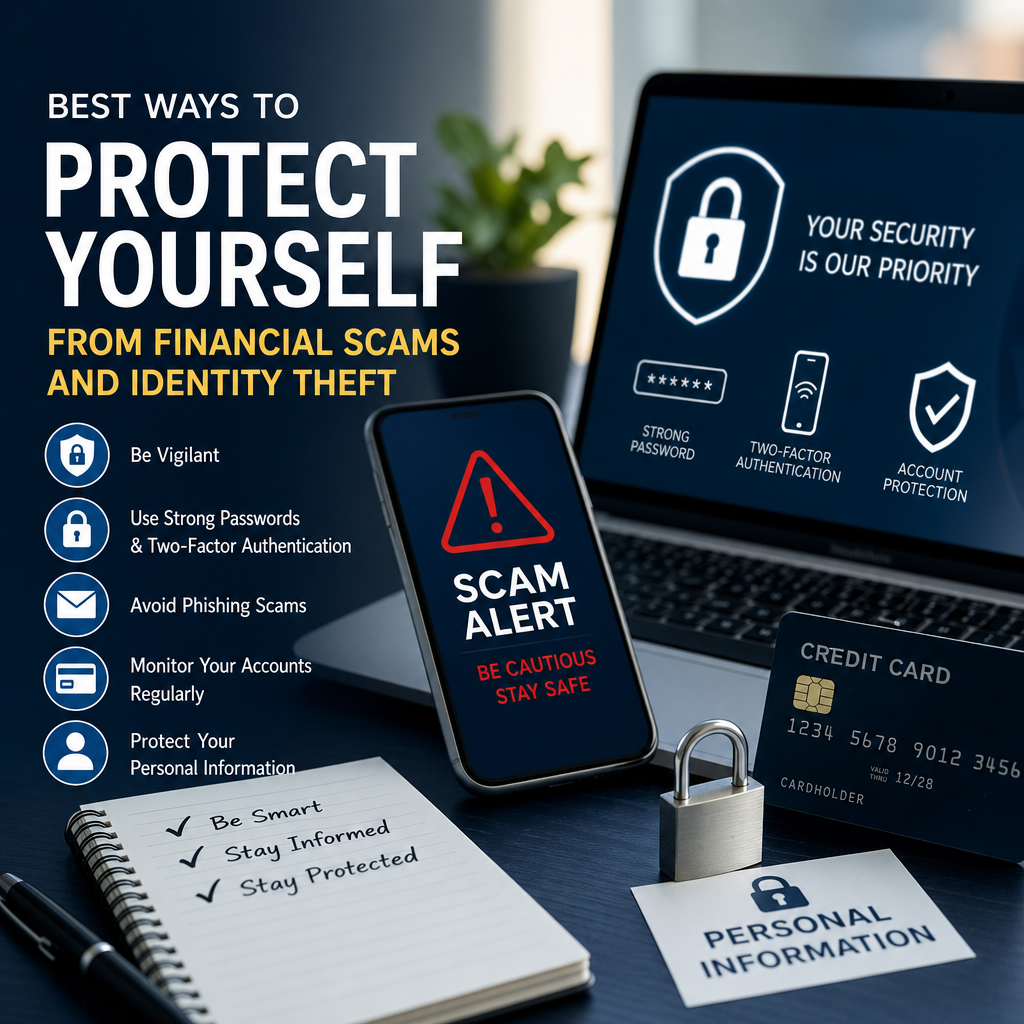
Best Ways to Protect Yourself from Financial Scams and Identity Theft
Financial scams and identity theft can strike when you least expect it, but a few smart habits can make a big difference. Learn how to spot red flags early and protect your money, accounts, and personal information with confidence.
By: Mary Mitchell on July 24, 2026
Best Ways to Protect Yourself from Financial Scams and Identity Theft
Financial scams and identity theft can happen to anyone, and they often start with one small mistake: clicking a fake link, sharing a code, or trusting the wrong caller. The good news is that you can reduce your risk dramatically by building a few smart habits and knowing what warning signs to watch for. If you’re looking for the best ways to protect yourself from financial scams and identity theft, the key is to stay alert, limit your exposure, and act quickly when something feels off.
This guide breaks down practical, real-world steps you can use to protect your money, personal information, and online accounts. Whether you shop online, use mobile banking, or just want to make sure your identity stays secure, these strategies can help.
Why Financial Scams and Identity Theft Keep Growing
Scammers constantly adjust their tactics. They may pretend to be your bank, the IRS, a delivery company, a tech support agent, or even a family member in distress. Identity thieves often combine stolen information from data breaches, phishing emails, and social media profiles to open accounts or make fraudulent purchases.
The threat is not limited to one channel. It can happen through:
Fake emails and text messages
Social media impersonation
Phone calls from “customer support”
Public Wi-Fi interception
Stolen mail or documents
Data breaches at companies you use
The more places you share personal and financial information, the more important it is to manage access carefully.
Best Ways to Protect Yourself from Financial Scams and Identity Theft
1. Use Strong, Unique Passwords for Every Account
Weak or reused passwords are one of the easiest ways for criminals to break in. If one site gets hacked and you use the same login elsewhere, attackers may try the same credentials on banking, email, or shopping accounts.
Use passwords that are:
Long and hard to guess
Unique for each account
Random, not based on personal details
Stored in a reputable password manager
A password manager makes it easier to create and save complex passwords without relying on memory. That simple step can prevent a single breach from turning into a bigger problem.
2. Turn On Multi-Factor Authentication
Multi-factor authentication, or MFA, adds another layer of protection. Even if someone steals your password, they still need a second factor to get into the account.
Common MFA methods include:
A text message code
An authentication app
A hardware security key
A biometric check like fingerprint or face recognition
Whenever possible, use an authentication app or security key instead of text messages, since texts can sometimes be intercepted or redirected.
3. Be Skeptical of Unsolicited Messages
Phishing scams often create a sense of urgency. The message may say your account is locked, a package is delayed, or a payment failed. The goal is to push you into acting before you think.
Before clicking anything, ask:
Do I recognize the sender?
Is the message trying to scare or rush me?
Is the link asking me to log in or share sensitive information?
Does the email address or phone number look slightly off?
If in doubt, do not respond directly. Instead, go to the company’s official website or call the number on your statement, card, or account portal.
4. Never Share Verification Codes or One-Time Passcodes
One of the most common financial scams today involves tricking people into reading back a verification code. A scammer might claim they need the code to reverse a charge, confirm your identity, or help recover your account.
In reality, that code is often the last barrier protecting your account.
Remember:
Legitimate companies will not ask you to share a code they sent you
Never give a one-time passcode to anyone who contacts you unexpectedly
Treat verification codes like your password
If someone pressures you to “prove” who you are by sharing a code, stop the conversation.
5. Check Account Activity Often
Reviewing your bank, credit card, and online account activity can help you catch fraud early. The sooner you spot a problem, the easier it is to limit the damage.
Look for:
Small “test” charges you don’t recognize
Logins from unfamiliar devices or locations
New payees or linked accounts you did not add
Cash withdrawals or transfers you didn’t make
Password reset emails you didn’t request
Set up account alerts for transactions, logins, and profile changes. These notifications can help you respond quickly if something suspicious happens.
6. Freeze Your Credit When You Don’t Need New Accounts
A credit freeze makes it harder for identity thieves to open new credit in your name. It restricts access to your credit report until you lift the freeze.
This is one of the strongest preventive steps you can take if you’re not applying for a loan, new credit card, or mortgage right away.
A credit freeze can help by:
Blocking most new-credit applications
Reducing the chance of fraudulent account openings
Giving you more control over your credit file
You can usually place or lift a freeze for free through the major credit bureaus. If you’re planning to apply for credit soon, temporarily lift it before submitting your application.
7. Guard Your Social Security Number and Other Sensitive Data
Your Social Security number, birth date, bank details, and government ID numbers should be shared only when necessary. Scammers can use fragments of personal data to impersonate you or answer security questions.
Protect sensitive information by:
Not carrying your Social Security card unless needed
Limiting how much personal info you post online
Shredding statements, tax forms, and documents with account details
Asking why a business needs your information before giving it
Avoiding unnecessary copies of IDs
The less personal data exposed, the harder it becomes for criminals to build a full profile of you.
8. Use Secure Internet Connections
Public Wi-Fi is convenient, but it can expose your data if you log into financial accounts on an unsecured network. A bad actor may monitor traffic or create a fake hotspot with a familiar name.
Safer habits include:
Avoiding banking or shopping on public Wi-Fi when possible
Using a trusted virtual private network, or VPN, if appropriate
Turning off auto-connect for unknown networks
Logging out of accounts after use
Making sure websites use HTTPS before entering information
If you must handle financial tasks away from home, use your mobile data connection instead of open Wi-Fi.
9. Keep Your Devices Updated and Protected
Phones, computers, and tablets are common targets for malware and spyware. Software updates often patch security holes that criminals try to exploit.
To reduce your risk:
Install operating system and app updates promptly
Use reputable antivirus or security software
Lock your devices with a passcode, fingerprint, or face ID
Avoid downloading unknown attachments or apps
Remove apps you no longer use
A secure device is a major part of protecting your financial accounts and personal information.
10. Watch Out for Payment Scams
Payment scams can happen through peer-to-peer apps, wire transfers, gift cards, or cryptocurrency. These methods often make money difficult to recover once it’s gone.
Be extra cautious if someone asks you to:
Send money to “verify” an account
Pay a fee to receive a prize or refund
Cover an emergency with gift cards
Move funds to a “safe” account
Use an unusual payment method for a standard purchase
If the payment method feels unusual or you’re being pressured to act immediately, pause and verify independently.
Smart Habits That Make a Big Difference
The best ways to protect yourself from financial scams and identity theft are usually the simple habits you repeat every day. Small steps add up.
Build a Personal Security Routine
Try making security part of your routine:
Review account alerts weekly.
Update passwords when a breach is reported.
Delete suspicious emails and texts instead of engaging.
Lock your credit if you’re not applying for new credit.
Back up important documents securely.
Check your credit reports regularly.
Be Cautious with Personal Information Online
Before posting on social media, consider whether you’re revealing details that help answer security questions or make impersonation easier. Even harmless posts can give scammers clues about your location, habits, family members, or travel plans.
Avoid posting:
Full birth dates
School names tied to security questions
Travel plans in real time
Photos of IDs, tickets, or account screens
Answers to “fun” quizzes that request personal data
Verify Before You Trust
If a message, call, or email seems suspicious, verify it using a separate source.
For example:
Call the company using the number on the official website
Log in directly through the app instead of clicking the email link
Ask a family member directly if they really sent the request
Search for known scam warnings from official sources
Verification takes a few minutes, but it can save you from a major loss.
What to Do If You Think You’ve Been Targeted
Even careful people can get caught in a scam attempt. Acting fast can limit the damage.
Steps to Take Right Away
If you suspect fraud or identity theft:
Change the affected passwords immediately
Contact your bank or card issuer
Freeze or lock compromised accounts
Review recent transactions for unauthorized activity
Place a fraud alert or credit freeze if needed
Report the incident to the appropriate agency or institution
Document Everything
Keep a record of:
Dates and times
Phone numbers, email addresses, or usernames used
Screenshots of texts, emails, or fake websites
Transaction details
Names of representatives you spoke with
This information can help your bank, credit bureau, or law enforcement investigate the issue.
Report It Promptly
Reporting fraud quickly can help reduce losses and prevent further abuse of your identity. Depending on the situation, you may need to contact:
Your financial institution
The credit bureaus
Your email provider
Your phone carrier
Federal or state consumer protection agencies
Simple Warning Signs You Should Not Ignore
Scams often leave clues. If you notice any of the following, slow down and verify:
Unusual urgency
Requests for secrecy
Grammar or branding mistakes
A mismatch between the sender and the claimed organization
Unexpected login alerts
Charges you don’t recognize
Account changes you never made
Trust your instincts. If something feels off, it probably deserves a second look.
Frequently Asked Questions
What is the most effective way to protect against identity theft?
A credit freeze is one of the strongest preventive tools because it makes it much harder for criminals to open new accounts in your name. Pair that with strong passwords, multi-factor authentication, and regular account monitoring for the best protection.
How do I know if a message is a phishing scam?
Phishing messages often create urgency, ask you to click a link or share information, and contain subtle signs of deception, such as a misspelled email address or an unusual domain name. If the message pressures you to act quickly, verify it through the company’s official website or app.
Should I use text message verification codes?
Text codes are better than no second factor at all, but they are not the strongest option. When available, an authentication app or hardware security key offers better protection against interception and account takeover.
What should I do if someone has my Social Security number?
Act quickly. Place a fraud alert or credit freeze, monitor your credit reports, and contact the institutions involved if your number may have been used fraudulently. You should also report identity theft to the appropriate government resources if you see signs of misuse.
Are peer-to-peer payment apps safe to use?
They can be safe when used carefully, but they are also a common target for scams. Only send money to people you know and trust, double-check usernames and payment requests, and avoid sending funds under pressure or for unfamiliar reasons.
Protecting yourself from scams and identity theft does not require perfection. It requires consistent habits, healthy skepticism, and a plan for quick action when something goes wrong. By using strong passwords, enabling multi-factor authentication, monitoring your accounts, freezing your credit when appropriate, and verifying unexpected requests, you can make life much harder for criminals.
The most important takeaway is this: scammers rely on pressure, confusion, and speed. When you slow down and confirm before acting, you gain back control. That one habit alone can prevent many of the most common financial scams. Start with the basics today, then build a routine that fits your life. A few smart moves now can protect your money, your credit, and your peace of mind for years to come.
Mary S, CFP®, is a Certified Financial Planner with over 12 years of experience in personal finance, retirement planning, and wealth management. She writes educational content that helps readers understand financial concepts and make informed decisions based on reliable information.