How Climate Events Are Impacting Communities Across America
Climate events are reshaping daily life in communities across America, from flooded roads and wildfire smoke to longer heat waves and more frequent storms. As these challenges grow, families, businesses, and local leaders are being pushed to adapt faster and plan for a more uncertain future.
By: Peter B on July 25, 2026
How Climate Events Are Influencing Communities Across America
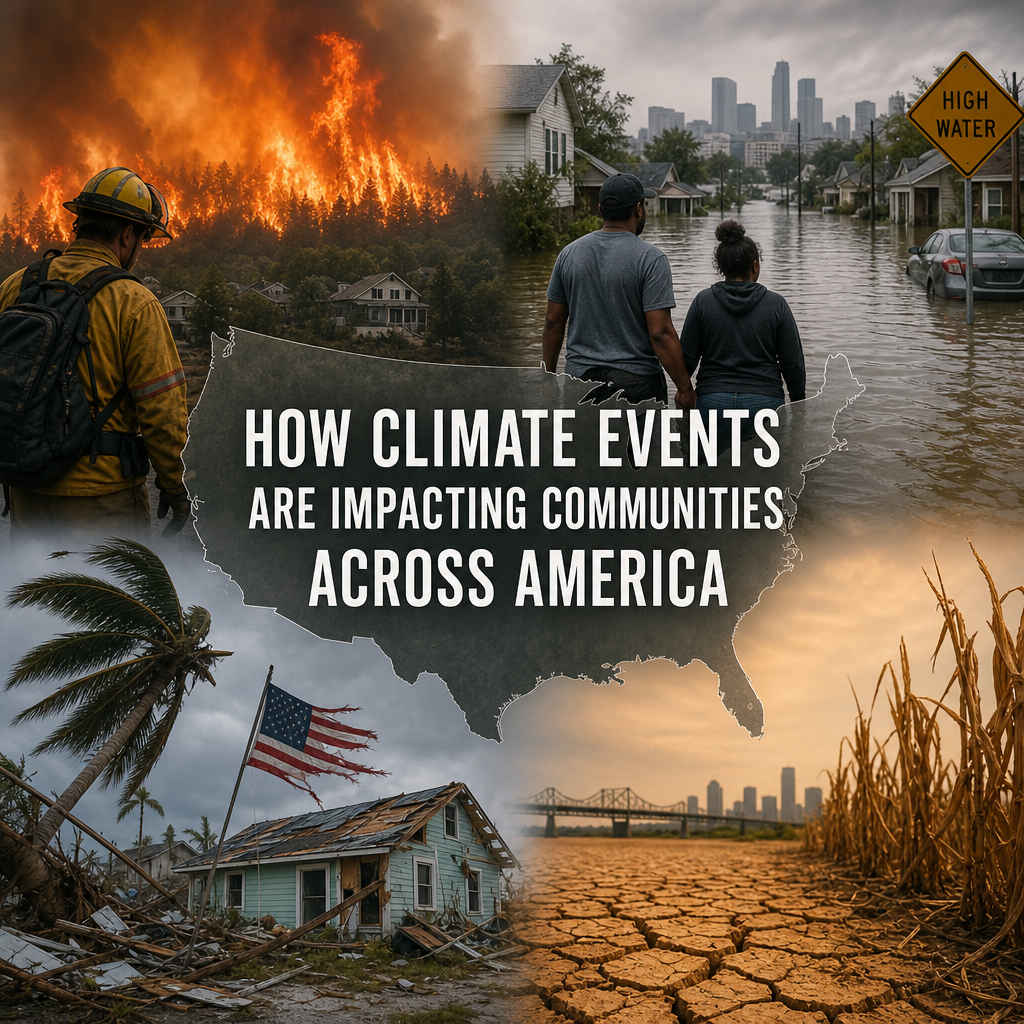
Climate events are no longer distant headlines or once-in-a-generation disruptions. Across the United States, communities are seeing the effects of stronger storms, heavier rainfall, longer wildfire seasons, rising heat, and changing seasonal patterns. These shifts are influencing how people live, work, build homes, manage infrastructure, and plan for the future.
For many households, the impact of climate events is personal. A flooded basement, an evacuation notice, a prolonged power outage, or a heat wave that stretches for days can reshape daily life in an instant. For local governments and businesses, the stakes are even higher. Roads, schools, hospitals, farms, and supply chains all depend on predictable conditions that are becoming harder to count on.
Understanding how climate events are influencing communities across America is essential for anyone who wants to prepare, adapt, and make informed decisions. The challenge is not only about weather. It is about resilience, equity, planning, and the ability of communities to recover and thrive.
What climate events mean for American communities
Climate events refer to weather- and climate-related hazards that affect people, property, and ecosystems. These include:
Hurricanes and tropical storms
Flooding and flash floods
Drought
Extreme heat
Wildfires and smoke exposure
Severe winter storms
Coastal erosion and sea level rise
When these events become more frequent, more intense, or more damaging, communities feel the pressure in different ways. Some face immediate destruction. Others experience gradual stress that builds over time, such as water shortages, insurance changes, or infrastructure wear.
The effects are not distributed evenly. Rural towns, coastal cities, mountain communities, and urban neighborhoods each face different risks. Local geography, housing quality, emergency planning, and access to resources all shape how communities respond.
How climate events are influencing communities across America
The phrase climate events are influencing communities across America captures a broad reality: no region is untouched. While the hazards differ by location, the consequences often overlap. People may struggle with health risks, financial losses, displacement, and emotional stress all at once.
Disrupting homes and neighborhoods
One of the most visible impacts of climate events is damage to homes and neighborhoods. Strong winds, flooding, fires, and landslides can destroy structures or leave them uninhabitable. Even when a house survives, water intrusion, mold, or smoke damage can lead to expensive repairs.
In many places, repeated events are changing where people choose to live. Families may leave areas with chronic flooding or wildfire risk, while others stay but spend more on renovations, insurance, and emergency supplies. Neighborhoods that once felt stable may now require constant maintenance and planning.
Straining infrastructure and public services
Roads, bridges, water systems, power grids, schools, and hospitals were often built for a past climate. When climate events intensify, older systems can fail faster than expected.
Common infrastructure challenges include:
Washed-out roads after heavy rain
Power outages during heat waves or storms
Water contamination after flooding
Damaged sewer systems and storm drains
Delays in emergency response due to impassable routes
Local governments often must spend limited funds on repairs instead of long-term improvements. That can create a cycle where communities respond to one disaster after another without enough time or money to strengthen their systems.
Increasing health risks
Climate events can affect physical and mental health in multiple ways. Extreme heat raises the risk of dehydration and heat-related illness, especially for older adults, outdoor workers, and people without access to air conditioning. Smoke from wildfires can worsen asthma and other respiratory conditions. Flooding can increase exposure to mold, bacteria, and contaminated water.
There are also emotional and psychological effects. After losing a home, being displaced, or repeatedly preparing for emergencies, people may experience stress, anxiety, or trauma. Children, seniors, and those with preexisting health conditions can be especially vulnerable.
Affecting jobs and local economies
Communities across America rely on industries that are sensitive to climate events. Agriculture, tourism, construction, shipping, and retail all depend on stable conditions and reliable infrastructure.
For example:
Farmers may face crop losses from drought or flooding.
Coastal businesses may lose revenue during storm evacuations or erosion.
Construction projects may be delayed by severe weather.
Small businesses may struggle to reopen after repeated disruptions.
These impacts ripple through local economies. When workers lose hours, businesses lose sales, and governments lose tax revenue, recovery becomes harder. In some towns, a single major climate event can alter the economic outlook for years.
Regional differences in climate impacts
Climate events do not affect every part of the country the same way. Geography plays a major role in shaping risk.
Coastal communities
Coastal regions face hurricanes, storm surge, erosion, and sea level rise. Even routine high tides can become a problem in low-lying neighborhoods. Over time, saltwater intrusion can affect freshwater supplies and damage roads, foundations, and septic systems.
Western states
Much of the West is dealing with drought, wildfire risk, and extreme heat. Long dry periods can strain water resources and increase the chances of fast-moving fires. Smoke can travel far beyond the fire zone, affecting air quality in nearby and distant communities.
Midwest and Plains states
These areas often face severe thunderstorms, tornadoes, hail, flooding, and agricultural stress. Shifts in rainfall patterns can make planting and harvesting less predictable, while extreme storms can damage homes, farms, and transportation networks.
Northeastern and Southern states
The Northeast is seeing more intense rainstorms and coastal flooding, while Southern states frequently deal with hurricanes, tropical moisture, and high heat. In both regions, older housing stock and aging infrastructure can increase vulnerability.
Who is most affected by climate events?
Although climate events touch many Americans, some groups face greater risk because of income, age, health, housing conditions, or location.
Lower-income households
Families with limited financial resources often have fewer options before, during, and after a disaster. They may live in high-risk areas because housing is cheaper there, and they may not have savings for repairs, relocation, or higher utility bills.
Older adults and people with disabilities
These groups may need extra support during evacuations, power outages, or heat waves. Mobility challenges, medical equipment needs, and social isolation can make emergencies more dangerous.
Children
Kids are vulnerable to heat, poor air quality, disrupted schooling, and the stress that comes with instability. Repeated disruptions can affect learning and emotional well-being.
Outdoor workers
Farmworkers, utility crews, landscapers, and construction workers often work directly in hazardous conditions. Heat, smoke, storms, and cold extremes can put their health at risk.
Rural communities
Some rural areas have limited access to hospitals, emergency shelters, and public transit. Long distances and fewer resources can make recovery slower after a climate event.
How communities are responding
Communities across America are not just reacting; many are adapting. Local leaders, residents, nonprofits, and businesses are taking practical steps to reduce risk and improve resilience.
Strengthening infrastructure
Cities and counties are investing in:
Improved drainage systems
Reinforced roads and bridges
Updated building codes
Backup power for critical facilities
Flood barriers and green stormwater solutions
These measures can reduce damage and make recovery faster after a climate event.
Expanding emergency planning
Preparedness efforts are becoming more detailed and community-focused. Emergency managers are using better communication tools, evacuation plans, cooling centers, smoke shelters, and community alert systems to reach people sooner.
Helpful planning includes:
Identifying vulnerable residents who may need extra support.
Creating clear evacuation and shelter plans.
Stocking emergency supplies before events occur.
Training staff and volunteers for response roles.
Reviewing plans after each event to improve the next one.
Supporting local resilience
Community resilience is not just about government response. Neighborhood groups, faith organizations, schools, and local nonprofits often play a key role in helping residents prepare and recover.
Examples include:
Distributing fans or bottled water during heat waves
Checking on elderly neighbors
Organizing cleanup efforts after flooding
Sharing trusted information during evacuations
Helping families access relief resources
These local networks often make the difference between a chaotic response and a coordinated one.
What households can do to prepare
Individuals and families can take steps now to reduce the stress and cost of future climate events.
Practical preparedness steps
Sign up for emergency alerts in your area.
Build a basic disaster supply kit.
Know evacuation routes and shelter locations.
Protect important documents in waterproof storage.
Review homeowners or renters insurance coverage.
Trim trees and secure outdoor items before storms.
Plan for power outages, heat waves, and smoke events.
A good plan should reflect local risks. A family in Florida may focus on hurricane readiness, while a household in California may prepare for wildfire smoke and evacuation. In the Midwest, flash flood planning may matter more than coastal surge.
Home upgrades that can help
Depending on the hazard, practical upgrades may include:
Raising electrical systems in flood-prone areas
Installing sump pumps or backflow valves
Using fire-resistant landscaping near homes
Improving insulation and ventilation to handle extreme heat
Sealing windows and doors to reduce smoke infiltration
Even small improvements can make a home safer and reduce repair costs after an event.
Why communication and trust matter
During a climate event, information can save lives. But people need clear, timely, and trustworthy updates. Conflicting messages or delayed warnings can create confusion and delay action.
Communities are more resilient when they trust local alerts, understand evacuation instructions, and know where to get help. That means public agencies must communicate in plain language and provide information in multiple formats and languages when needed.
Trust also grows when communities see that planning is fair and inclusive. Residents are more likely to participate when they feel their concerns are heard and their needs are considered.
The long-term outlook for American communities
As climate events continue to influence communities across America, long-term adaptation will become even more important. This does not mean every region faces the same future, but it does mean every region needs a plan.
The most successful communities will likely share a few traits:
They invest in resilience before disaster strikes.
They support the most vulnerable residents.
They use local knowledge alongside science and planning.
They update infrastructure instead of relying on outdated systems.
They treat preparedness as an ongoing responsibility, not a one-time task.
Communities that make these choices can reduce losses, speed recovery, and protect quality of life. That work takes time and cooperation, but it is possible.
Frequently Asked Questions
1. What are the most common climate events affecting communities in the United States?
The most common climate events include hurricanes, flooding, drought, extreme heat, wildfires, severe storms, and winter weather extremes. The specific risks vary by region, but nearly every part of the country faces some combination of these hazards.
2. How do climate events affect local economies?
Climate events can damage businesses, disrupt supply chains, reduce tourism, delay construction, and harm agriculture. They can also strain public budgets as local governments pay for repairs, emergency response, and recovery efforts.
3. Why are some communities more vulnerable than others?
Vulnerability depends on factors such as income, housing quality, age, health, geography, and access to emergency resources. Communities with fewer financial resources or aging infrastructure often have a harder time preparing for and recovering from climate events.
4. What can families do to prepare for climate-related emergencies?
Families should create an emergency plan, sign up for local alerts, assemble a supply kit, protect important documents, and understand evacuation routes. It also helps to prepare for the specific hazards most likely in their region, such as flooding, wildfires, or heat waves.
5. How can communities become more resilient over time?
Communities can become more resilient by improving infrastructure, updating building standards, strengthening emergency communication, supporting vulnerable residents, and investing in long-term planning. Local partnerships between government, nonprofits, and residents are often essential.
Climate events are influencing communities across America in ways that go far beyond the weather forecast. They are shaping where people live, how families prepare, what local governments must prioritize, and how businesses plan for the future. From flooding and wildfire smoke to heat waves and storms, these events can disrupt health, infrastructure, and daily routines, especially for those with fewer resources.
The good news is that communities are not powerless. Preparedness, resilient infrastructure, clear communication, and local cooperation can reduce risk and improve recovery. Homeowners can take practical steps to protect property and safety. Neighborhoods can support vulnerable residents. Leaders can invest in systems that hold up under pressure.
The more people understand the real-world effects of climate events, the better they can respond with confidence and purpose. Whether you are a homeowner, renter, business owner, or community leader, the next step is the same: learn your local risks, make a plan, and stay informed. Small actions taken now can make a major difference when the next event arrives.
Peter B holds a degree in Journalism and has 5 years of experience covering U.S. economic policy, labor markets, and financial news. He writes data-driven news content on topics like inflation, interest rates, and employment trends.