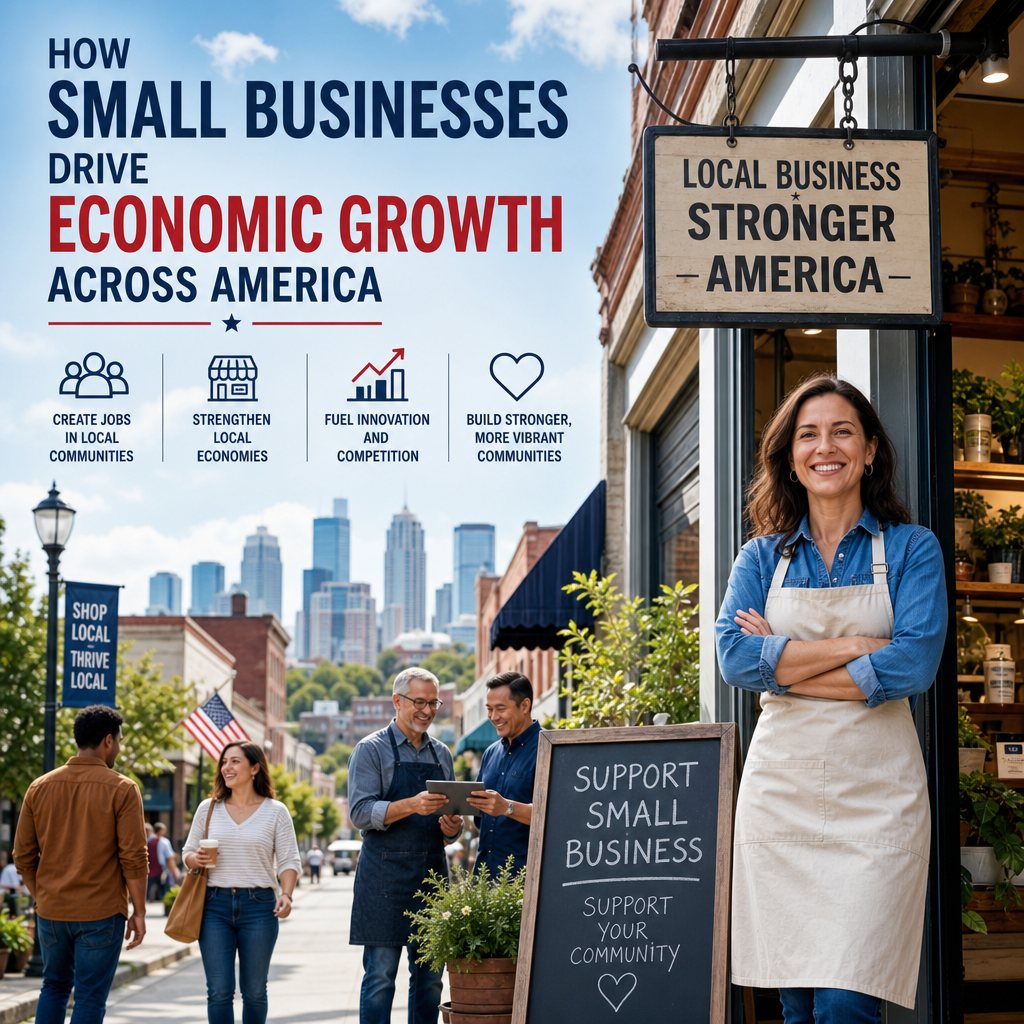
How Small Businesses Drive Economic Growth Across America
Small business growth is powering local economies across America by creating jobs, sparking innovation, and keeping money circulating in communities. From Main Street shops to fast-growing startups, these businesses are proving that big economic impact often starts small.
By: Peter B on July 25, 2026
How Small Businesses Are Driving Economic Growth Across America
Small businesses are doing far more than keeping neighborhood storefronts open. They are shaping local job markets, fueling innovation, strengthening communities, and helping the broader economy stay flexible and resilient. In cities, suburbs, and rural towns alike, how small businesses are driving economic growth across America is a story of ambition, adaptability, and long-term impact.
From family-owned restaurants to niche software startups, small businesses create opportunities where large corporations often cannot. They hire locally, respond quickly to customer needs, and introduce new ideas that help entire industries move forward. Just as importantly, they keep money circulating within communities, supporting other local services and encouraging additional investment.
Why Small Businesses Matter to the U.S. Economy
Small businesses are often the first place people turn when they need work, a trusted service, or a product tailored to their needs. They are also where many entrepreneurs take their first steps toward building wealth and independence.
Small businesses create local economic momentum
When a small business opens, it does more than serve customers. It can also:
Hire employees from the surrounding community
Purchase goods and services from local vendors
Rent commercial space and support property owners
Bring more foot traffic to nearby businesses
Encourage neighborhood revitalization
This ripple effect is one reason small businesses are so important to economic development. A new café, repair shop, or childcare center can improve quality of life while strengthening the local tax base.
They help the economy stay adaptable
Small businesses are usually more nimble than large corporations. They can adjust prices, test new products, and respond to shifting customer preferences faster. That flexibility matters during times of uncertainty, when communities rely on businesses that can pivot quickly.
For example, many small retailers expanded into e-commerce during the pandemic. Others added delivery, curbside pickup, or appointment-based service models. These changes helped them survive and kept consumers connected to essential goods and services.
How Small Businesses Are Driving Economic Growth Across America
The phrase how small businesses are driving economic growth across America is more than a slogan. It reflects real patterns seen in hiring, innovation, and community investment.
1. They are major sources of job opportunities
Small businesses are often the backbone of local employment. They provide entry-level jobs, skilled positions, and leadership opportunities that may not exist elsewhere in a community. For many workers, a small business is where they gain their first experience, learn a trade, or build a long-term career.
This matters because local employment tends to have a multiplier effect. When workers earn income, they spend it on housing, food, transportation, child care, and other necessities. That spending supports more local businesses and helps strengthen regional economies.
2. They encourage entrepreneurship and self-employment
Small businesses make it easier for people to turn ideas into income. A freelance designer, independent contractor, food truck owner, or home-based consultant can start small and grow steadily over time. This kind of entrepreneurship expands opportunity for people who may not have access to corporate career paths.
It also supports a culture of problem-solving. Entrepreneurs often create businesses because they see a gap in the market:
A parent needs better after-school care
A town needs a reliable mechanic
A niche audience wants specialized products
A local company needs bookkeeping help
By meeting these needs, small business owners make the economy more diverse and responsive.
3. They spark innovation at the ground level
Innovation does not only come from large research labs or venture-backed startups. Small businesses frequently introduce practical improvements in service, technology, design, and customer experience.
A few examples include:
A bakery developing online ordering for pre-scheduled pickup
A landscaping company using software to streamline estimates and scheduling
A local manufacturer producing a specialized part that larger suppliers overlook
A healthcare practice offering telehealth options for busy families
Because they are close to their customers, small businesses can notice pain points early and create useful solutions. Over time, those solutions can influence broader market trends.
4. They support community stability
Small businesses often reinvest in the places where they operate. Owners live nearby, donate to local causes, sponsor youth sports teams, and participate in civic life. This creates a sense of shared responsibility that strengthens community identity.
In many towns, the success of small businesses is tied to the success of schools, downtown districts, and neighborhood organizations. When these businesses thrive, communities often become more vibrant and resilient.
Key Ways Small Businesses Strengthen Economic Growth
To understand the broader impact of small businesses, it helps to look at how their activity supports growth in multiple directions.
They circulate money locally
When a person buys from a local business, part of that money often stays in the community. The owner may pay local employees, hire a nearby accountant, buy from regional suppliers, or invest in local advertising. That circulation helps create a healthier local economy than one where most spending leaves the area immediately.
They broaden the tax base
Successful small businesses contribute property, sales, and income taxes, depending on their structure and location. Those revenues can help fund public services such as roads, schools, parks, and public safety. While taxes alone do not define economic strength, they do help communities maintain essential infrastructure.
They diversify the economy
Communities that depend on a single employer or industry can be vulnerable when demand shifts. Small businesses spread risk across many sectors:
Retail
Food service
Construction
Professional services
Technology
Manufacturing
Personal care
Health and wellness
This diversity can help local economies absorb shocks more effectively.
They create pathways for wealth building
Owning a small business can be a path to long-term financial stability. For many families, it offers a way to build equity, transfer a legacy, and create opportunities for future generations. Even when a business starts modestly, it can contribute to household income, retirement security, and community wealth over time.
The Role of Small Businesses in Rural, Suburban, and Urban Areas
The impact of small businesses looks different depending on where they operate, but the value remains clear.
In rural communities
Small businesses may be the primary source of goods, services, and employment. A local hardware store, farm supply shop, restaurant, or clinic can serve a wide area and reduce the need for long-distance travel. In places where large employers are limited, small businesses often anchor the local economy.
In suburban areas
Small businesses add convenience, variety, and personality to commercial corridors. They help create lively shopping and dining districts while offering residents services closer to home. These businesses also give suburban communities a more distinctive identity.
In cities
Urban small businesses contribute to neighborhood vitality and walkability. They occupy storefronts, support transit-oriented development, and create diverse commercial landscapes. From food vendors to creative agencies, these businesses help cities remain dynamic and culturally rich.
Challenges Small Businesses Face
Understanding how small businesses are driving economic growth across America also means recognizing the obstacles they face. Supporting them effectively requires realistic attention to these challenges.
Access to capital
Many small businesses struggle to secure financing, especially in the early stages. Owners may need funds for inventory, equipment, payroll, technology, or expansion, but traditional lending can be difficult to access without collateral or a strong credit history.
Rising costs
Inflation, rent increases, supply chain disruptions, and higher labor costs can put pressure on margins. Unlike large companies, small businesses often have less room to absorb sudden expenses.
Hiring and retention
Finding and keeping good employees can be challenging, especially when larger employers offer more competitive benefits. Small businesses may need to compete with bigger firms while also managing limited budgets and administrative capacity.
Digital competition
Consumers increasingly expect online ordering, fast delivery, and strong digital experiences. Small businesses must invest in websites, social media, payment systems, and cybersecurity to stay competitive.
How Communities and Policymakers Can Support Small Business Growth
If small businesses are essential to economic growth, then supportive policies and local action matter. Communities can help create the conditions they need to succeed.
Improve access to funding
Programs that expand microloans, grants, community development financing, and technical assistance can help small businesses launch and grow. Flexible financing is especially helpful for underserved entrepreneurs.
Reduce regulatory friction
Clear, predictable, and efficient licensing and permitting processes can save time and money. Small business owners often spend significant effort navigating paperwork, so streamlining requirements can make a real difference.
Invest in training and mentorship
Business owners benefit from practical support in areas such as:
Bookkeeping and cash flow management
Marketing and branding
Inventory control
Hiring and compliance
Digital tools and e-commerce
Local chambers of commerce, nonprofit organizations, and educational institutions can play a major role here.
Strengthen broadband and infrastructure
Reliable internet, transportation, and utility infrastructure are vital for modern business operations. Rural and underserved communities especially benefit when these systems are improved.
Examples of Small Business Impact in Everyday Life
It is easy to think of economic growth in abstract terms, but small businesses affect daily life in concrete ways.
A neighborhood bakery may hire local workers, purchase ingredients from regional suppliers, and attract visitors to a downtown district. A small auto shop might keep residents on the road and employed by providing affordable repairs. A family-owned childcare center can help parents participate in the workforce. A local marketing agency may help other entrepreneurs expand their own reach.
These examples show that small businesses do more than generate revenue. They make it easier for other people and businesses to succeed.
The Future of Small Business in America
The future of the U.S. economy will likely depend in part on how well small businesses adapt to changing consumer behavior, new technologies, and evolving labor markets. Businesses that embrace digital tools, customer service excellence, and community relationships are well positioned to grow.
At the same time, consumers increasingly value authenticity, convenience, and local connection. That gives small businesses an advantage if they can communicate what makes them unique. Whether through personalized service, local sourcing, or niche expertise, small businesses often compete by offering something larger companies cannot easily replicate.
Frequently Asked Questions
1. Why are small businesses so important to economic growth?
Small businesses are important because they create jobs, support local supply chains, encourage innovation, and keep money circulating in communities. They also provide essential services and help diversify the economy, making regions more resilient.
2. How do small businesses help local communities?
Small businesses help communities by hiring locally, sponsoring events, improving commercial districts, and contributing to civic life. They often reinvest in the neighborhoods where they operate, which can support long-term stability and growth.
3. What challenges do small businesses face most often?
Common challenges include limited access to capital, rising operating costs, employee retention, regulatory complexity, and competition from larger companies or online retailers. Many small businesses also need help adopting digital tools.
4. How can customers support small business growth?
Customers can support small business growth by shopping locally, leaving positive reviews, sharing businesses on social media, using local services, and recommending small businesses to friends and family. Even small purchases can have a meaningful impact.
5. What role does technology play in small business success?
Technology helps small businesses reach more customers, improve efficiency, manage finances, and compete in digital markets. Tools like e-commerce platforms, payment systems, scheduling software, and social media marketing can make a major difference in growth and sustainability.
Small businesses are a powerful engine of economic growth across the United States. They create jobs, spark innovation, support local communities, and give people a practical path to entrepreneurship and financial independence. While large corporations often make headlines, small businesses shape the everyday reality of American economic life in ways that are personal, visible, and lasting.
Their impact reaches far beyond a single storefront or service area. When small businesses succeed, they help build stronger neighborhoods, broader tax bases, more resilient local economies, and new opportunities for workers and families. That is why supporting them matters, whether through smart policy, accessible financing, or simple consumer choices.
If you want to understand the American economy at the ground level, start with small businesses. They are not just participating in growth; they are driving it. And as communities continue to adapt to new technologies, shifting markets, and changing needs, small businesses will remain one of the clearest signs of where opportunity is being created next.
Peter B holds a degree in Journalism and has 5 years of experience covering U.S. economic policy, labor markets, and financial news. He writes data-driven news content on topics like inflation, interest rates, and employment trends.