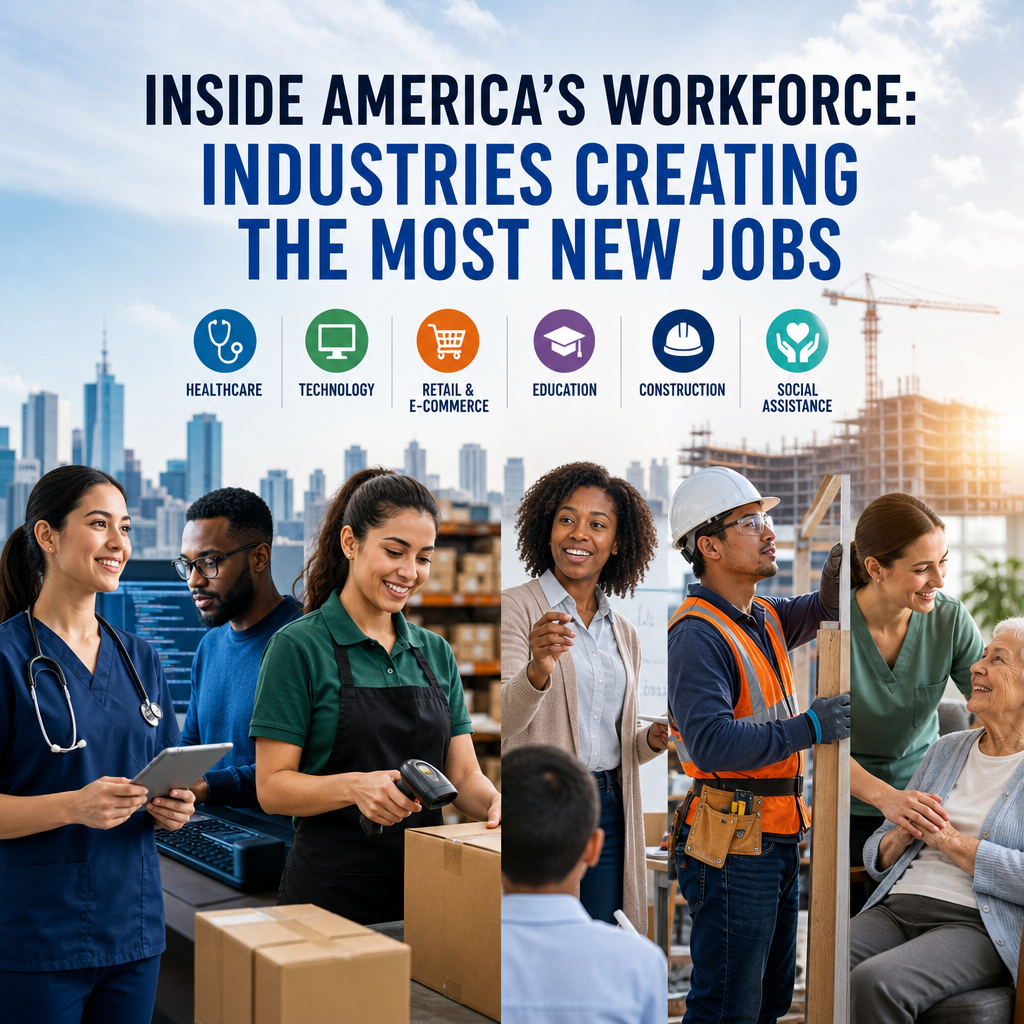
Inside America’s Workforce: Industries Creating the Most New Jobs
Healthcare, technology, logistics, and construction are among today’s top job growth industries, each fueled by powerful long-term trends. If you want to know where the strongest hiring demand is headed next, these expanding sectors offer a clear roadmap.
By: Peter B on July 25, 2026
Inside America’s Workforce: Industries Creating the Most New Jobs
America’s labor market is always moving, but some sectors are expanding faster than others. If you’re trying to understand where opportunities are growing, inside America’s workforce is a useful place to start. Certain industries are adding jobs because of demographic shifts, technological change, consumer demand, and long-term economic trends. For job seekers, employers, students, and career changers, knowing which industries are creating the most new jobs can help guide smarter decisions.
In this article, we’ll look at the industries that are generating the strongest hiring demand, why they’re growing, and what kinds of roles are opening up. We’ll also cover practical steps for people who want to take advantage of these opportunities.
Inside America’s Workforce: Where Job Growth Is Happening
Job creation does not happen evenly across the economy. Some sectors are tied to population needs, while others grow because of innovation or public investment. When you look inside America’s workforce, the pattern becomes clearer: industries that serve essential needs, support digital transformation, or address labor shortages tend to create the most new jobs.
The big picture behind job growth
Several forces are shaping today’s labor market:
An aging population is increasing demand for healthcare and personal care services
Businesses are investing in cloud computing, cybersecurity, and automation
Infrastructure upgrades and green energy projects are fueling construction and engineering demand
E-commerce and logistics continue to reshape retail and transportation
Schools, childcare providers, and social services need more workers as families and communities adapt
These trends create opportunities in both high-skill and entry-level roles, which makes workforce growth broad-based rather than concentrated in just one occupation.
Healthcare Leads the Way in New Job Creation
Healthcare consistently ranks among the fastest-growing industries in the U.S. That’s no surprise given the country’s aging population, ongoing need for medical care, and expansion of services outside traditional hospitals.
Why healthcare keeps hiring
Healthcare jobs grow for a few important reasons:
More older adults need regular medical care
Chronic conditions require long-term management
Telehealth and outpatient care are expanding access
Mental health awareness is increasing demand for counselors and support staff
Common roles in healthcare growth
Some of the strongest hiring areas include:
Registered nurses
Licensed practical nurses
Medical assistants
Home health aides
Nurse practitioners
Physical therapy assistants
Medical and health services managers
Not all of these roles require the same education level. That’s part of what makes healthcare such a powerful job engine. Some positions require specialized degrees, while others offer entry points through certification, on-the-job training, or associate programs.
A practical example
A person who wants to enter the healthcare field without spending four years in school might train as a medical assistant, then later move into a nursing program or healthcare administration role. This type of career ladder is common in growing industries and can open long-term advancement opportunities.
Technology and Information Services Are Reshaping the Labor Market
Technology has changed nearly every industry, but it also creates direct employment in software, data, IT support, and digital security. As more companies move operations online, they need workers who can build, maintain, and protect those systems.
Why tech jobs continue to expand
A few drivers stand out:
Businesses rely on digital platforms for customer service and operations
Cybersecurity threats keep rising
Data-driven decision-making is now standard in many industries
AI tools are being adopted, but they still need human oversight and implementation
Jobs seeing strong demand
Inside America’s workforce, tech-related jobs remain among the most visible growth areas:
Software developers
Cybersecurity analysts
Cloud engineers
Data analysts
IT support specialists
Network and systems administrators
Product managers
One important trend is that technology roles are no longer limited to tech companies. Banks, hospitals, manufacturers, retailers, and schools all need digital workers. That widens the field and creates more entry points for candidates with the right training.
Skills that matter most
Employers often look for a mix of technical and soft skills, such as:
Problem-solving
Attention to detail
Communication
Scripting or programming basics
Familiarity with cloud platforms
Security awareness
For career changers, short-term certifications and bootcamps can help bridge the gap into some of these roles.
Construction and Infrastructure Are Building Opportunity
Construction may not always get the same attention as tech or healthcare, but it remains one of the most important job-creating industries in the country. New housing, roads, bridges, commercial buildings, utility upgrades, and energy projects all depend on skilled labor.
What’s fueling construction demand
Construction hiring tends to grow when:
Public infrastructure receives funding
Population growth increases housing needs
Businesses expand warehouses, factories, and office space
Energy projects require site work and installation
High-demand roles in construction
Some of the jobs seeing strong demand include:
Carpenters
Electricians
Plumbers
HVAC technicians
Heavy equipment operators
Construction managers
Civil engineering technicians
Construction offers a wide range of pathways. Some jobs require apprenticeships and licensing, while others are accessible through vocational training. Many roles also provide strong earning potential without requiring a traditional four-year degree.
Why this industry matters
Construction supports much more than buildings. It also drives demand in transportation, manufacturing, materials supply, and engineering. That ripple effect makes it one of the key engines of job growth across the broader economy.
Logistics, Warehousing, and Transportation Keep Goods Moving
The rise of online shopping changed how goods move through the economy. Warehousing, freight, delivery, and supply chain operations now play a central role in daily commerce, which means these industries continue to create a steady stream of jobs.
Why logistics remains a growth area
E-commerce drives demand for fulfillment centers
Companies need faster shipping and inventory management
Supply chains require more planning and flexibility
Delivery networks continue to expand in both urban and rural areas
Jobs in demand
Common roles in this sector include:
Warehouse associates
Forklift operators
Delivery drivers
Supply chain analysts
Logistics coordinators
Inventory managers
Truck drivers
While some positions are physically demanding, others require planning, software knowledge, and scheduling skills. The industry offers opportunities for people with a wide range of experience levels.
The human side of logistics
Even with automation, many parts of logistics still depend on people. Machines can sort packages, but humans are needed for oversight, problem-solving, route planning, customer communication, and equipment maintenance. That keeps the sector labor-intensive and job-rich.
Education and Childcare Are Growing Alongside Family Needs
Education and childcare are essential services that support working families and long-term workforce development. As parents return to work and communities seek better support for children, these fields remain important job creators.
Why these fields are expanding
Families need reliable childcare options
Schools require more support staff and specialized educators
Early childhood education is gaining more attention
Student support services are becoming more comprehensive
Roles seeing demand
Preschool teachers
Childcare workers
Teacher aides
Special education assistants
School counselors
Tutors
Program coordinators
These jobs often appeal to people who want meaningful work with a community impact. Some require certifications or degrees, while others offer direct entry with training and experience.
Social Assistance and Mental Health Services Are in Higher Demand
Communities across the U.S. are seeing stronger demand for social workers, counselors, and support professionals. This growth reflects broader awareness of mental health, substance use recovery, housing instability, and family support needs.
What’s driving this growth
Increased awareness of mental health care
Demand for addiction treatment and recovery support
Aging adults needing care coordination
Nonprofits and public agencies expanding assistance programs
Jobs to watch
Social workers
Mental health counselors
Case managers
Substance abuse counselors
Community outreach specialists
Behavioral health technicians
These roles often require empathy, communication, and resilience. They also play a crucial role in helping people access services and build stability.
Renewable Energy and Clean Technology Are Opening New Paths
The energy sector is changing. Traditional power systems are being supplemented by solar, wind, battery storage, and energy-efficiency projects. That transition is creating new jobs across engineering, installation, maintenance, and project management.
Why clean energy jobs are increasing
Businesses and households are adopting renewable systems
Utilities are modernizing grids and storage capacity
Energy efficiency projects require installation and maintenance
Public and private investment is supporting long-term growth
Roles in clean energy
Solar panel installers
Wind turbine technicians
Energy auditors
Electrical workers
Project managers
Environmental technicians
This is one of the most promising areas inside America’s workforce because it combines technical work with long-term infrastructure needs. Many roles can be entered through specialized training programs or apprenticeships.
How Job Seekers Can Position Themselves for Growth Industries
If you want to move toward one of these expanding sectors, the key is to match your current skills with industry demand.
Start with your transferable skills
Many workers already have skills that apply across industries:
Customer service
Scheduling
Problem-solving
Team collaboration
Basic technology use
Time management
These skills can help you transition into new fields even if your background is different.
Choose training that fits the job
Not every opportunity requires a college degree. Depending on the field, you may need:
A certification
An apprenticeship
A short-term training program
An associate degree
A bachelor’s or advanced degree
The right path depends on your target role and how quickly you want to enter the workforce.
Build a job search strategy
A practical job search in a growing industry should include:
Researching labor market trends
Updating your résumé for the target field
Highlighting relevant experience and certifications
Connecting with employers, workforce centers, and professional groups
Preparing examples that show reliability and adaptability
Keep learning
Fast-growing industries reward people who keep updating their skills. Even after landing a job, additional training can help you move into higher-paying or more specialized roles.
What Employers Should Notice About Workforce Trends
Employers can also benefit from understanding where jobs are growing. If your business operates in a high-demand industry, competition for talent may be intense. That means retention, training, and compensation strategies matter more than ever.
Smart steps for employers
Offer clear career pathways
Invest in onboarding and mentoring
Use apprenticeships and training partnerships
Improve workplace flexibility where possible
Focus on skills-based hiring
By aligning hiring practices with labor market realities, employers can strengthen their workforce and reduce turnover.
Frequently Asked Questions
1. Which industries are creating the most new jobs in the U.S. right now?
Healthcare, technology, construction, logistics, education, social assistance, and clean energy are among the strongest job-creating industries. These sectors benefit from long-term demand, demographic trends, and ongoing investment.
2. Do the fastest-growing industries require a college degree?
Not always. Some roles do require degrees, but many growing industries also offer jobs through certifications, apprenticeships, and on-the-job training. Healthcare support, construction trades, logistics, and IT support often have accessible entry points.
3. What makes healthcare such a strong job market?
Healthcare grows because people need consistent care throughout life, especially as the population ages. Chronic conditions, mental health needs, and expanded outpatient and home-based care also increase demand for workers.
4. How can career changers enter a growing industry?
Career changers should identify transferable skills, research the training required, and target entry-level roles that lead to advancement. Short certification programs, apprenticeships, and employer-sponsored training can make the transition easier.
5. Are green jobs a major part of future workforce growth?
Yes. Renewable energy, energy efficiency, and related infrastructure projects are creating new opportunities. These jobs may include installation, maintenance, planning, and technical support, and many are expected to remain important as the energy sector evolves.
Inside America’s workforce, the biggest job gains are coming from industries that meet essential needs, support modern business operations, and respond to long-term social change. Healthcare remains a leader because demand for care keeps rising. Technology continues to expand as every sector becomes more digital. Construction, logistics, education, social assistance, and clean energy all offer significant opportunities as well.
For job seekers, the most important takeaway is that growth industries are not just about numbers—they’re about access. Many of today’s strongest fields offer multiple entry points, from certifications and apprenticeships to degrees and specialized training. That means there is room for both new entrants and experienced workers looking to pivot.
If you’re planning your next career move, start by identifying your strengths, researching the skills employers want, and choosing a path that fits your goals. The labor market will keep changing, but people who stay informed and adaptable are in the best position to benefit from where growth is happening now and in the years ahead.
Peter B holds a degree in Journalism and has 5 years of experience covering U.S. economic policy, labor markets, and financial news. He writes data-driven news content on topics like inflation, interest rates, and employment trends.