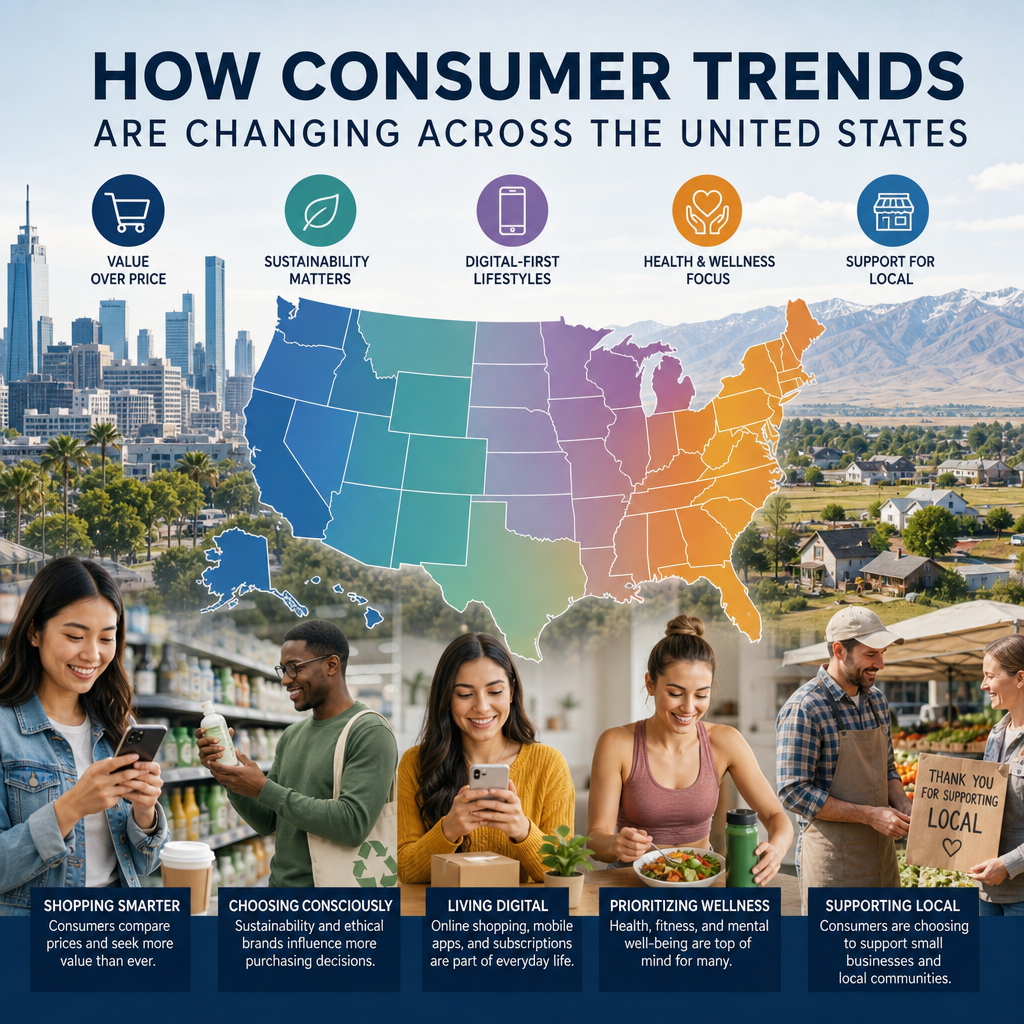
How Consumer Trends Are Changing Across the United States
Consumer trends in the United States are shifting as shoppers put more weight on convenience, trust, and value than ever before. From digital-first buying to growing interest in sustainability and transparency, these changes are reshaping how Americans discover, compare, and choose products.
By: Peter B on July 25, 2026
Consumer behavior in the U.S. is changing faster than ever, and businesses, marketers, and everyday shoppers are all feeling the shift. From how people discover products to where they spend their money, consumer trends are changing across the United States in ways that reflect broader shifts in technology, values, and daily life. Convenience matters more. Trust matters more. And buyers are increasingly making decisions based on personalization, sustainability, price transparency, and digital experience.
Understanding these changes is no longer optional. Whether you run a small business, manage a retail brand, or simply want to understand how Americans shop and why, paying attention to consumer trends can help you stay relevant and make smarter decisions.
What’s Driving Consumer Trends in the United States?
Consumer preferences rarely change for just one reason. In most cases, several forces work together: economic pressure, cultural shifts, technology adoption, and changing expectations around service and value.
Technology has changed the buying journey
Digital tools now shape nearly every part of the shopping experience. Consumers research products online, compare reviews, ask AI tools for recommendations, and often complete purchases without ever stepping into a store.
A few common examples include:
Mobile-first shopping through apps and responsive websites
Social media influencing product discovery
Digital wallets and contactless payments becoming routine
Chat-based customer support replacing slower channels
As a result, consumers expect speed, convenience, and a frictionless experience. If a website is slow or a checkout process feels complicated, many buyers simply leave.
Economic uncertainty affects spending habits
When budgets tighten, consumers become more selective. They look for value, compare prices more carefully, and trade up or down depending on the category. In some areas, people may cut back on discretionary spending. In others, they may choose store brands, wait for promotions, or seek financing options.
This doesn’t mean consumers stop spending. It means they spend more intentionally. Price, durability, and long-term value tend to carry more weight when households are watching their budgets closely.
Values now shape purchasing decisions
Today’s consumers often want their purchases to align with their beliefs. That can include supporting companies with strong sustainability practices, ethical labor standards, or community involvement. It can also mean buying from local businesses or choosing brands that are transparent about ingredients, sourcing, or data privacy.
This shift is especially important for brands trying to build loyalty. People are more likely to stick with companies they trust and respect.
How Consumer Trends Are Changing Across the United States in Everyday Shopping
The phrase how consumer trends are changing across the United States becomes especially clear when you look at everyday shopping behavior. Americans are not just buying different things; they are buying in different ways.
Shopping is becoming more omnichannel
Many consumers no longer separate online and in-store shopping. Instead, they move back and forth between channels depending on convenience.
For example:
They may discover a product on TikTok or Instagram
Read reviews on a brand website
Compare options on a marketplace
Buy online for pickup in store
Return the item by mail or in person
This blended behavior has become normal. Businesses that offer multiple convenient touchpoints tend to have an advantage because shoppers want flexibility.
Brand loyalty is becoming more conditional
Brand loyalty still exists, but it is less automatic than before. Consumers may be loyal to a brand only as long as it continues to offer good value, dependable quality, and a strong customer experience.
That means buyers are more willing to switch when:
Prices rise too quickly
Product quality slips
Shipping or service becomes unreliable
A competing brand offers a better digital experience
Another company better reflects their values
For businesses, this creates both a challenge and an opportunity. Loyalty must be earned repeatedly, not assumed.
Convenience now competes with cost
Many consumers want both affordability and ease. They may compare a lower-priced option with a more convenient one and decide based on what saves them the most time.
This has helped fuel growth in:
Same-day delivery
Subscription reorder services
Buy online, pick up in store
Meal kits and prepared foods
Automated refill programs for household goods
When brands can reduce effort for the customer, they often stand out even if they are not the cheapest option.
Regional Differences Still Matter
Consumer trends are national, but they do not look exactly the same in every part of the country. Geography, income levels, local culture, and urban or rural lifestyle all influence how people shop and what they value.
Urban consumers often prioritize speed and convenience
In large cities, consumers tend to have more options and less time. They may lean toward delivery, mobile payments, and services that fit a busy schedule. Convenience and accessibility are major factors.
Suburban shoppers often balance value and family needs
In suburban areas, buyers may focus on household budgets, school schedules, family routines, and bulk shopping. They often appreciate a mix of online and in-person options.
Rural shoppers may emphasize access and reliability
In rural communities, access can matter as much as price. Customers may prioritize dependable shipping, local availability, and businesses that understand their specific needs. Internet access and logistics can also influence shopping habits in these areas.
These regional differences matter because a one-size-fits-all strategy rarely works well across the United States.
Generational Shifts Are Reshaping Consumer Expectations
Different age groups often approach shopping with different priorities, and those differences influence broader market trends.
Gen Z values authenticity and digital fluency
Younger consumers often expect brands to be visible, responsive, and genuine online. They are comfortable discovering products through creators, short-form video, and peer reviews. They also tend to pay attention to brand tone, cultural relevance, and whether a company seems transparent.
Millennials often seek convenience and alignment
Many millennials are in life stages that involve balancing work, family, and financial responsibilities. They often value time-saving services, practical products, and brands that align with their ethics. Digital convenience is usually important, but so is quality and trust.
Gen X and older consumers often prioritize reliability
Older shoppers may be less influenced by trends for trend’s sake and more focused on consistency, service, and product performance. That said, many are highly active online shoppers and increasingly comfortable using digital tools when the experience feels secure and easy.
It’s important not to stereotype. Age groups overlap in many ways. Still, generational patterns can help explain why some products or marketing messages resonate more than others.
Sustainability and Transparency Are No Longer Niche Concerns
A major part of how consumer trends are changing across the United States involves growing expectations around accountability. Many buyers want to know where products come from, how they are made, and what impact they have.
Consumers want proof, not promises
Shoppers are increasingly skeptical of vague claims. Terms like “eco-friendly” or “natural” may not be enough on their own. People want details:
What materials are used?
How is the product sourced?
Is the packaging recyclable or reusable?
Are labor practices publicly disclosed?
Can the company back up its claims?
Brands that provide clear, specific information are more likely to earn trust.
Reuse, repair, and resale are gaining traction
Consumers are also becoming more open to alternatives to traditional buying. That includes secondhand shopping, refurbished products, repair programs, and resale marketplaces. These choices can stretch budgets and reduce waste at the same time.
This shift is visible in categories like:
Apparel
Electronics
Furniture
Sporting goods
Baby products
What used to be seen as a compromise is now often viewed as a smart, practical choice.
Health, Wellness, and Personalization Are Shaping Purchases
Consumers increasingly want products and services tailored to their individual needs. This goes beyond marketing language. People are looking for real personalization in food, fitness, self-care, and even retail recommendations.
Wellness influences many categories
Health-conscious spending is not limited to groceries or supplements. It affects:
Sleep products
Office furniture
Cleaning supplies
Snack choices
Mental wellness apps
Fitness and recovery tools
Consumers often evaluate whether a product supports a healthier, easier, or less stressful lifestyle.
Personalization improves relevance
When brands use customer preferences responsibly, they can create better experiences. Personalization can take many forms:
Product recommendations based on past purchases
Customized email offers
Bundled options that match user needs
Flexible subscription settings
Location-based service recommendations
The key is balance. Personalization should feel helpful, not invasive.
What Businesses Should Do to Keep Up
Brands that want to stay competitive need to adapt to current consumer expectations without losing sight of their core identity.
Focus on clarity and trust
Consumers appreciate straightforward communication. That means:
Clear pricing
Honest product descriptions
Transparent shipping and return policies
Responsive customer service
Consistent messaging across channels
Trust is often built through small, repeated experiences.
Improve the customer journey
Every step matters, from discovery to checkout to post-purchase follow-up. Businesses should evaluate whether their process is easy to understand and fast to complete.
A few practical improvements include:
Reducing website friction
Offering multiple payment options
Simplifying returns
Optimizing mobile usability
Keeping inventory information accurate
Use data carefully and ethically
Data can help businesses understand consumer behavior, but it should be used responsibly. Respect for privacy and transparent data practices matter more than ever. Consumers are more alert to how their information is collected and used, especially when personalization feels excessive.
The Future of Consumer Trends in the U.S.
The next phase of consumer change will likely continue blending digital convenience with human expectations for trust, quality, and purpose. New technologies will keep influencing behavior, but the underlying demand for value and reliability will remain steady.
Businesses that succeed will likely be those that:
Adapt quickly without chasing every fad
Build meaningful relationships with customers
Offer flexibility across channels
Communicate clearly and honestly
Match products and services to real-life needs
Consumer behavior is always evolving, but the best strategies are rooted in listening carefully and responding with practical improvements.
Frequently Asked Questions
1. Why are consumer trends changing so quickly in the United States?
Consumer trends are changing quickly because technology, economic conditions, and social values are all evolving at the same time. People now shop through more channels, compare more options, and expect faster service. At the same time, many shoppers are more selective about how they spend, which makes their preferences more dynamic.
2. How does inflation affect consumer behavior?
When prices rise, consumers usually become more cautious. They may look for discounts, switch to lower-cost brands, delay nonessential purchases, or buy smaller quantities. Inflation can also encourage shoppers to prioritize necessities over discretionary spending and compare value more carefully.
3. Are younger consumers the main force behind new shopping trends?
Younger consumers often help accelerate new trends because they adopt digital tools quickly and influence online culture. However, they are not the only factor. Older generations are also changing how they shop, and many of the biggest shifts reflect broad changes across all age groups.
4. Why do consumers care more about transparency now?
Consumers care more about transparency because they want to make informed decisions and avoid misleading claims. They want to know what a product contains, where it comes from, and whether a company follows ethical and sustainable practices. Clear communication helps build trust and long-term loyalty.
5. What should businesses do first to respond to changing consumer trends?
Businesses should start by reviewing the customer experience. That includes pricing clarity, website usability, product quality, and service responsiveness. Then they should listen to customer feedback, study buying behavior, and adjust their marketing and operations to better match current expectations.
Consumer behavior in the United States is changing in real time, shaped by technology, tighter budgets, shifting values, and a stronger demand for convenience and trust. The biggest lesson for businesses and observers alike is that today’s consumers are more informed, more selective, and less loyal to brands that fail to meet expectations. They want clear value, easy experiences, and companies that communicate honestly.
That does not mean every trend requires a dramatic overhaul. In many cases, the smartest response is simply to pay attention: study how customers shop, notice what they prioritize, and remove friction wherever possible. Whether the issue is pricing, service, sustainability, or digital usability, the brands that respond with clarity and consistency are the ones most likely to keep pace.
If you want to stay relevant in a fast-changing market, keep watching how consumer trends are changing across the United States. The more closely you listen to buyers, the better prepared you’ll be to serve them well.
Peter B holds a degree in Journalism and has 5 years of experience covering U.S. economic policy, labor markets, and financial news. He writes data-driven news content on topics like inflation, interest rates, and employment trends.