The Evolution of Digital Government Services in the United States
Digital government services have transformed the way Americans access public programs, turning once slow and paper-heavy processes into faster, more convenient online experiences. From early agency websites to today’s mobile-friendly systems, this evolution reflects both changing technology and rising public expectations.
By: Peter B on July 25, 2026
The rise of digital government services in the United States has changed how people interact with public institutions. What once required long waits, paper forms, and in-person appointments can now often be done from a laptop or phone. From tax filing to renewing a driver’s license, digital tools have made government more accessible, more efficient, and in many cases more user-friendly.
But the shift did not happen overnight. It has been shaped by changing technology, public expectations, security concerns, and the growing need for government to serve people where they are: online. Understanding the evolution of digital government services helps explain not only how public services have improved, but also where gaps still exist.
From Paper-Based Bureaucracy to Early Online Access
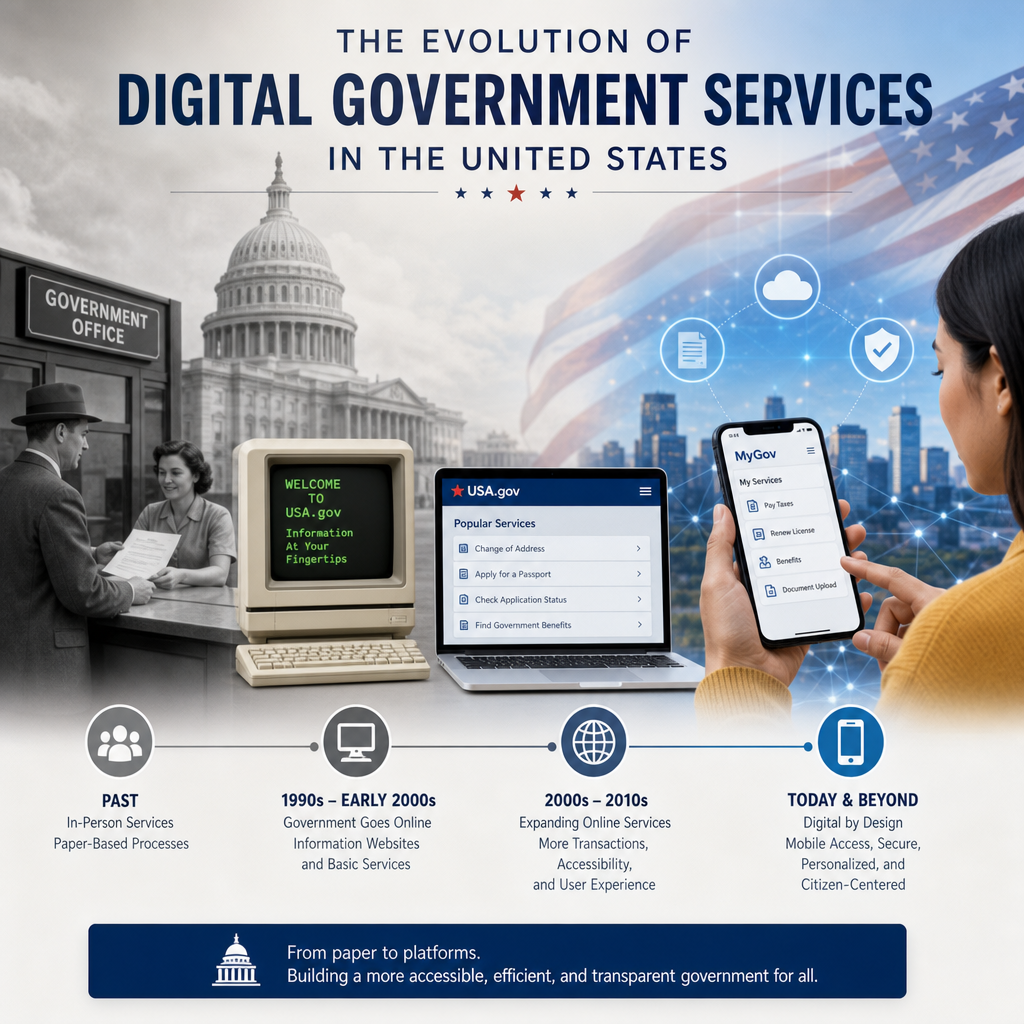
For much of American history, government services depended on paper records and face-to-face interaction. Citizens mailed forms, visited offices, and waited for letters or stamped approvals. These systems worked, but they were slow and often inconvenient.
The first wave of digital government services began in the 1990s and early 2000s as agencies launched basic websites. At first, these sites mostly served as online brochures. They posted contact information, hours, downloadable forms, and policy updates. Still, this was an important step.
Early Goals of Digital Government
The early mission was simple:
Share information faster
Reduce telephone and office traffic
Make forms easier to access
Improve transparency
Even limited online services changed the citizen experience. Instead of calling an agency for a form, people could download it. Instead of waiting for mailed notices, they could read updates online. These small improvements laid the foundation for more advanced digital government services later on.
The Rise of E-Government
As internet access expanded, government agencies began moving from static websites to interactive services. This period is often described as the rise of e-government, when the public could start completing tasks online rather than just reading information.
Common Services That Went Online
Some of the most widely adopted digital services included:
Paying taxes and fees
Renewing vehicle registrations
Filing benefit applications
Searching public records
Requesting permits or licenses
Submitting public comments
These changes helped people save time and reduced administrative burden for agencies. Governments could process requests faster, track documents more easily, and provide 24/7 access to some services.
Why E-Government Mattered
E-government was more than a convenience upgrade. It marked a shift in how public service was delivered. Governments began to recognize that digital channels could improve service quality, lower costs, and support broader access.
At the same time, agencies learned that simply putting forms online was not enough. Websites had to be easy to navigate, secure, and compatible with assistive technologies. The best digital government services started to focus not just on availability, but on usability.
The Smartphone Era and Citizen Expectations
The spread of smartphones changed everything. People no longer expected to sit at a desktop computer to access services. They expected mobile-friendly websites, text alerts, account dashboards, and quick self-service options.
This shift pushed government agencies to modernize more aggressively. If a private bank, airline, or retailer could offer an intuitive app, citizens began expecting similar convenience from government.
What Citizens Now Expect
Modern users often want:
Mobile-friendly design
Fast page loading
Clear instructions
Secure account access
Real-time status updates
Digital document submission
These expectations have influenced how agencies build and redesign digital government services. A confusing layout or broken mobile page can now create frustration quickly and reduce trust.
The Impact of Federal Digital Modernization Efforts
Digital transformation at the federal level has helped set the tone for state and local agencies. Over time, the U.S. government has pushed for better web standards, stronger cybersecurity, improved accessibility, and more citizen-centered design.
Key Modernization Priorities
Federal digital modernization efforts have typically focused on:
User experience
Agencies aim to make services easier to find and complete.
Accessibility
Government websites must work for people with disabilities and meet legal requirements for accessible design.
Security
Public systems must protect personal information and resist cyber threats.
Data-sharing and coordination
Agencies need better systems to share information securely and reduce duplication.
Cloud adoption and infrastructure updates
Modern systems often rely on flexible, scalable platforms.
These priorities have helped shape a more mature approach to digital government services. Instead of treating digital tools as add-ons, agencies increasingly see them as core infrastructure.
The Role of State and Local Government
While federal agencies often get attention, state and local governments deliver many of the services people use most often. Driver’s licenses, unemployment assistance, public health programs, property records, and school-related services are commonly managed at these levels.
State Innovation in Digital Services
States have been major innovators in areas like:
Online tax filing
Digital ID verification
Benefit portals
Court record access
Voter registration tools
Business registration systems
Some states have introduced unified portals that allow residents to manage multiple services from a single account. Others have focused on digital appointment scheduling, email reminders, or chat support to reduce long lines and call center volume.
Local Government Challenges
Cities and counties often face tighter budgets and older systems. Even so, many have improved digital government services by offering:
Online utility bill payment
Trash and recycling schedules
Permit applications
Service request tracking
Meeting agendas and livestreams
Local governments are especially important because they are closest to the public. When digital tools are done well, they can improve everyday interactions and increase trust in local institutions.
Accessibility and Equity in Digital Government Services
One of the most important issues in the evolution of digital government services is equity. Not everyone has the same internet access, device availability, or digital literacy. If services move online without careful planning, some people can be left behind.
The Digital Divide
The digital divide includes barriers such as:
Limited broadband access
Lack of reliable devices
Low digital literacy
Language barriers
Disabilities that affect web use
Government has a responsibility to make services usable for as many people as possible. That means maintaining alternatives when needed and designing online tools that work for diverse users.
Accessibility Standards Matter
Accessible design is not optional. Good digital services should support:
Screen readers
Keyboard navigation
Text alternatives for images
Clear labels and forms
Strong color contrast
Captions and transcripts for media
When agencies prioritize accessibility, they improve service for everyone, not just people with disabilities. Clear language, simple navigation, and consistent design help all users complete tasks faster.
Security and Trust in the Digital Era
As more public services moved online, cybersecurity became a central concern. Government systems store sensitive personal information, from Social Security numbers to benefit details and tax records. A secure system is essential for public trust.
Common Security Priorities
Government agencies must address:
Identity verification
Fraud prevention
Data encryption
Secure authentication
System monitoring
Incident response planning
The growth of digital services has also increased the importance of educating users. Strong passwords, multi-factor authentication, and phishing awareness all help protect public systems.
Trust Is Part of the Service
People are more likely to use digital government services when they trust the system. That trust depends on clear privacy policies, reliable performance, and transparent communication when problems arise. If a website is confusing or a login process feels unsafe, many users will simply avoid it.
The Pandemic as an ускорation Point
The COVID-19 pandemic accelerated digital transformation across government. When offices closed or reduced in-person service, agencies had to expand online access quickly. This period revealed both the value of digital services and the risks of underinvestment.
What Changed During the Pandemic
Many governments expanded or improved:
Online appointment systems
Virtual hearings and meetings
Remote document submission
Emergency benefit applications
Telehealth-related public services
Online public information hubs
For many residents, these tools became essential. The pandemic showed that digital government services can support continuity in times of crisis. It also highlighted the need for resilient systems that can handle sudden spikes in demand.
Emerging Trends in Digital Government Services
The next phase of digital government is about more than moving services online. It is about making them smarter, more integrated, and more responsive.
1. Service Design Around Life Events
Instead of organizing services by agency structure, some governments are designing around life events, such as:
Getting married
Starting a business
Having a child
Losing a job
Retiring
Moving to a new state
This approach makes digital government services easier to understand because people can follow a real-world journey rather than navigate a maze of departments.
2. Better Data Integration
Agencies are working to reduce duplication by sharing data securely. When systems communicate better, people do not have to enter the same information repeatedly. That improves efficiency and reduces errors.
3. More Self-Service Options
Modern public service increasingly includes self-service features such as:
Status tracking
Appointment scheduling
Digital document uploads
Automated reminders
Account dashboards
These tools give users more control and reduce friction.
4. Artificial Intelligence and Automation
Some agencies are testing AI-powered chatbots, document sorting, and workflow automation. When used carefully, these tools can reduce wait times and help staff focus on more complex issues. However, agencies must ensure that automation does not replace human judgment where it matters.
Challenges That Still Need Attention
Despite major progress, digital transformation in government remains uneven. Many agencies still struggle with legacy systems, funding constraints, procurement delays, and staffing shortages.
Ongoing Barriers
Some of the biggest challenges include:
Aging software and hardware
Limited budgets for modernization
Uneven service quality across jurisdictions
Privacy and security risks
Difficult procurement processes
Resistance to change
Another major challenge is consistency. Citizens expect smooth service no matter which agency or state they are dealing with. Yet the quality of digital government services can vary widely from place to place.
What Makes Digital Government Successful?
Successful digital services usually share a few common traits.
Key Characteristics of Effective Services
Simple: Users can understand what to do quickly
Fast: Pages and processes load without unnecessary delays
Secure: Personal data is protected
Accessible: Everyone can use the service
Reliable: The system works consistently
Transparent: Users know what to expect and where they stand
When these elements come together, digital services feel less like bureaucracy and more like real public service.
Practical Example: A Better Online Permit Process
Imagine a small business owner applying for a local permit. In the past, they might have had to:
Find the right office
Download several forms
Visit in person
Wait for staff to review the paperwork
Return later to check status
A modern digital system could instead let them:
Create an online account
Answer a few guided questions
Upload required documents
Pay fees securely
Track application status online
Receive email updates when action is needed
This is the promise of well-designed digital government services: less confusion, faster turnaround, and a better experience for both the public and agency staff.
Frequently Asked Questions
1. What are digital government services?
Digital government services are public services delivered through online tools, websites, mobile apps, or other digital platforms. They allow people to complete tasks such as filing forms, paying fees, checking status updates, or requesting records without always visiting a government office in person.
2. Why did digital government services become so important?
They became important because people wanted faster, more convenient access to public services. Digital tools also help agencies reduce paperwork, improve efficiency, and provide services outside normal office hours. During emergencies such as the COVID-19 pandemic, online services also became essential for continuity.
3. Are digital government services secure?
They can be secure when agencies use strong identity verification, encryption, access controls, and monitoring. Security is a constant priority because public systems handle sensitive data. Users also play a role by using strong passwords, multi-factor authentication, and caution with phishing attempts.
4. What are the main challenges with digital government services?
The biggest challenges include outdated technology, cybersecurity risks, unequal internet access, accessibility issues, and inconsistent service quality across agencies. Governments also need enough funding and skilled staff to maintain and improve these systems over time.
5. How can citizens benefit from digital government services?
Citizens can save time, avoid unnecessary travel, track requests more easily, and access services when it is convenient for them. Digital systems can also reduce errors, improve communication, and make government feel more responsive and transparent.
The evolution of digital government services in the United States reflects a broader change in how people expect to interact with public institutions. What started as simple informational websites has grown into a complex ecosystem of online portals, secure accounts, mobile-friendly tools, and service experiences designed around real human needs.
The benefits are clear: greater convenience, faster processing, improved access, and the potential for more transparent government. Yet progress also brings responsibility. Agencies must continue to improve accessibility, protect personal data, support people with different levels of digital access, and keep services easy to use.
The future of public service will likely be shaped by how well governments balance innovation with inclusion. When digital systems are designed thoughtfully, they can reduce frustration and strengthen trust. For citizens, that means better access to the services they rely on every day. For government, it means an opportunity to serve more effectively, more efficiently, and more equitably. The next step is not just expanding digital tools, but making them truly work for everyone.
Peter B holds a degree in Journalism and has 5 years of experience covering U.S. economic policy, labor markets, and financial news. He writes data-driven news content on topics like inflation, interest rates, and employment trends.