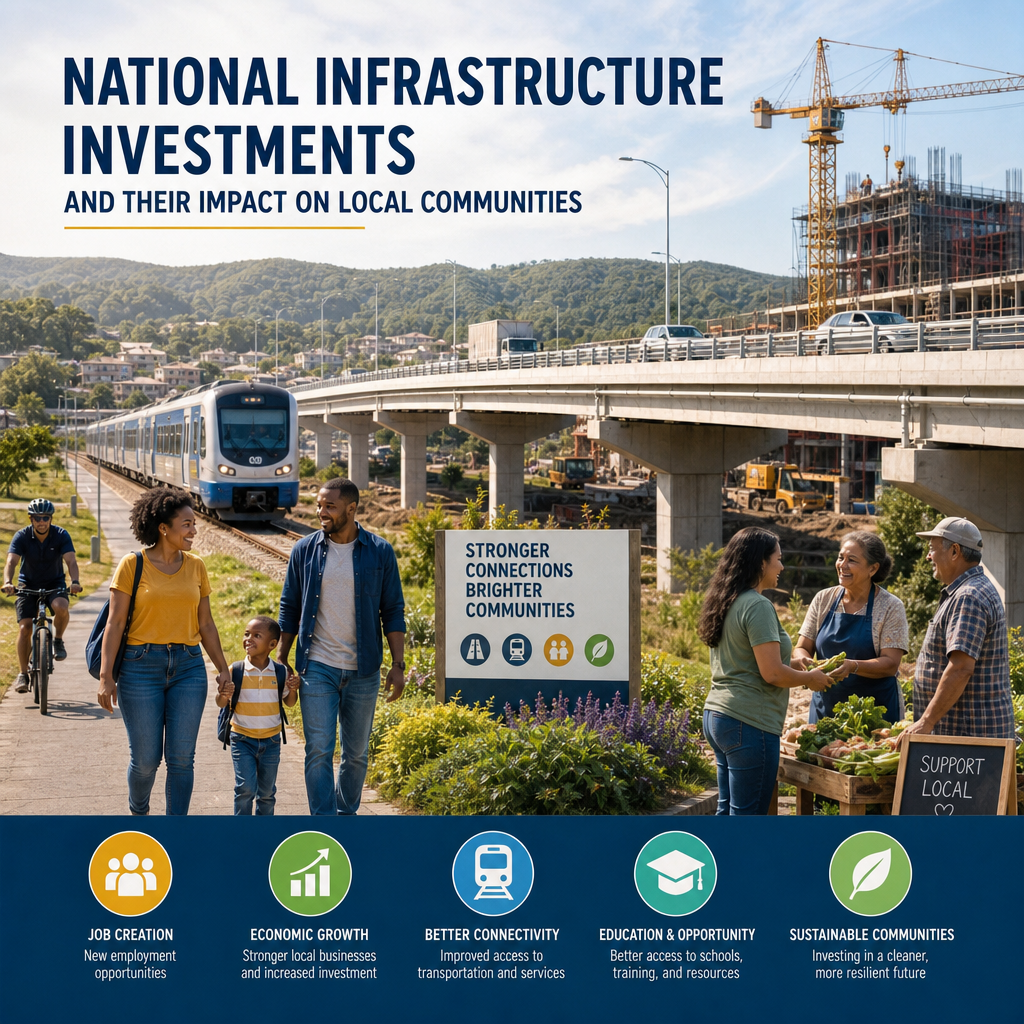
National Infrastructure Investments and Their Impact on Local Communities
National infrastructure investments can transform everyday life in local communities by improving roads, transit, utilities, and public services. While these projects may cause short-term disruption, they often create safer neighborhoods, stronger local economies, and a better foundation for future growth.
By: Peter B on July 25, 2026
National Infrastructure Investments: What They Mean for Local Communities
National infrastructure investments shape far more than highways, bridges, and utility systems. They influence how people commute, how businesses grow, how children get to school, and how safely a community can respond to emergencies. For many towns and cities, these projects can bring long-needed upgrades, new jobs, and a stronger foundation for future growth.
At the same time, infrastructure projects can also create disruption, raise questions about costs, and require careful local planning. That is why understanding national infrastructure investments matters for residents, business owners, local leaders, and community advocates alike. When federal and national-level funding reaches local areas, the effects are often immediate and long-lasting.
What Are National Infrastructure Investments?
National infrastructure investments are public or public-private spending efforts designed to build, repair, or modernize essential systems that support daily life and economic activity. These investments usually come from federal budgets, national infrastructure programs, or large-scale public initiatives.
They often target areas such as:
Roads, highways, and bridges
Public transit and rail
Water and wastewater systems
Broadband and digital access
Airports, ports, and freight corridors
Power grids and clean energy systems
Schools, hospitals, and public buildings
Flood control and climate resilience projects
These upgrades are not only about construction. They are about improving the systems people rely on every day.
How National Infrastructure Investments Reach Local Communities
National infrastructure investments are often designed at the federal level, but their real impact shows up in neighborhoods, business districts, and municipal budgets. Local governments usually compete for funding, partner with state agencies, or apply for grants tied to specific infrastructure goals.
From Federal Policy to Local Projects
A national infrastructure program may fund a major bridge replacement, but the local impact can include:
Fewer traffic delays
Better access to jobs and services
Safer routes for pedestrians and cyclists
Lower transportation costs for residents and businesses
The same is true for water system upgrades. A large-scale investment in lead pipe replacement or sewer modernization may start with federal support, but the results are felt in homes, schools, and commercial areas.
Why Local Planning Matters
National funding does not automatically solve local problems. Communities still need:
Clear project priorities
Accurate needs assessments
Transparent budgeting
Community input
Strong project management
Without these pieces, funds may be delayed, poorly allocated, or used on projects that do not fully match local needs.
The Positive Effects of National Infrastructure Investments
When managed well, infrastructure spending can create broad benefits that go beyond the construction phase. These benefits often strengthen both quality of life and local economies.
Better Roads, Bridges, and Transit
One of the most visible benefits is improved transportation. Well-maintained roads and bridges reduce vehicle damage, cut travel time, and improve safety. Public transit upgrades can also make it easier for workers, students, seniors, and people with disabilities to get where they need to go.
For example, a bus rapid transit expansion may help a city connect neighborhoods to medical centers and job hubs more efficiently. A bridge repair project may restore a key freight route that local businesses depend on.
Stronger Local Economies
Infrastructure helps local economies function. Businesses rely on dependable roads, broadband, water service, and power. When those systems improve, communities often become more attractive to employers, developers, and investors.
Local economic benefits may include:
Easier movement of goods and services
Expanded access to labor markets
Improved business reliability
Higher property desirability in some areas
More confidence for long-term investment
Small businesses often benefit as well. A better road network can increase customer traffic, while broadband expansion can help entrepreneurs reach larger markets.
Job Creation and Workforce Development
Infrastructure projects typically require planners, engineers, contractors, equipment operators, electricians, laborers, and inspectors. That means funding can support both direct construction jobs and related employment in supply chains.
Some communities also use infrastructure projects to strengthen workforce development by:
Partnering with local colleges
Creating apprenticeship pathways
Prioritizing local hiring
Supporting trade certification programs
These efforts can leave behind more than a completed project. They can help build a stronger local workforce.
Improved Public Safety and Emergency Response
Infrastructure is closely tied to safety. Roads that are in good condition, functioning traffic signals, reliable water systems, and modern emergency communications all help first responders do their jobs.
Communities may see safety improvements such as:
Faster ambulance response times
Reduced crash risk
Better stormwater management
More reliable fire protection systems
Greater resilience during power outages or natural disasters
In areas prone to flooding, aging drainage systems can create major risks. National infrastructure investments that support resilience can help prevent future damage and reduce long-term recovery costs.
Challenges Communities Should Watch For
National infrastructure investments can create opportunity, but they can also bring complications. Communities that understand the possible downsides are better prepared to manage them.
Construction Disruption
Road closures, detours, noise, dust, and temporary access issues can affect daily life and local commerce. A downtown business district under construction may struggle with foot traffic. Commuters may face longer travel times.
Good project planning can reduce these impacts, but they are rarely eliminated completely.
Uneven Benefits
Not every community benefits equally from national infrastructure spending. Larger cities may have more staff and resources to apply for grants. Wealthier areas may move faster through permitting and matching-fund requirements. Rural communities may face more difficulty accessing the same opportunities.
There is also a risk that projects focus on visible upgrades while leaving smaller, less glamorous needs unresolved, such as aging water lines or storm drains.
Long-Term Maintenance Costs
A new road, transit station, or public facility is only helpful if it is maintained. Communities need to plan for the cost of upkeep, repairs, staffing, and replacement over time. If maintenance is neglected, a new asset can become another future liability.
Gentrification and Rising Costs
In some neighborhoods, major infrastructure improvements can increase property values and attract new development. That can be positive, but it may also put pressure on long-time residents through rising rents and taxes.
Local leaders often need to consider:
Affordable housing protections
Small business retention
Community land use planning
Anti-displacement strategies
The goal should be to improve neighborhoods without pushing existing residents out.
How Local Communities Can Prepare for Infrastructure Projects
Communities that engage early are often better positioned to benefit from national infrastructure investments. Preparation helps ensure that projects reflect real needs and community priorities.
Start With a Local Needs Assessment
Before pursuing funding, local leaders should identify the most urgent infrastructure gaps. That might include aging sewer systems, unsafe intersections, poor broadband service, or unreliable transit.
Useful questions include:
Which systems are most vulnerable?
Where are service gaps greatest?
Which neighborhoods are most affected?
What problems would create the biggest community benefit if solved?
A clear needs assessment helps communities focus their efforts and support strong funding applications.
Involve Residents Early
Public input can make infrastructure plans more effective and more trusted. Residents often know where problems exist long before data catches up. They can also identify unintended consequences that planners might miss.
Ways to gather input include:
Public meetings
Online surveys
Community workshops
Advisory committees
Outreach through schools, libraries, and faith groups
This is especially important in communities that have historically been excluded from planning decisions.
Coordinate Across Agencies
Infrastructure projects often require cooperation between local departments, state agencies, utility providers, transit authorities, and private contractors. When communication breaks down, delays are common.
A coordinated approach can help communities:
Align timelines
Reduce duplication
Manage permitting more efficiently
Clarify responsibility for long-term maintenance
Think Beyond the Project Itself
The best infrastructure plans connect immediate needs to broader community goals. For example:
A broadband project can support remote work and digital education
A sidewalk expansion can improve safety and access for seniors
A stormwater project can support climate resilience and land-use planning
A transit upgrade can help connect workers to jobs without requiring a car
This systems view turns a single project into a broader investment in community health and opportunity.
Real-World Examples of Local Impact
The benefits of national infrastructure investments are easier to understand when viewed through everyday examples.
A Rural Town Gets Broadband Access
A rural community may struggle with slow internet speeds that make it hard for students to complete homework, telehealth patients to access care, or small businesses to compete online. Broadband investment can reduce isolation and expand economic opportunity.
A City Repairs a Major Bridge
A city bridge nearing the end of its useful life can become a major bottleneck. Federal support for replacement or rehabilitation may improve freight movement, reduce commute times, and restore confidence in regional transportation.
A Neighborhood Receives Water System Upgrades
A community with aging pipes and recurring service issues may see major improvements after funding supports replacements and treatment upgrades. That can improve public health, reduce leaks, and lower the risk of costly emergency repairs.
A Transit Corridor Is Expanded
An expanded bus or rail corridor may connect lower-income neighborhoods to jobs, schools, and healthcare. It can also reduce traffic congestion and give people more reliable transportation options.
What Residents and Local Leaders Can Do
People do not need to be engineers or policy experts to have a voice in infrastructure decisions. There are practical ways to stay informed and involved.
For Residents
Attend public meetings or planning sessions
Review local capital improvement plans
Share feedback on proposed projects
Ask how projects will affect access, cost, and safety
Follow local government and agency updates
For Local Leaders
Prioritize projects based on documented need
Build partnerships with state and federal agencies
Use data to support funding requests
Plan for maintenance and lifecycle costs
Ensure community voices shape project decisions
The most successful efforts usually combine technical planning with local knowledge.
The Bigger Picture: Infrastructure as Community Investment
At its best, infrastructure is not just concrete, steel, pipes, or fiber cable. It is a framework for opportunity. National infrastructure investments help communities function today while preparing them for tomorrow’s challenges.
When these investments are planned thoughtfully, they can:
Improve mobility
Strengthen local economies
Support safer neighborhoods
Expand access to digital and essential services
Build resilience against future shocks
But the value of any investment depends on how well it matches local needs and how responsibly it is managed over time.
Frequently Asked Questions
1. What are national infrastructure investments?
National infrastructure investments are large-scale public or public-private funding efforts that support essential systems like roads, bridges, transit, water, broadband, energy, and public facilities. They are usually driven by federal or national policy and implemented through state and local partners.
2. How do these investments help local communities?
They can improve safety, reduce commute times, support jobs, expand access to broadband, modernize water systems, and make communities more resilient. The exact benefits depend on the type of project and how well it fits local needs.
3. Can small towns benefit from national infrastructure investments?
Yes. Small towns can benefit significantly, especially when funding supports broadband expansion, water system upgrades, bridge repairs, rural transit, or storm resilience projects. The challenge is often securing access to funding and technical assistance.
4. What are the risks of infrastructure projects for local residents?
Common risks include construction disruption, rising costs in some neighborhoods, delays, and long-term maintenance burdens. In some areas, improvements may also contribute to displacement if planning does not account for housing affordability and local protections.
5. How can residents influence infrastructure planning?
Residents can attend public meetings, respond to surveys, contact local officials, review project plans, and participate in advisory groups. Community input can help ensure that projects address real needs and avoid unintended consequences.
National infrastructure investments have a direct and lasting influence on local communities. They can repair what is aging, expand what is missing, and strengthen the systems people rely on every day. From safer bridges and better transit to improved broadband and more reliable water service, these projects can create meaningful change when they are guided by local needs and maintained over time.
Still, the best outcomes do not happen automatically. Communities need clear priorities, strong public engagement, and smart planning to make sure investments deliver real value. Residents should pay attention to where funding is going, how projects are selected, and whether the benefits are reaching the people who need them most.
In the end, infrastructure is about more than construction. It is about access, opportunity, safety, and resilience. When communities approach national infrastructure investments with informed participation and a long-term vision, they are better positioned to build a stronger future for everyone.
Peter B holds a degree in Journalism and has 5 years of experience covering U.S. economic policy, labor markets, and financial news. He writes data-driven news content on topics like inflation, interest rates, and employment trends.