How to Create a Monthly Budget That Actually Works
A monthly budget should make your life easier, not more stressful. In this guide, you’ll learn how to build a realistic monthly budget that fits your habits, leaves room for surprises, and still helps you reach your money goals.
By: Mary Mitchell on July 24, 2026
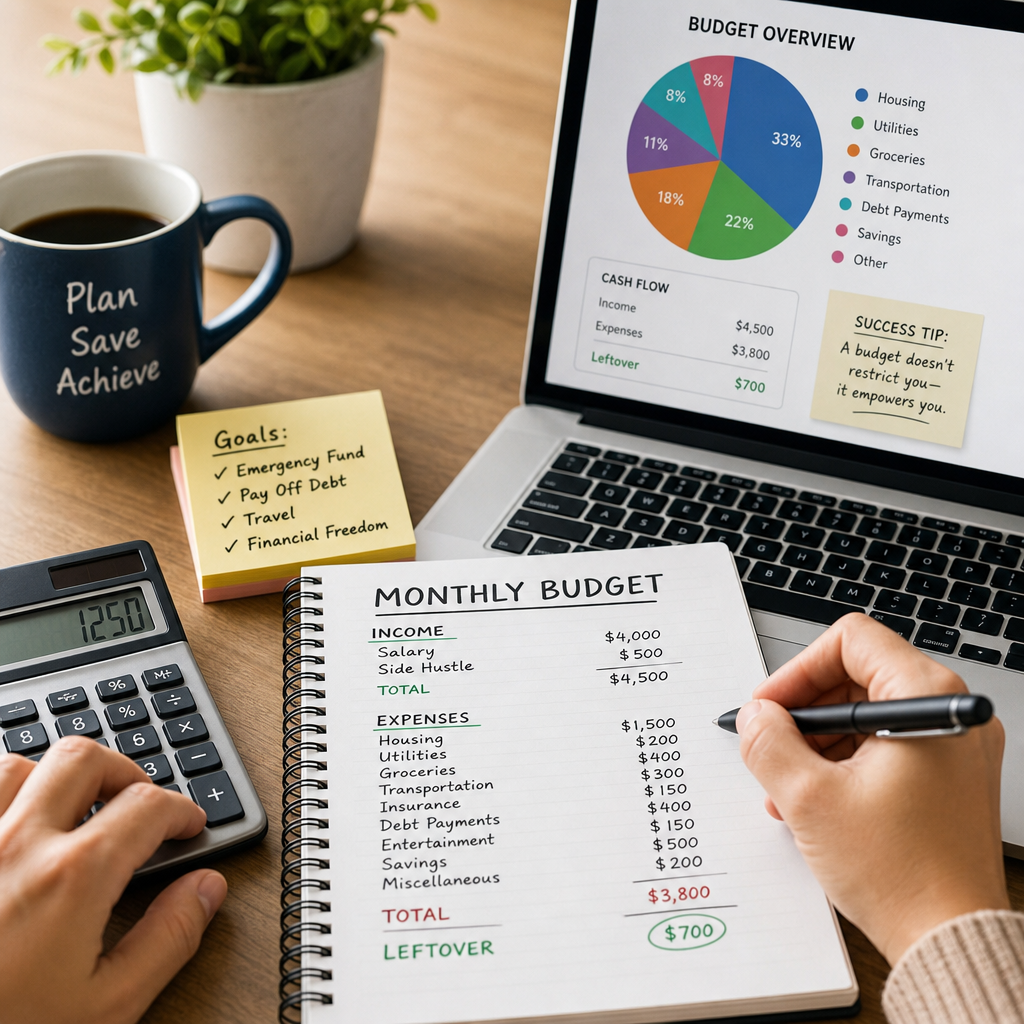
Learning how to create a monthly budget that actually works is one of the most practical money skills you can build. A good budget does more than track spending—it gives your income a purpose, helps you prepare for surprises, and reduces the stress that comes with wondering where your money went.
The problem is that many budgets fail because they are too rigid, too complicated, or unrealistic for everyday life. If your budget feels like a punishment, you will not stick with it. The goal is to build a plan that fits your habits, supports your priorities, and adjusts as your life changes.
In this guide, you will learn a simple, realistic way to create a monthly budget that actually works in the real world.
Why Most Budgets Fail
Before you build a better plan, it helps to understand why so many budgets break down.
They are based on wishful thinking
A common mistake is estimating “ideal” spending instead of actual spending. If you guess that you spend only $200 on groceries when your real average is closer to $450, the budget will fail before the month ends.
They are too strict
If every dollar is locked into a category with no flexibility, one unexpected expense can throw off the entire month. A budget needs room for life’s messy moments.
They ignore real habits
A budget should reflect your routines, not an imaginary version of your life. If you regularly grab coffee on workdays or pay for monthly subscriptions, those expenses belong in the plan.
They do not include savings or irregular costs
Many people focus only on bills and daily spending. But a monthly budget that actually works must include savings, gifts, car maintenance, annual fees, and other costs that do not arrive every month.
Start With Your Real Monthly Income
The foundation of any budget is knowing exactly how much money you have to work with.
Use take-home pay, not gross pay
Your budget should be based on your net income—the amount that lands in your bank account after taxes, insurance, retirement contributions, and other deductions.
If your income is steady, this is straightforward. If it varies, use a conservative average based on your lowest reliable months.
Include all consistent income sources
Add up:
Your primary job income
Side hustle or freelance earnings
Regular support payments
Any predictable recurring income
If a source is inconsistent, do not depend on it for essential bills unless you can confidently count on it each month.
Track Your Spending for One to Two Months
Before setting category limits, look at where your money actually goes.
Review bank and credit card statements
Go through recent transactions and sort them into major categories such as:
Housing
Utilities
Transportation
Groceries
Dining out
Entertainment
Subscriptions
Insurance
Personal care
Debt payments
Look for patterns, not perfection
You do not need to analyze every coffee purchase in detail. Focus on trends. Are groceries consistently higher than expected? Are subscriptions quietly eating up more than you realized?
Separate fixed and variable expenses
Fixed expenses stay mostly the same each month, such as:
Rent or mortgage
Car payment
Insurance premiums
Loan payments
Variable expenses change from month to month, such as:
Groceries
Gas
Dining out
Gifts
Entertainment
Understanding the difference makes your budget easier to manage.
Build a Budget Based on Real Life
Once you know your income and average spending, it is time to build the budget itself.
How to Create a Monthly Budget That Actually Works Step by Step
A practical monthly budget does not have to be complicated. Start with a basic structure and refine it over time.
1. Cover essentials first
List the expenses you must pay to keep your household running:
Rent or mortgage
Utilities
Transportation
Groceries
Insurance
Minimum debt payments
Childcare, if applicable
These are your non-negotiables. Make sure they fit comfortably within your monthly income.
2. Set aside money for savings
A budget that works should move you toward financial stability, not just survival.
Try to include:
Emergency savings
Retirement contributions
Short-term goals, such as travel or a home repair fund
Even small amounts matter. Saving consistently builds momentum.
3. Plan for irregular expenses
Not every expense arrives on a monthly schedule, but those costs still belong in your budget.
Examples include:
Car registration
Holiday gifts
School supplies
Annual memberships
Medical copays
Home maintenance
A useful approach is to divide the yearly cost by 12 and save that amount each month.
4. Allow room for flexible spending
You are more likely to stick with a budget that includes spending you actually enjoy. Set aside money for discretionary categories such as:
Dining out
Hobbies
Streaming services
Shopping
Entertainment
This keeps your budget from feeling restrictive and helps prevent rebound overspending.
5. Give every dollar a job
One of the simplest budgeting principles is to assign your income before the month begins. That does not mean every dollar has to go into a rigid category, but each dollar should have a purpose.
A basic structure might look like this:
50% for needs
30% for wants
20% for savings and debt repayment
That is only a starting point. Your actual percentages may look different depending on your income, location, and goals.
Choose a Budgeting Method That Fits You
There is no single best budgeting method. The right system is the one you will use consistently.
Zero-based budgeting
In a zero-based budget, your income minus expenses equals zero because every dollar is assigned a job. This method works well if you want close control over your spending.
Envelope budgeting
This approach uses separate categories for spending limits. You can use physical envelopes or digital equivalents. Once the category is empty, spending stops until next month.
The 50/30/20 method
This simple method divides your money into three buckets:
Needs
Wants
Savings and debt payoff
It is easy to understand and a good starting point for beginners.
Pay-yourself-first budgeting
With this method, savings and investments are prioritized immediately after you receive income. It works well for people who want to build wealth steadily without overcomplicating the process.
Use Tools That Make Budgeting Easier
A budget is easier to maintain when it is simple to update.
Try a spreadsheet or app
You can use:
A basic spreadsheet
A budgeting app
A paper planner
A bank’s built-in budgeting tools
The best tool is the one you will check regularly.
Automate what you can
Automation reduces decision fatigue and helps you stay consistent. Consider automating:
Bill payments
Savings transfers
Debt payments
Retirement contributions
Track spending weekly
A monthly budget works better when you review it often. A quick weekly check-in helps you catch overspending early and make small adjustments before they become bigger problems.
Make Room for Real-Life Flexibility
Even the best budget needs breathing room.
Build a buffer
If possible, keep a small cushion in your checking account so small mistakes or timing issues do not derail your month.
Expect occasional surprises
A flat tire, a school event, or a higher-than-expected utility bill can happen. Planning for small surprises helps you avoid using credit unnecessarily.
Adjust without guilt
If one category runs over, move money from another category instead of abandoning the entire budget. A budget is a living plan, not a perfect scorecard.
Common Budgeting Mistakes to Avoid
If your budget keeps falling apart, check for these issues.
Underestimating variable costs
Groceries, gas, and household goods often cost more than people expect. Use real averages instead of hopeful guesses.
Forgetting annual or seasonal expenses
Birthdays, holidays, back-to-school shopping, and tax time can strain your finances if they are not built into the plan.
Leaving no room for fun
A budget with no enjoyment is difficult to sustain. If you completely eliminate discretionary spending, you may end up overspending later.
Not reviewing the budget regularly
A budget should evolve. Income changes, bills change, and goals change. Review it at least once a month.
How to Stay Consistent Month After Month
Creating the budget is only the first step. The real value comes from sticking with it.
Set a monthly budget meeting
Choose a regular time to review:
What you spent
What you saved
What needs adjusting next month
If you share finances with a partner, make this a shared routine.
Celebrate small wins
Progress builds motivation. If you stayed within your grocery budget or saved more than planned, acknowledge it.
Keep your goals visible
Whether you are saving for an emergency fund, paying off debt, or preparing for a big purchase, remind yourself why the budget matters.
Simplify when needed
If your system becomes too complicated, scale it back. A simple budget you use consistently is more valuable than a detailed budget you ignore.
Example of a Simple Monthly Budget
Here is a basic example for someone with $3,500 in monthly take-home pay:
Rent: $1,200
Utilities: $200
Groceries: $400
Transportation: $250
Insurance: $250
Debt payments: $300
Savings: $500
Dining out: $150
Entertainment: $100
Personal spending: $100
Irregular expenses fund: $150
Buffer/miscellaneous: $100
This budget is just an example, but it shows how a monthly plan can balance essentials, savings, and lifestyle spending without feeling overly restrictive.
Frequently Asked Questions
1. What is the best way to start a monthly budget?
Start by calculating your take-home pay and tracking your actual spending for at least one month. Then list your essential expenses, savings goals, and flexible spending categories. A simple budget is easier to follow than a perfect one.
2. How much should I save each month in my budget?
That depends on your income, debt, and goals. A good starting point is to save something consistently, even if it is small. If you can, aim to include emergency savings and retirement contributions in your monthly plan.
3. What if my income changes every month?
Use your lowest reliable monthly income as your baseline. Build a budget around essential expenses first, and use extra income to cover savings, debt payoff, or variable spending. Keeping a buffer also helps smooth out income swings.
4. How do I stick to a budget when unexpected expenses come up?
Create a miscellaneous or buffer category in your budget, and keep a small emergency fund if possible. When something unexpected happens, adjust other flexible categories instead of abandoning the whole plan.
5. Should I use a budgeting app or a spreadsheet?
Either one can work. A budgeting app may be easier if you want automatic tracking, while a spreadsheet gives you more control and customization. Choose the method you will use consistently.
A monthly budget works best when it reflects your real life, not an idealized version of it. The most effective budgets start with accurate income, honest spending data, and a clear plan for essentials, savings, and flexible expenses. When you build in room for irregular costs and everyday life, budgeting stops feeling like a chore and starts becoming a tool for confidence.
If you want a monthly budget that actually works, keep it simple at first. Track what you spend, set realistic limits, and review the plan regularly. Over time, small improvements can lead to stronger savings, less financial stress, and better control over your money. You do not need a perfect system to make progress—you just need one you can use consistently.
The best time to start is this month. Begin with what you know, adjust as you learn, and keep refining your budget until it supports the life you want.
Mary S, CFP®, is a Certified Financial Planner with over 12 years of experience in personal finance, retirement planning, and wealth management. She writes educational content that helps readers understand financial concepts and make informed decisions based on reliable information.