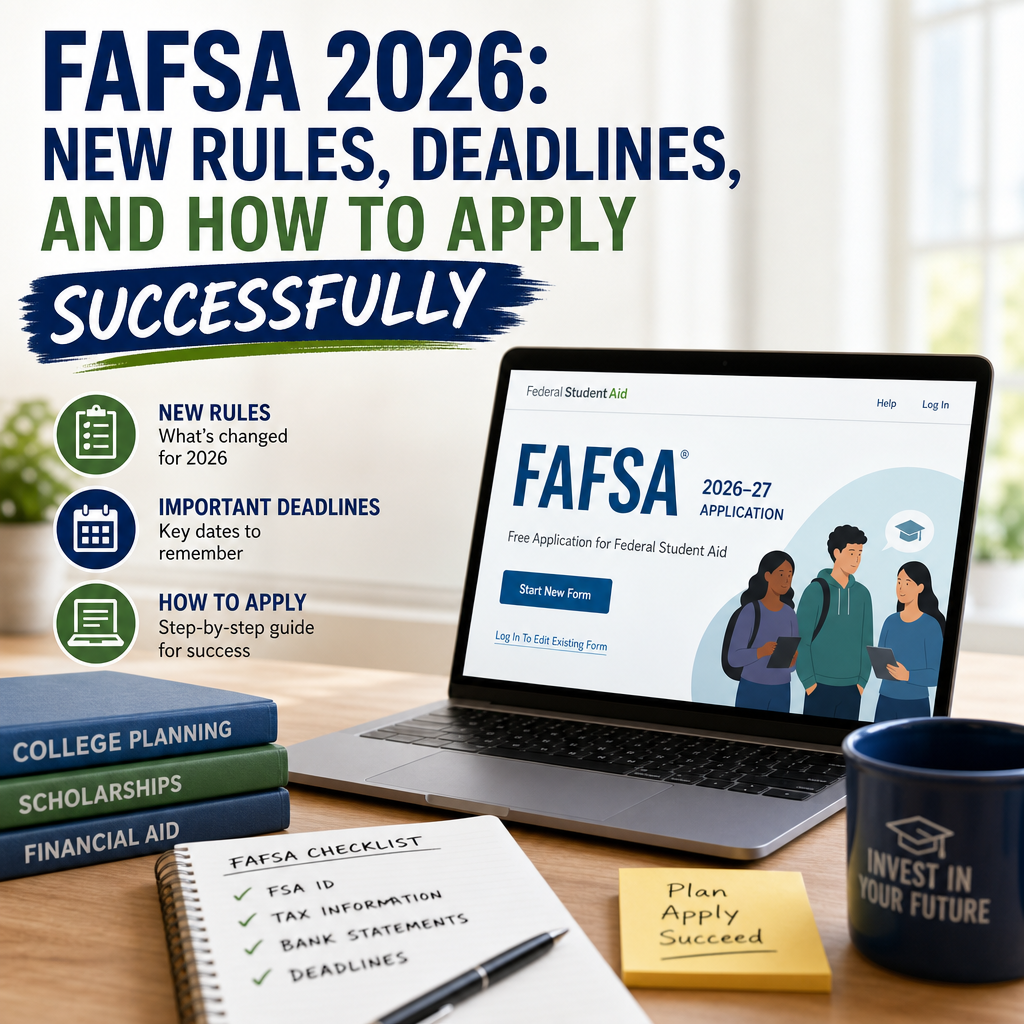
FAFSA 2026: New Rules, Deadlines, and How to Apply Successfully
FAFSA 2026 brings important updates to deadlines, rules, and the application process, but getting started early can make it much easier to secure aid for college or trade school. This guide breaks down what you need to know so you can complete the FAFSA 2026 accurately and on time.
By: Jennifer on July 24, 2026
The FAFSA 2026 process is one of the most important steps for students and families planning for college, trade school, or other eligible postsecondary programs. Whether you are applying for federal grants, work-study, or student loans, completing the Free Application for Federal Student Aid accurately and on time can make a major difference in how much financial aid you receive.
The good news is that FAFSA has become more streamlined in recent years. The challenge is that the changes also mean families need to understand new rules, updated deadlines, and a different application flow. If you are preparing for the FAFSA 2026 cycle, this guide will walk you through what matters most and how to submit a strong application without unnecessary stress.
What Is FAFSA 2026?
FAFSA stands for the Free Application for Federal Student Aid. It is the form the U.S. government uses to determine whether a student qualifies for federal financial aid.
For the FAFSA 2026 application cycle, students will use income and tax information from an earlier tax year, along with updated family and school details, to establish eligibility for aid for the 2026–2027 academic year.
Completing the FAFSA can help you access:
Pell Grants
Federal Work-Study
Direct Subsidized and Unsubsidized Loans
Some state grants
Institutional aid from colleges and universities
Even if you think your family income is too high to qualify, submitting the FAFSA is still worth it. Many schools require it for merit aid or institutional scholarships, and some aid programs are first come, first served.
FAFSA 2026: New Rules You Should Know
The FAFSA process continues to evolve, and the FAFSA 2026 application includes several details that students should understand before starting.
Contributor information is more important than ever
One of the biggest changes in recent FAFSA cycles is the use of contributors. Contributors include parents, spouses, or other individuals who are required to provide financial information based on the student’s dependency status.
This does not mean they are legally responsible for paying the student’s college costs. It only means their information is needed to complete the form.
To avoid delays:
Confirm who must be listed as a contributor
Make sure each contributor has their own FSA ID
Invite contributors early so they can complete their section quickly
The Student Aid Index replaces the old EFC
The FAFSA now uses the Student Aid Index (SAI) instead of the old Expected Family Contribution (EFC). The SAI is used to help schools determine your financial need.
A lower SAI generally indicates greater financial need, but it is not the same as a dollar amount your family must pay. Colleges use the SAI together with their own cost of attendance and aid policies.
Family size and tax data matter
The application may ask for details that affect eligibility, including:
Household size
Number of family members in college
Income and tax information
Untaxed income in some cases
It is important to answer each question carefully and use the right tax year information requested by the form.
Dependency status still affects what you report
Whether a student is considered dependent or independent changes which financial information must be reported. Many students under age 24 are dependent unless they meet specific criteria such as marriage, military service, or having legal dependents of their own.
If you are unsure about your dependency status, review the FAFSA instructions closely before submitting.
FAFSA 2026 Deadlines: Don’t Miss Your Window
Deadlines are one of the most important parts of the process. The FAFSA 2026 application has multiple deadline layers:
1. Federal FAFSA deadline
The federal deadline is the final date to submit the FAFSA for federal aid eligibility. While students should not wait until the last minute, the federal deadline gives you the broadest cutoff for completion.
2. State deadlines
Many states use FAFSA information to award state grants and scholarships. State deadlines can be earlier than the federal deadline, and some states have limited aid that is awarded on a first come, first served basis.
3. School deadlines
Colleges may set their own priority deadlines for institutional aid. Missing a school deadline can reduce your chances of receiving need-based scholarships or grants, even if you still qualify for federal aid.
How to stay ahead of deadlines
Use this simple approach:
Mark the federal deadline on your calendar
Check each state’s FAFSA deadline
Look up each college’s priority deadline
Submit early if possible
Save confirmation after submission
Submitting early can help you resolve errors before aid is awarded.
How to Prepare for FAFSA 2026
Good preparation makes the application faster and more accurate. Before you start the FAFSA 2026 form, gather the documents and information you will need.
Gather your documents
Have the following ready:
Social Security number, if applicable
FSA ID login credentials
Driver’s license number, if you have one
Federal income tax returns and W-2s
Bank statements and records of untaxed income
Records of assets, if requested
Parent or spouse tax information, if needed
School list for the colleges you want to receive your FAFSA data
Create or update your FSA ID
The FSA ID is your electronic signature for the FAFSA. Students and contributors each need their own. If you already have one, make sure the password and recovery information are current.
Make a school list before you start
The FAFSA lets you send your information to multiple schools. Prepare a list of institutions in advance, including any backup options. This saves time and helps ensure every school you want receives your application.
Check your tax return details
The FAFSA often uses imported tax information through IRS data transfer tools. Make sure your tax return is complete and matches your records. Even small mismatches in names, Social Security numbers, or filing status can trigger errors.
Step-by-Step Guide to Applying for FAFSA 2026
Completing the FAFSA 2026 form is much easier when you break it into smaller steps.
Step 1: Start the application on the official FAFSA website
Go to the official FAFSA site and sign in with your FSA ID. Choose the correct academic year before beginning the application.
Step 2: Enter student information
You will provide personal details such as:
Full legal name
Date of birth
Social Security number, if applicable
Contact information
Citizenship or eligible noncitizen status
Be careful to enter your information exactly as it appears on official records.
Step 3: Determine dependency status
The form will ask a series of questions to establish whether you are dependent or independent. Answer honestly and review any prompts carefully.
Step 4: Add contributors
If parent or spouse information is required, the form will guide you through adding them. Contributors will receive a request to complete their portion separately.
Step 5: Report financial information
Use the requested tax year data and financial records. If the IRS Data Retrieval Tool or a similar transfer option is available, use it when possible to reduce errors.
Step 6: Select your colleges
Add the schools you want to receive your FAFSA information. You can usually list multiple colleges, which helps if you are comparing financial aid offers.
Step 7: Review and submit
Before submitting, review every section:
Names
Dates
Social Security numbers
Financial figures
School list
A quick review can prevent delays or rejected information.
Step 8: Track your FAFSA submission
After submission, monitor your FAFSA status. You may receive confirmation, corrections requests, or notices if more information is needed.
Common FAFSA 2026 Mistakes to Avoid
A small mistake can slow down your aid processing. Here are the most common problems students run into with FAFSA 2026.
Entering the wrong tax year information
Use the tax year specified in the FAFSA instructions, not the most recent return unless the form says otherwise.
Mismatched names or Social Security numbers
If your FAFSA information does not match your legal records, the application may be delayed.
Forgetting a contributor
If the FAFSA requires a parent or spouse contributor and you leave them out, your form may remain incomplete.
Waiting too long to submit
Some aid is limited. Delays can reduce your chances of receiving the best available package.
Skipping corrections
If your school or the FAFSA system asks for corrections, respond quickly. Even small fixes can matter.
How to Maximize Your Financial Aid Eligibility
Completing the FAFSA is only the first step. If you want the best possible outcome, you should approach the process strategically.
Submit as early as possible
Early filing does not guarantee more aid, but it can improve your chances for state and institutional awards that run out quickly.
Apply to multiple schools
Different schools may offer different aid packages. Having multiple offers gives you more flexibility when comparing costs.
Keep your information consistent
Use the same legal name, address, and contact information across all school and financial aid forms.
Report unusual circumstances if needed
If your family has experienced job loss, medical hardship, or another major change, contact the financial aid office. Schools may be able to review special circumstances separately from the FAFSA.
Check for verification requests
Some students are selected for verification. This does not mean something is wrong. It simply means the school needs extra documents to confirm the information on file.
FAFSA 2026 for Parents and Families
Parents often play a big role in the FAFSA 2026 process, especially for dependent students. If you are a parent contributor, your attention to detail matters.
What parents should prepare
FSA ID
Tax return information
Household size details
Financial records
Access to email and the FAFSA system
Tips for parent contributors
Complete your section promptly
Use the same legal name on all records
Respond quickly if the student invites you to contribute
Save confirmation after submitting your portion
Families should also discuss who is responsible for each part of the application. Clear communication helps prevent incomplete forms and confusion.
Why FAFSA 2026 Still Matters Even If You Think You Won’t Qualify
Many families skip the FAFSA because they assume they make too much money to qualify. That can be a costly mistake.
The FAFSA 2026 form can affect access to:
Federal aid
State aid
School-based grants and scholarships
Work-study opportunities
Some private scholarships that require FAFSA completion
Even if your family’s income seems too high for need-based aid, colleges may still use the FAFSA to decide how to package grants, loans, and institutional assistance. Filing the form keeps your options open.
Frequently Asked Questions
1. When should I start the FAFSA 2026 application?
You should start as soon as the application opens for the 2026–2027 academic year. Early completion gives you more time to fix errors and helps you meet state and school priority deadlines.
2. Do I need my parents’ information for FAFSA 2026?
If you are a dependent student, yes, you will usually need parent contributor information. If you are independent based on FAFSA rules, you may not need it. Dependency is determined by specific questions in the application, not by whether you live with your parents or how much they help you.
3. What is the difference between the SAI and EFC?
The Student Aid Index (SAI) replaced the Expected Family Contribution (EFC). The SAI helps schools estimate financial need, but it is not a bill or a required payment amount. It is one part of the aid calculation used by colleges.
4. Can I submit FAFSA 2026 to more than one college?
Yes. You can list multiple colleges on the FAFSA so they each receive your information. This is a smart move if you are applying to several schools or comparing financial aid offers.
5. What happens if I make a mistake on my FAFSA?
If you notice an error after submission, you can usually make corrections through the FAFSA system. You should correct mistakes as soon as possible, especially if they involve income, household size, dependency status, or school selections.
The FAFSA 2026 application may seem complicated at first, but the process becomes much easier when you understand the rules, deadlines, and steps ahead of time. The most important things are simple: gather your documents early, identify the correct contributors, use accurate tax information, and submit before your state or school deadlines pass.
Even if you are uncertain about eligibility, filing the FAFSA is still a smart decision because it can open the door to federal aid, state grants, work-study, and institutional scholarships. A careful, timely application can make college more affordable and reduce last-minute stress.
If you are preparing for the upcoming school year, don’t wait until the deadline approaches. Review your documents now, create or update your FSA ID, and map out the schools and deadlines that matter to you. A few hours of preparation can pay off in a much stronger financial aid outcome.
Jennifer, M.Ed., holds a degree in Higher Education Administration, with
a focus on U.S. college financial aid, admissions policy, and student
support systems. She researches and writes about scholarships, federal
aid programs, and the college planning process to help students and
families make informed, well-supported decisions.