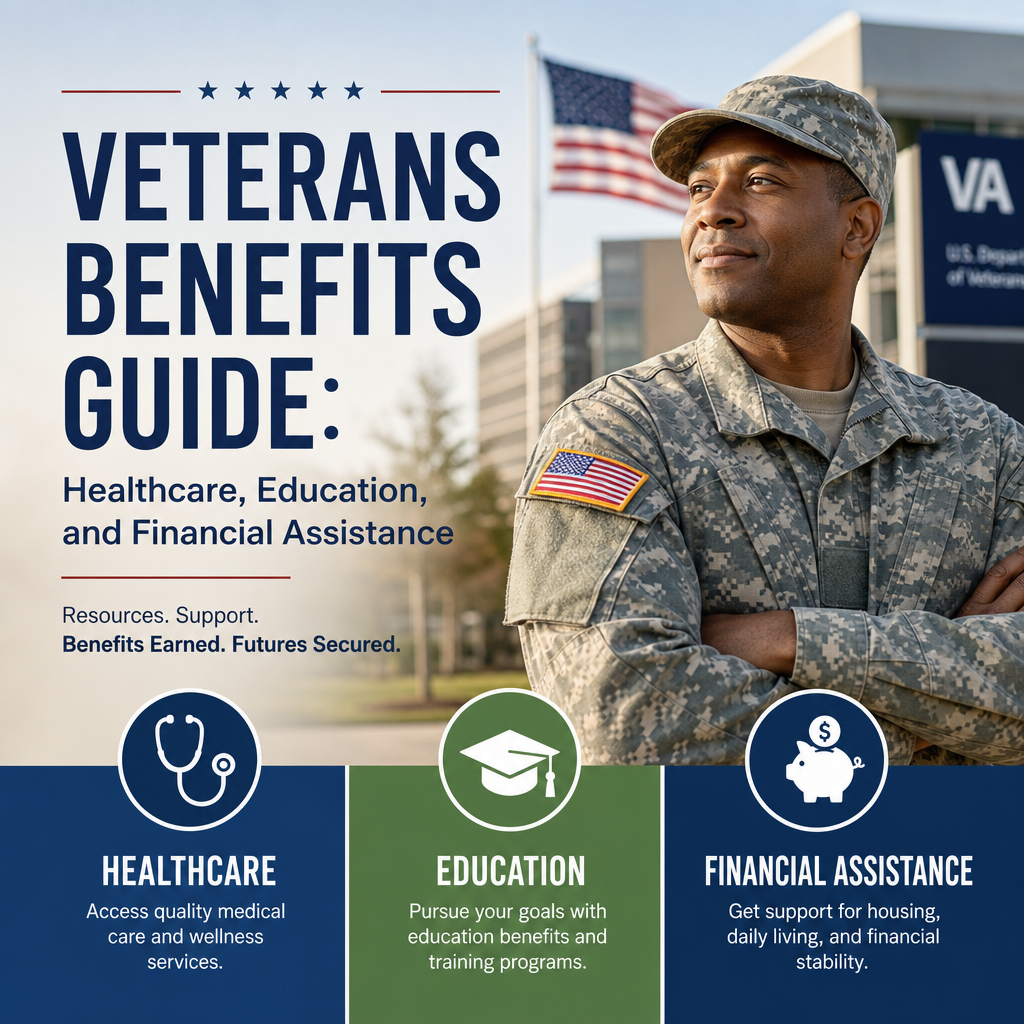
Veterans Benefits Guide: Healthcare, Education, and Financial Assistance
A veterans benefits guide can help you navigate healthcare, education, and financial assistance with less stress and more confidence. By understanding what you qualify for and how to apply, you can make the most of the support earned through your service.
By: Emilly Adams on July 25, 2026
Transitioning from military service to civilian life can bring new opportunities, but it can also raise practical questions about healthcare, education, housing, and everyday finances. A solid veterans benefits guide can make that transition easier by helping you understand what support may be available and how to use it effectively. From VA medical care to education programs and financial assistance, benefits earned through service can provide meaningful stability for veterans and their families.
The challenge is that the system can feel overwhelming at first. There are different eligibility rules, multiple agencies, and a lot of paperwork. This guide breaks down the most important categories of support in plain language so you can identify the benefits that fit your situation and take the next step with confidence.
Understanding Your Veterans Benefits Guide
Veterans benefits are not one-size-fits-all. Eligibility can depend on your length of service, discharge status, service-connected disabilities, income, family status, and the specific benefit program.
A good veterans benefits guide should help you understand three core areas:
Healthcare: medical, mental health, prescription, and preventive services
Education: college, training, certification, and apprenticeship support
Financial assistance: disability compensation, pensions, housing support, and related programs
The Department of Veterans Affairs (VA) is the main federal agency that administers many benefits, but some programs also involve the Department of Education, the Department of Labor, and state agencies. That’s why it helps to start with the basics and then narrow in on what applies to you.
Healthcare Benefits for Veterans
Access to healthcare is one of the most valuable benefits available to eligible veterans. VA healthcare can support everything from routine checkups to specialized treatment.
VA Health Care Enrollment
If you qualify, you may be able to enroll in the VA health care system. Once enrolled, you can access care through VA medical centers, outpatient clinics, and telehealth options, depending on your location and needs.
Common services may include:
Primary care
Preventive screenings
Mental health care
Specialty care
Emergency services in certain situations
Prescription medications
Women’s health services
Rehabilitation and therapy
Eligibility is based on factors such as service history, income, and disability status. Veterans with service-connected conditions often receive priority access, but many others may also qualify.
Mental Health Support
Mental health support is an essential part of veterans healthcare. Service members and veterans can experience stress, anxiety, depression, trauma-related symptoms, or difficulty adjusting to civilian life.
VA mental health services may include:
Counseling
Psychiatric care
PTSD treatment
Substance use disorder treatment
Crisis support
If you or someone you know is in immediate danger or needs urgent support, the Veterans Crisis Line is available 24/7.
Long-Term and Specialty Care
Some veterans need more than basic medical care. Depending on your needs and eligibility, you may have access to:
Home-based care
Physical therapy
Prosthetics
Hearing and vision services
Geriatric care
Palliative and hospice care
If you have a service-connected disability, these services can be especially important for maintaining independence and quality of life.
Education Benefits Through the GI Bill and Beyond
Education benefits are among the most well-known veteran resources. They can help pay for college, trade school, certification programs, apprenticeships, and job training.
Post-9/11 GI Bill
The Post-9/11 GI Bill is a major education benefit for many veterans and eligible dependents. It may help cover:
Tuition and fees
A housing allowance
Money for books and supplies
Some moving or relocation support in specific cases
The amount you receive can depend on your length of service and the type of school you attend. Public schools, private institutions, and online programs may all be covered under different rules.
Montgomery GI Bill
Some veterans may be eligible for the Montgomery GI Bill, which also provides education and training assistance. This program has different enrollment rules and payment structures from the Post-9/11 GI Bill, so it’s important to compare both if you qualify for more than one.
Tuition Assistance and Vocational Training
Veterans who want a faster path into the workforce may benefit from vocational and technical programs. These programs can support careers in areas such as:
Healthcare
Information technology
Skilled trades
Transportation
Emergency services
Business and administration
Education doesn’t always mean a four-year degree. In many cases, a certification or apprenticeship can lead to a strong career with less debt and faster entry into the job market.
Transferable Benefits for Dependents
In some cases, veterans can transfer education benefits to a spouse or dependent child. This can be a valuable family resource, especially when planning for college costs. Transfer rules are strict, so be sure to review current requirements carefully before making decisions.
Financial Assistance for Veterans
Financial assistance can help veterans manage the transition to civilian life, deal with disability-related expenses, or stabilize household income.
VA Disability Compensation
If you have a disability or medical condition linked to your military service, you may qualify for VA disability compensation. This is a tax-free monthly payment based on the severity of the condition and how it affects your life and work.
Common service-connected conditions may include:
Back or joint injuries
Hearing loss
PTSD
Traumatic brain injury
Respiratory conditions
Chronic pain-related limitations
To receive compensation, you generally need evidence connecting the condition to your service. Medical records, service records, and supporting statements can all help strengthen your claim.
VA Pension for Wartime Veterans
The VA pension is a needs-based benefit for certain wartime veterans with limited income and assets. It is different from disability compensation because it is based on financial need rather than service-connected disability.
Some veterans may also qualify for:
Aid and Attendance, if they need help with daily activities
Housebound benefits, if they are substantially confined to their home
Housing and Home Loan Assistance
Stable housing is a major part of financial wellness. The VA Home Loan Program can help eligible veterans buy a home with favorable terms and no required down payment in many cases, depending on the lender and situation.
The program may also help with:
Refinancing existing loans
Avoiding private mortgage insurance in many cases
Accessing better lending terms than some conventional loans
If you are already a homeowner, the VA also offers programs that may help with disabilities-related home modifications or housing stability in certain situations.
Emergency and Family Support
Veterans and their families may also find help through:
State veterans programs
Nonprofit organizations
Local emergency aid
Food, utility, and rental support
Burial and survivor benefits in qualifying situations
These resources can be especially helpful during a job transition, after a medical setback, or when unexpected expenses create strain.
How to Apply for Veterans Benefits
Applying for benefits can take time, but a clear approach makes the process easier.
Step 1: Gather Your Records
Before applying, collect the documents you may need, such as:
DD-214 or other discharge papers
Medical records
Service treatment records
Marriage or dependent records
Income information
Prior education records
Keeping digital copies can save time later.
Step 2: Identify the Right Benefit
Not every benefit requires the same application. For example:
Healthcare enrollment is handled differently from disability compensation
Education benefits have separate rules from pension benefits
Some state programs require additional paperwork
Read each program’s requirements carefully before applying.
Step 3: Submit a Complete Application
Incomplete applications often lead to delays. Make sure forms are filled out correctly and supporting documents are attached. If you’re unsure, work with a Veterans Service Officer (VSO), who can often help at no cost.
Step 4: Track Your Claim
After submitting, monitor your claim status and respond quickly to any requests for additional information. Staying organized can shorten delays and reduce frustration.
Common Mistakes to Avoid
Many veterans miss out on benefits because of preventable mistakes. Here are a few to watch for:
Waiting too long to apply
Assuming you do not qualify
Submitting incomplete forms
Forgetting to include supporting records
Overlooking state and local benefits
Not appealing a denied claim when evidence exists
It is also common for veterans to focus only on one type of support. A strong veterans benefits guide should remind you that healthcare, education, and financial assistance often work together. Using more than one benefit can create a stronger foundation for long-term stability.
Tips for Making the Most of Your Benefits
Work with a Veterans Service Officer
A VSO can help you understand eligibility, prepare claims, and avoid common errors. Many veterans find this support especially helpful when filing for disability compensation or appealing a decision.
Reevaluate Your Needs Over Time
Your situation may change as your health, family responsibilities, or career goals change. Revisit your benefits periodically to make sure you are using the support that best fits your life.
Combine Benefits Strategically
For example, you might:
Use VA healthcare while attending school
Pair GI Bill support with apprenticeship training
Apply for disability compensation while also exploring housing assistance
When used thoughtfully, benefits can complement each other.
Keep Your Information Updated
If your address, marital status, dependent information, or banking details change, update your records promptly. This helps prevent missed payments or delayed correspondence.
Frequently Asked Questions
1. Who qualifies for veterans benefits?
Eligibility depends on the benefit program. In general, factors may include your discharge status, length of service, whether you served during wartime, whether you have a service-connected disability, and your financial situation. Some programs also extend to spouses or dependents.
2. Can I get both VA healthcare and disability compensation?
Yes. Many veterans receive both. VA healthcare covers medical services, while disability compensation provides monthly tax-free payments for qualifying service-connected conditions. Receiving one does not automatically prevent you from receiving the other.
3. Do I need to use the GI Bill right after leaving the military?
Not always. Many veterans can use GI Bill benefits later, depending on the program and their eligibility period. However, there may be deadlines or service-based time limits, so it’s important to review your specific benefit rules early.
4. What if my disability claim is denied?
A denial does not always mean you are ineligible. You may be able to appeal, submit new evidence, or request a review. A Veterans Service Officer or accredited representative can help you understand your options and build a stronger case.
5. Are there benefits for veterans’ spouses and children?
Yes, in some cases. Dependents may qualify for transferred education benefits, survivor benefits, healthcare-related programs, or other support depending on the veteran’s status and the program requirements.
Veterans earned their benefits through service, and those benefits can make a real difference in health, education, and financial stability. The key is knowing where to start and which programs match your needs. VA healthcare can support both physical and mental wellness. Education benefits can open doors to degrees, certifications, and career training. Financial assistance programs, including disability compensation, pensions, and housing support, can help create a stronger foundation for daily life.
The process may feel complicated, but you do not have to figure it out alone. Start by gathering your records, identifying the benefit categories that apply to you, and reaching out to a Veterans Service Officer or official VA resource when needed. Even one well-chosen benefit can make your path forward easier, and combining several benefits can create lasting support for you and your family.
If you are just beginning your journey, take the first step today by reviewing your eligibility and organizing your documents. A clear plan now can save time later and help you access the benefits you have earned.
Emily A, holds a Master's degree in Public Administration (MPA) and has over 7 years of experience researching federal and state assistance programs. She writes educational content focused on government benefits, public policy, and community resources, using information from official agencies to help readers understand available programs and eligibility requirements.