How to Start Investing with Little Money in the United States
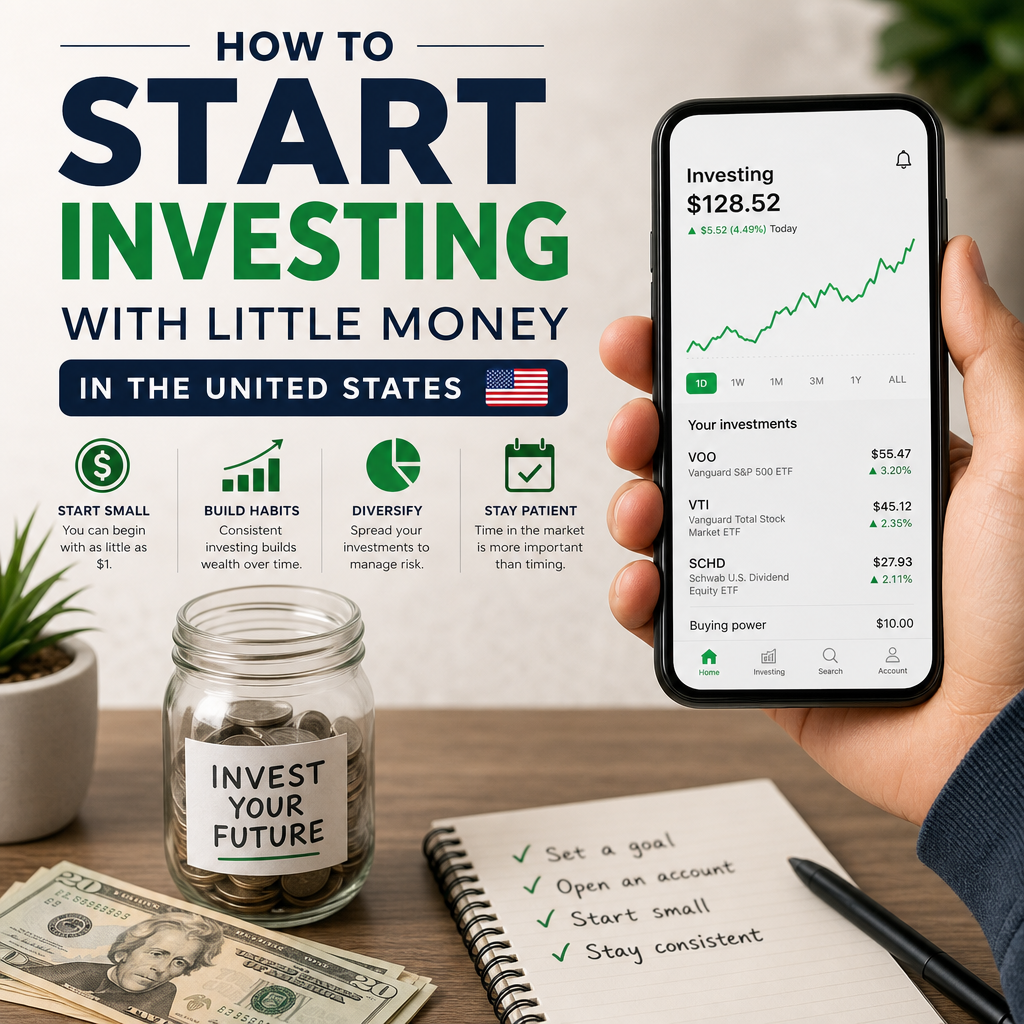
Learning how to start investing with little money in the United States is easier than many people think, thanks to fractional shares, low-cost index funds, and app-based brokerages. With a simple plan and consistent contributions, even small amounts can help you build long-term wealth over time.
By: Mary Mitchell on July 24, 2026
How to Start Investing with Little Money in the United States
Many people assume investing is only for wealthy adults with large brokerage accounts and a financial advisor on speed dial. In reality, how to start investing with little money in the United States is a practical question for students, young professionals, parents, and anyone trying to build long-term wealth one small step at a time. You do not need thousands of dollars to begin. You need a plan, consistency, and a basic understanding of the tools available.
The good news is that the investing landscape has changed. Today, fractional shares, low-cost index funds, app-based brokerages, and employer retirement plans make it possible to begin with very modest amounts. The challenge is not access—it is knowing where to start and how to avoid common mistakes.
How to Start Investing with Little Money in the United States
If you are starting with limited cash, the goal is not to chase big returns quickly. The goal is to build the habit of investing while keeping risk reasonable. That usually means focusing on simple, low-cost investments and avoiding unnecessary fees.
Step 1: Make sure your financial foundation is stable
Before you invest even a small amount, check the basics:
You can cover essential monthly expenses
You are paying at least minimums on any high-interest debt
You have a small emergency fund, even if it is just a few hundred dollars
You understand that invested money may go up or down in value
This does not mean you must be debt-free or fully “financially ready” before investing. It simply means investing should fit into a healthy money plan. If you invest while constantly relying on credit cards for emergencies, you may be forced to sell at the wrong time.
Step 2: Set a realistic starting amount
A common mistake is waiting until you have “enough” money. For most people, that delay becomes permanent. Instead, choose a starting amount you can invest consistently.
Examples:
$10 per week
$25 per paycheck
$50 per month
A round-up amount from everyday purchases
Starting small is not a weakness. It is how habits are built. Over time, regular contributions often matter more than timing the market.
Step 3: Choose the right account
Where you invest matters almost as much as what you buy. In the United States, beginners often start with one of these accounts:
401(k) or 403(b)
If your employer offers a retirement plan and matches contributions, that match is valuable. It is essentially extra compensation. Even if you can only contribute a small percentage of your paycheck, try to capture the match if possible.
IRA
A Traditional IRA or Roth IRA can be a smart choice for long-term investing. A Roth IRA, in particular, is popular with younger investors who expect to be in a higher tax bracket later. You can often start with very small contributions, depending on the provider.
Taxable brokerage account
If you want more flexibility and easier access to your money, a taxable brokerage account may be the simplest place to start. There are no special tax advantages, but there are also fewer restrictions on withdrawals.
Step 4: Pick investments that are simple and diversified
For small investors, simplicity is powerful. You do not need a complicated portfolio with dozens of stocks. In fact, it is often better to keep things basic.
Low-cost index funds and ETFs
Index funds and exchange-traded funds (ETFs) are among the most beginner-friendly options because they spread your money across many companies at once. That diversification can help reduce the risk of owning a few individual stocks.
Common examples include:
S&P 500 index funds
Total stock market funds
Broad bond index funds
These funds are popular because they usually have low expense ratios, which means more of your money stays invested.
Fractional shares
Fractional shares let you buy part of a stock or ETF instead of paying for a full share. This can be useful if you want to invest a small amount in a large company or a fund with a high share price. Many online brokerages now offer this feature.
Target-date funds
If you want a hands-off approach, a target-date fund can be a good option inside a retirement account. These funds automatically adjust their mix of stocks and bonds over time based on a target retirement year.
Best ways to invest small amounts of money
There is no single best method for everyone. The right choice depends on your goals, timeline, and comfort with risk. Still, some strategies work especially well for people starting with limited money.
Automate your contributions
Automation is one of the easiest ways to stay consistent. You can set up automatic transfers from checking to investing on payday. Even a small recurring amount can build momentum.
Benefits of automation:
Removes the need to “remember” to invest
Helps you stay disciplined during busy months
Makes investing feel like a routine expense
Use dollar-cost averaging
Dollar-cost averaging means investing the same amount on a regular schedule, regardless of market ups and downs. When prices are lower, your money buys more shares. When prices are higher, it buys fewer. Over time, this can smooth out the effects of market volatility.
This strategy does not guarantee profits, but it can help beginner investors stay calm and avoid trying to guess the perfect time to buy.
Start with one core investment
If you are new to investing, you do not need a long list of holdings. A single broad index fund or target-date fund can be enough to begin. As your balance grows, you can add more detail later if needed.
What to avoid when you have little money to invest
Starting small does not mean taking unnecessary risks. In fact, beginners often lose money by making preventable mistakes.
Avoid high-fee investments
Fees may seem small, but they can eat into returns over time. Be cautious with:
Funds with high expense ratios
Brokerages that charge account maintenance fees
Frequent trading fees
Investment products with unclear costs
Low-cost investing gives your money a better chance to grow.
Avoid picking stocks based on hype
It is tempting to buy a stock because it is trending on social media or mentioned in the news. But single stocks are unpredictable, especially if you only have a little money to work with.
If one small company performs poorly, it can hurt your portfolio more than a diversified fund would. For most beginners, broad funds are a smarter starting point.
Avoid investing money you need soon
Do not invest rent money, emergency cash, or money set aside for short-term bills. The stock market can be volatile, and short-term losses can happen. Money needed within the next year or two usually belongs in a savings account, not the market.
Avoid waiting for “the perfect time”
Many first-time investors hesitate because they want to buy after a dip, after a raise, or after they learn more. Waiting can become a habit. A better approach is to start with a small amount, learn as you go, and keep contributing.
A practical beginner investment plan
Here is a simple example of how someone might begin investing with little money in the United States.
Example monthly plan
Suppose you can invest $40 per month.
You might:
Open a Roth IRA or brokerage account with a reputable provider
Set up automatic monthly transfers of $40
Buy one broad market index fund or ETF
Reinvest dividends automatically
Review the account every few months, not every day
This is not flashy, but it is effective. The most important part is consistency.
Example for an employee with a 401(k)
If your employer offers a 401(k) match, you might:
Contribute enough to get the full match
Choose a target-date fund or low-cost index fund option
Increase your contribution by 1% whenever you get a raise
That small increase can make a significant difference over time without straining your budget.
How to keep investing when money is tight
One of the hardest parts of investing with little money is staying committed when life gets expensive. That is normal. The key is to make investing flexible rather than all-or-nothing.
Use small increases
If you cannot invest much now, start with something manageable. Later, increase your contribution by:
$5 per month
1% of your paycheck
A portion of any tax refund or bonus
Small increases can grow into meaningful habits without causing financial stress.
Tie investing to income events
A helpful approach is to link investing to moments when money naturally arrives:
Payday
Freelance payments
Cash gifts
Tax refunds
Side hustle income
When you connect investing to income instead of leftover spending, it becomes easier to stay consistent.
Reinvest dividends
If your investments pay dividends, consider reinvesting them. This allows your returns to stay in the market and continue compounding over time. For small accounts, reinvestment can help every dollar work harder.
Why time matters more than amount
When you start investing with little money in the United States, it is easy to focus only on the small size of your contributions. But time in the market matters tremendously. A small amount invested consistently over many years can grow more than a larger amount invested only once.
That does not mean results are guaranteed. Markets rise and fall. But long-term investing gives your money more chances to benefit from compound growth. Even modest contributions become more powerful when given enough time.
Frequently Asked Questions
1. Can I start investing with just $10?
Yes. Many brokerages, retirement accounts, and apps allow small contributions, especially if you use fractional shares or recurring investments. The exact minimum depends on the provider, but you do not need a large amount to begin building the habit.
2. Should I invest or pay off debt first?
It depends on the type of debt. High-interest debt, such as credit card debt, usually deserves priority because interest charges can grow quickly. At the same time, if your employer offers a retirement match, contributing enough to earn the match may still be worthwhile.
3. Is a savings account better than investing for beginners?
For short-term goals and emergency funds, a savings account is better because it protects your money from market risk. For long-term goals like retirement, investing is usually more effective because your money has the potential to grow over time.
4. What is the safest way to invest a small amount?
No investment is completely risk-free, but broad index funds, target-date funds, and diversified ETFs are often considered beginner-friendly because they spread risk across many investments. The safest choice also depends on your timeline and goals.
5. How often should I check my investments?
For long-term investing, checking too often can lead to stress and impulsive decisions. Many investors do fine reviewing their accounts monthly or quarterly. The most important thing is to stay consistent with contributions and avoid reacting to short-term market swings.
Learning how to start investing with little money in the United States is less about having a large starting balance and more about building a smart, repeatable process. If you focus on the essentials—stabilizing your finances, choosing the right account, using low-cost diversified investments, and contributing consistently—you can begin with far less money than you might expect.
The biggest advantage small investors have is time. Starting early, even with modest amounts, gives your money more opportunity to grow through compounding and disciplined contributions. You do not need to master the market or wait for a perfect financial moment. You need a simple plan, patience, and the willingness to begin.
If you are ready to take the next step, choose one account, pick one low-cost investment, and make your first contribution. Small starts can lead to meaningful progress when you stay consistent.
Mary S, CFP®, is a Certified Financial Planner with over 12 years of experience in personal finance, retirement planning, and wealth management. She writes educational content that helps readers understand financial concepts and make informed decisions based on reliable information.