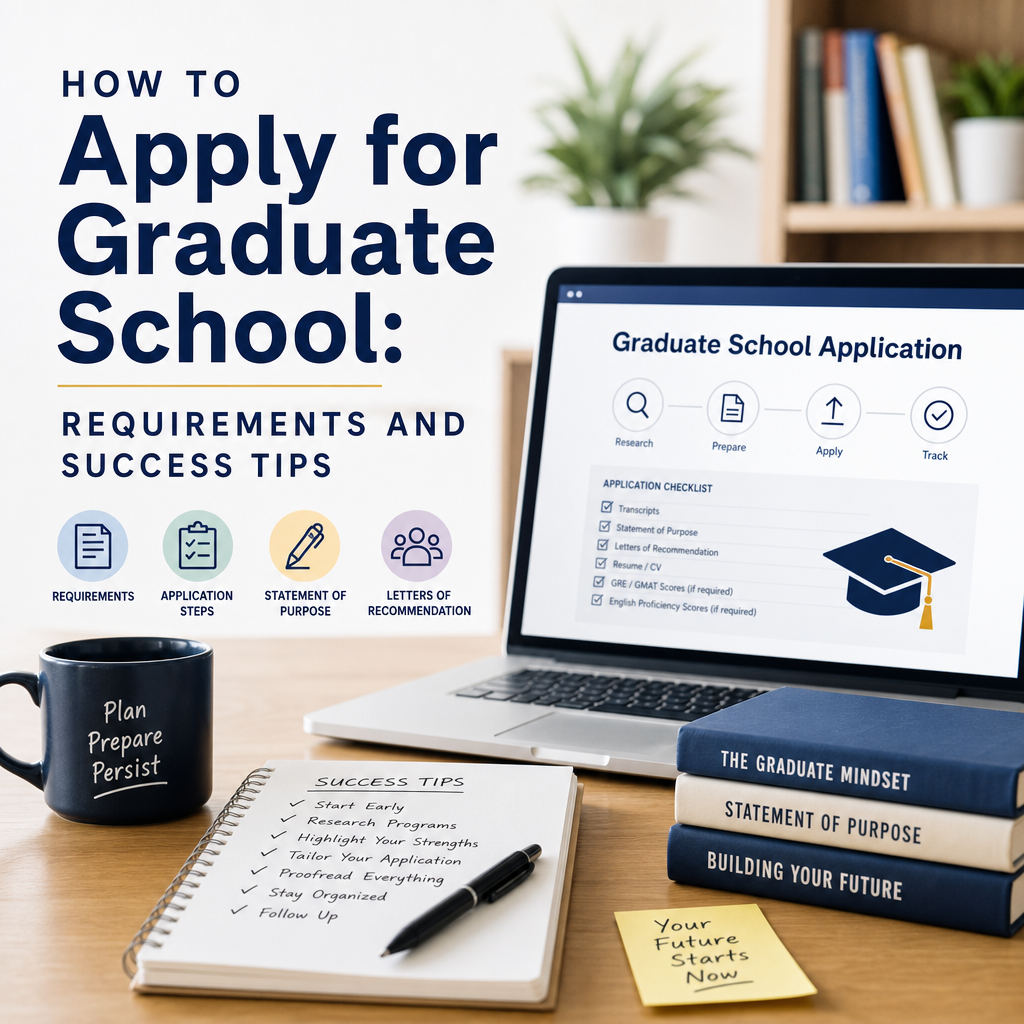
How to Apply for Graduate School: Requirements and Success Tips
Applying to graduate school starts with knowing what each program expects and preparing your materials with care. A strong graduate school application can help you stand out, stay organized, and move one step closer to your academic goals.
By: Jennifer on July 24, 2026
How to Apply for Graduate School: Requirements and Tips for Success
Applying to graduate school can feel exciting, overwhelming, and a little mysterious all at once. Whether you’re planning to pursue a master’s degree, doctorate, or another advanced credential, understanding how to apply for graduate school can make the process far less stressful. From choosing the right program to writing a standout statement of purpose, each step matters.
The good news is that most graduate school applications follow a predictable pattern. Once you know what admissions committees expect, you can build a stronger application and avoid common mistakes. In this guide, you’ll learn the main graduate school requirements, how to prepare your materials, and practical tips for success.
How to Apply for Graduate School: Start With a Clear Plan
Before you fill out any applications, take time to define your goals. Graduate school is a major investment of time, energy, and money, so it helps to know exactly why you want to go.
Ask yourself:
What degree do I need for my career goals?
Do I want a research-focused, professional, or practice-based program?
Would I prefer full-time, part-time, online, or on-campus study?
What kind of environment will help me thrive academically and personally?
A focused plan makes the rest of the process easier. It also helps you identify programs that fit your interests instead of applying broadly without a strategy.
Common Graduate School Requirements
Every program is different, but most graduate school applications include several core components. Understanding these requirements early gives you time to gather strong materials and meet deadlines.
1. Undergraduate transcripts
Most schools require official transcripts from every college or university you attended. Some programs have minimum GPA expectations, while others review your academic record more holistically.
If your GPA is not as strong as you’d like, don’t panic. You can strengthen your application with:
Relevant work experience
Strong recommendation letters
A compelling statement of purpose
Evidence of recent academic success or professional growth
2. Standardized test scores
Depending on the program, you may need to submit GRE, GMAT, LSAT, MCAT, or another test score. Many schools have made testing optional in recent years, but some still require it.
Always check each program’s admissions page carefully. If the test is optional, think strategically about whether your score will help your application.
3. Letters of recommendation
Most graduate schools ask for two to three recommendation letters. These should come from people who can speak to your academic ability, work ethic, leadership, research skills, or professional potential.
Strong recommenders might include:
Professors who know your work well
Academic advisors
Internship supervisors
Current or former managers, depending on the field
Choose recommenders who can offer specific examples, not just general praise.
4. Statement of purpose or personal statement
This is one of the most important parts of your application. Your statement of purpose explains why you want to pursue graduate study, why you’re interested in that specific program, and how the degree fits your long-term goals.
A strong statement should clearly answer questions like:
Why this field?
Why this school?
What experience has prepared me?
What do I hope to do after graduation?
5. Resume or curriculum vitae
Many graduate programs request a resume or CV. This document should highlight your academic background, professional experience, volunteer work, research, publications, certifications, and leadership roles.
Tailor your resume to the program whenever possible. Emphasize experiences that support your graduate school goals.
6. Writing sample, portfolio, or interview
Some programs require additional materials such as:
A writing sample
A portfolio of creative work
A research proposal
An admissions interview
These extras can help admissions committees evaluate your preparation and potential. They also give you another chance to show fit with the program.
How to Choose the Right Graduate Program
Not all graduate programs are created equal. A school may have a strong reputation overall, but that doesn’t mean it’s the best fit for your needs. Choosing wisely is one of the most important steps in how to apply for graduate school successfully.
Look beyond rankings
Rankings can be useful, but they should not be your only guide. Pay attention to:
Faculty expertise
Curriculum structure
Research opportunities
Internship and practicum options
Funding and assistantships
Location and format
Career outcomes for graduates
Consider fit, not just prestige
A program that aligns with your goals, learning style, and financial situation is often a better choice than a more prestigious option that doesn’t fit your life.
For example:
A future counselor may value supervised clinical placements.
A research-focused student may prioritize faculty publications and lab opportunities.
A working professional may need evening or hybrid classes.
Compare application deadlines
Graduate school deadlines vary widely. Some programs use rolling admissions, while others have strict annual cutoffs. Build a spreadsheet to track:
Application deadlines
Test score deadlines
Transcript requests
Recommendation due dates
Interview dates
Decision timelines
Staying organized reduces last-minute stress and helps you submit polished materials.
How to Prepare a Strong Graduate School Application
Once you know what each program requires, focus on making every piece of your application work together. Admissions officers look for clarity, consistency, and purpose.
Write a focused statement of purpose
Your statement should feel specific, not generic. Instead of saying you “want to help people” or “love learning,” explain what experiences led you to graduate study and what questions you want to pursue.
A useful structure is:
Introduce your academic or professional background
Explain your interest in the field
Highlight relevant accomplishments or experiences
Show why the program is a good match
Describe your career or research goals
Keep your tone professional, reflective, and confident. Avoid oversharing or repeating your resume word for word.
Choose recommenders strategically
Ask for recommendations well before deadlines. Give your recommenders enough time and provide them with helpful materials, such as:
Your resume or CV
Your statement draft
Program details
A list of accomplishments you’d like them to mention
This makes it easier for them to write a detailed, personalized letter.
Tailor each application
Even if you’re applying to several schools, do not send the same materials everywhere without revision. Admissions committees can tell when an application feels generic.
Customize your materials by referring to:
Specific faculty members
Research centers or clinics
Program concentrations
Unique courses or experiential learning opportunities
This shows genuine interest and helps you stand out.
Proofread carefully
Simple errors can weaken an otherwise strong application. Read every document more than once. If possible, ask a trusted mentor, professor, or colleague to review your materials.
Check for:
Grammar and spelling mistakes
Inconsistent formatting
Missing names or program details
Repeated phrases
Confusing sentence structure
A clean, polished application signals professionalism and attention to detail.
Tips for Success During the Graduate School Application Process
Knowing how to apply for graduate school is only part of the equation. Success often comes down to preparation, consistency, and smart decision-making.
Start early
Graduate applications take longer than many students expect. You may need time to request transcripts, prepare for tests, draft essays, and collect recommendation letters. Starting early gives you flexibility and reduces the chance of errors.
Build a timeline
Create a simple plan that breaks the process into stages:
Research programs
Take any required tests
Request transcripts
Contact recommenders
Draft your statement
Update your resume
Submit applications
Prepare for interviews
A timeline keeps you moving forward and helps you avoid rushing at the end.
Stay organized
Use folders, spreadsheets, or project management tools to keep track of each school’s requirements. Save copies of every version of your essays and note what you submitted.
This is especially helpful if you are applying to multiple programs with different prompts.
Prepare for interviews
Some graduate programs invite applicants to interview as part of the selection process. Interviews may be conducted in person, by phone, or via video conference.
To prepare:
Review your application materials
Practice explaining your goals clearly
Learn about the faculty and program
Prepare thoughtful questions to ask
Rehearse professional body language and tone
Treat the interview as a conversation, not a performance. Admissions teams want to see whether you understand the field and can contribute to the program.
Follow instructions exactly
Graduate admissions offices often provide detailed instructions for a reason. If a program asks for a two-page statement, do not send three pages. If it requests PDFs, do not upload Word documents. Small details matter.
Following directions shows respect for the process and helps avoid unnecessary delays or rejection.
Common Mistakes to Avoid
Even strong applicants can weaken their chances by making preventable errors. Avoid these common graduate school application mistakes:
Submitting generic essays
Waiting too long to ask for recommendation letters
Ignoring program-specific requirements
Forgetting to proofread
Overloading your application with unnecessary details
Failing to explain academic gaps or low grades when appropriate
Applying only to highly competitive programs without backups
A thoughtful, balanced application strategy is often more effective than a last-minute rush.
What to Do After You Submit
Submitting your application is a big milestone, but the process is not always over. After you apply, keep an eye on your email and application portals for updates.
You may need to:
Confirm that all materials were received
Respond to interview requests
Submit additional documents
Compare admission offers
Review funding packages carefully
If you are admitted to more than one program, evaluate each offer based on academic fit, cost, location, support services, and long-term career value.
Frequently Asked Questions
1. When should I start applying for graduate school?
It’s best to start at least 6 to 12 months before your intended start date. This gives you enough time to research programs, prepare for tests, request transcripts, and draft strong essays. Competitive programs may require even earlier preparation.
2. Do I need a perfect GPA to get into graduate school?
No. While GPA matters, admissions committees often evaluate applicants holistically. Strong test scores, relevant experience, excellent letters of recommendation, and a compelling statement of purpose can help offset a less-than-perfect GPA.
3. What makes a strong statement of purpose?
A strong statement of purpose is specific, focused, and program-driven. It explains your academic background, your interest in the field, why you chose that program, and what you plan to do with the degree. It should sound authentic and professional, not generic.
4. Should I apply to more than one graduate program?
Yes, applying to multiple programs is usually a smart move. It gives you more options and increases your chances of admission. Just make sure each application is tailored to the specific school and program rather than copied and pasted.
5. What if I don’t have much work experience?
Lack of work experience does not automatically disqualify you. You can still be a strong candidate if you have solid academic preparation, meaningful research, internships, volunteer work, or leadership experience. Focus on showing readiness, motivation, and potential.
Learning how to apply for graduate school is really about building a thoughtful case for why you belong in a program and how advanced study will help you reach your goals. The process can seem intimidating at first, but it becomes manageable when you break it into clear steps: research programs carefully, understand the requirements, write tailored essays, secure strong recommendations, and stay organized through every deadline.
The strongest applications don’t just list accomplishments. They show direction, self-awareness, and genuine interest in the field. That means choosing programs that fit your ambitions, presenting your experience clearly, and giving yourself enough time to revise and improve each part of the application.
If you’re planning to apply soon, start now by creating a timeline and identifying the schools that best match your goals. A careful, well-prepared application can make a real difference—and it can help you take the next confident step toward graduate study and your future career.
Jennifer, M.Ed., holds a degree in Higher Education Administration, with
a focus on U.S. college financial aid, admissions policy, and student
support systems. She researches and writes about scholarships, federal
aid programs, and the college planning process to help students and
families make informed, well-supported decisions.