How to Build Credit Fast in the USA: Proven Strategies
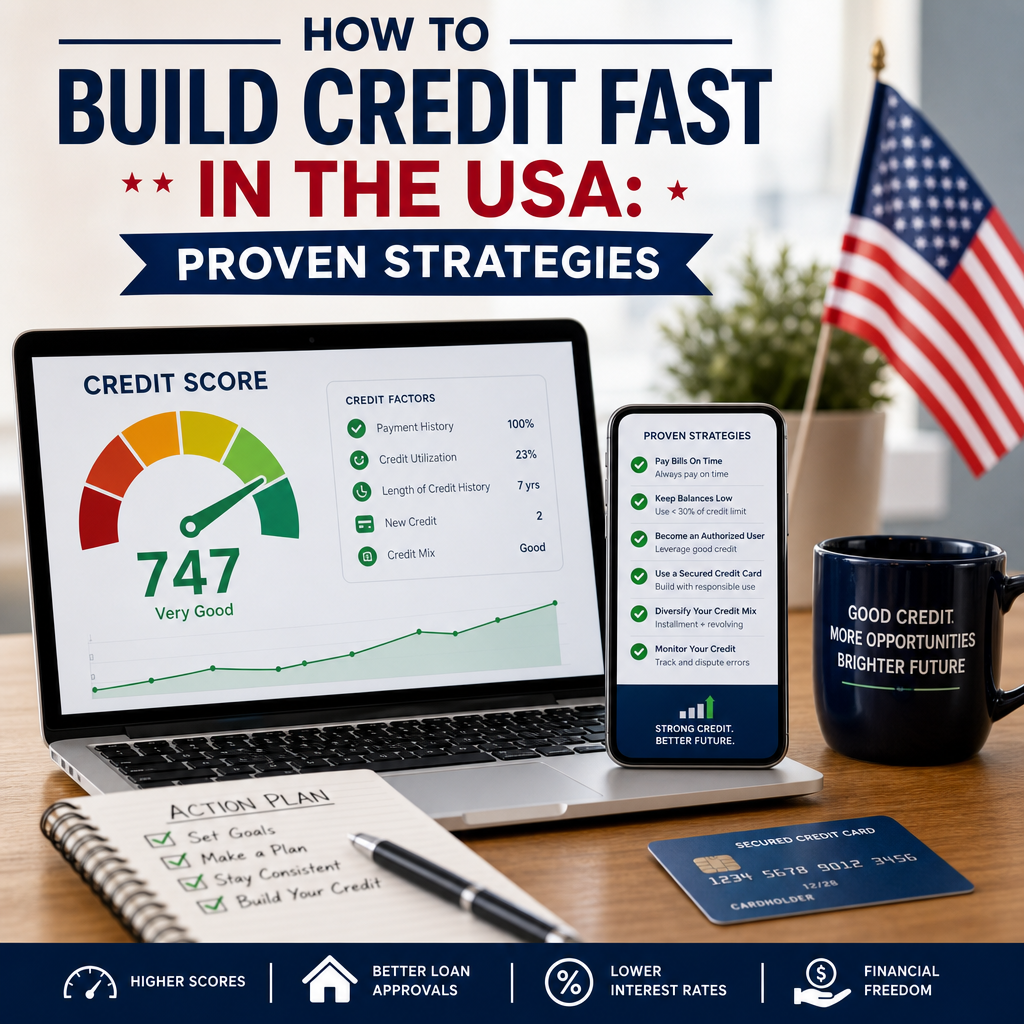
If you’re wondering how to build credit fast in the USA, the good news is that a few smart moves can make a real difference in just a few months. From secured cards to timely payments and low utilization, this guide shows practical strategies that actually work.
By: Mary Mitchell on July 24, 2026
How to Build Credit Fast in the USA: Proven Strategies That Actually Work
Building credit quickly can feel frustrating when you’re starting from scratch or trying to recover from a thin file. The good news is that how to build credit fast in the USA is not a mystery. With the right mix of smart account choices, on-time payments, and a few strategic moves, you can often see meaningful progress in months—not years.
A strong credit profile can help you qualify for loans, apartments, better insurance rates in some states, and more favorable terms on financial products. But fast credit-building is not about shortcuts or gimmicks. It’s about showing lenders a pattern of responsible behavior in a way the credit bureaus can recognize.
In this guide, you’ll learn practical, legal, and proven ways to build credit faster in the U.S., along with mistakes to avoid and steps you can take today.
How Credit Works in the USA
Before you focus on how to build credit fast in the USA, it helps to understand what actually affects your score.
Most lenders use credit scores from FICO or VantageScore, both of which rely on information in your credit reports. The major credit bureaus are:
Equifax
Experian
TransUnion
While scoring models differ slightly, they generally look at the same core factors:
Payment history
Credit utilization
Length of credit history
Credit mix
New credit inquiries
If you want fast results, the first two—payment history and utilization—usually matter most in the short term.
How to Build Credit Fast in the USA: The Best Strategies
1. Open a Secured Credit Card
A secured credit card is one of the most reliable tools for new credit builders. You make a refundable deposit, and that deposit usually becomes your credit limit.
Why it works:
Easier approval than an unsecured card
Reports to the credit bureaus like a regular credit card
Helps you establish a positive payment history
Best practices:
Choose a card that reports to all three bureaus
Keep the balance low
Pay the full statement balance on time every month
Example: If your secured card has a $300 limit, try to keep your statement balance under $30 if possible.
2. Become an Authorized User on a Responsible Account
If a family member or trusted friend has a long-standing credit card with excellent payment history and low utilization, they may be able to add you as an authorized user.
This can help because their account history may appear on your credit report. If the issuer reports authorized users, you may benefit from:
Older account age
Positive payment history
Lower overall utilization
Important caution:
Only do this with someone who manages credit well
If the primary cardholder carries high balances or misses payments, it could hurt more than help
3. Use a Credit-Builder Loan
A credit-builder loan is designed specifically to help you establish credit. Instead of receiving cash upfront, you make fixed payments into a savings account or certificate of deposit. Once the loan is repaid, you receive the funds.
Why it’s effective:
Shows consistent payment history
Can help people with no credit or bad credit
Often available through credit unions, community banks, and online lenders
This is a strong option if you want a structured, low-risk way to build credit fast in the USA.
4. Pay Every Bill on Time
Payment history is the single most important factor in most credit scoring models. Even one late payment can slow your progress and may stay on your report for years.
Focus on bills that may be reported to the credit bureaus, such as:
Credit cards
Loans
Some rent reporting services
Some utility reporting services
To avoid missed payments:
Set up autopay for at least the minimum due
Add calendar reminders a few days before due dates
Keep an emergency buffer for payment coverage
If you want fast credit growth, consistency matters more than perfection.
5. Keep Credit Utilization Low
Credit utilization is the percentage of your available revolving credit that you’re using. For example, if your card has a $1,000 limit and you carry a $300 balance, your utilization is 30%.
A lower utilization ratio usually helps your score.
Good habits include:
Keeping reported balances under 30%
For stronger results, aiming even lower
Paying before the statement closes if needed
A practical tip:
If you use your card regularly for groceries or gas, you can still keep utilization low by making an extra payment before the statement date.
6. Ask for a Credit Limit Increase
If you already have a credit card in good standing, a credit limit increase may help lower your utilization ratio.
This works best when:
You have a history of on-time payments
Your income has improved
You haven’t recently missed payments
A limit increase can help, but don’t treat it as an excuse to spend more. The goal is to improve your credit profile, not just your buying power.
7. Add Rent and Utility Reporting When Available
Some services allow on-time rent and utility payments to be reported to credit bureaus. This can be especially useful if you don’t yet have much traditional credit.
Potentially reportable payments may include:
Rent
Electricity
Water
Phone bills
Internet
A few things to know:
Not all lenders consider these payments equally
Not all bureaus or scoring models use them the same way
Missed payments can sometimes be reported too
Still, if you consistently pay these bills on time, reporting may help strengthen your overall profile.
8. Avoid Opening Too Many Accounts at Once
It’s tempting to apply for several cards or loans at the same time when you’re trying to build credit fast. But multiple hard inquiries and new accounts can temporarily lower your score.
A smarter approach:
Choose one or two starter tools
Use them responsibly for several months
Add more credit only when it supports your plan
Remember: building credit fast does not mean opening everything available. It means choosing the right accounts and managing them well.
What Helps the Most When You Need Fast Credit Improvement
If your goal is rapid progress, these are usually the highest-impact moves:
Pay all accounts on time
Lower credit card balances
Use a secured card or credit-builder loan
Become an authorized user on a strong account
Avoid unnecessary applications
A Simple 30-Day Credit-Building Plan
If you’re starting today, here’s a practical first-month plan:
Check your credit reports for accuracy.
Open one credit-building product, such as a secured card or credit-builder loan.
Set up autopay immediately.
Use less than 30% of your card limit.
If possible, make small purchases and pay them off quickly.
Track your statements and due dates.
Review your progress after one to two billing cycles.
Mistakes That Can Slow You Down
Even good intentions can backfire if you’re not careful. Avoid these common mistakes:
Missing a Payment
A missed payment can set you back significantly. Even if you can’t pay the full balance, pay at least the minimum due on time.
Maxing Out Your Cards
High utilization can hurt your score, even if you pay later. Keeping balances low is one of the fastest ways to improve your credit profile.
Applying for Too Much Credit
Too many applications can create multiple hard inquiries and make you look risky to lenders.
Ignoring Errors on Your Credit Report
Mistakes happen. Accounts you don’t recognize, incorrect balances, or late payments reported in error can hurt your score. Dispute inaccuracies promptly with the bureau and the furnisher.
Closing Old Accounts Too Soon
Older accounts can support your credit history length. If an account has no annual fee and doesn’t create financial risk, keeping it open may help.
How Long Does It Take to Build Credit Fast in the USA?
There’s no universal timeline because every credit profile is different. However, some people see improvement after just a few billing cycles if they:
Open a reporting credit account
Use it lightly
Pay on time
Keep balances low
The key is to create positive data that credit bureaus can report. A strong start can matter a lot, especially if you have no credit history at all.
Who Benefits Most From These Strategies?
These methods are especially useful for:
Young adults just starting out
Immigrants new to the U.S. credit system
Renters who want stronger financial flexibility
People recovering from a thin credit file
Anyone rebuilding after past mistakes
If you fall into one of these groups, the path to stronger credit usually begins with simple, repeatable habits.
Frequently Asked Questions
1. What is the fastest way to build credit in the USA?
The fastest legal and practical way is usually to combine a reporting credit account, such as a secured credit card or credit-builder loan, with perfect on-time payments and low credit utilization. If possible, becoming an authorized user on a well-managed account can also help.
2. Can I build credit without a credit card?
Yes. A credit-builder loan, some rent-reporting services, and certain utility reporting programs can help you build credit without a traditional credit card. However, a secured card remains one of the most effective tools because it often provides ongoing credit history and flexibility.
3. How much should I use on my credit card to build credit?
A common guideline is to keep utilization below 30% of your limit, though lower is often better. For example, if your limit is $500, try to keep the statement balance below $150—and even lower if you can. Paying before the statement closes can help reduce reported utilization.
4. Does paying off a credit card every month help credit?
Yes. Paying your card on time every month builds a positive payment history, which is one of the most important factors in credit scoring. If you also keep your balance low when the statement closes, you can support better utilization, too.
5. Can I build credit in 3 months?
You may see some improvement in 3 months if you start with a reporting account, use it responsibly, and make all payments on time. However, the amount of improvement depends on your starting point. Someone with no credit history may build faster than someone recovering from late payments or high debt.
Learning how to build credit fast in the USA comes down to a simple truth: credit scores reward steady, responsible behavior. There’s no instant fix, but there are reliable ways to speed up the process. Start with one or two tools that report to the bureaus, such as a secured credit card or credit-builder loan. Then protect your progress with on-time payments, low balances, and careful application habits.
If you already have accounts, focus on the factors that move the needle most quickly—payment history and utilization. If you’re starting from zero, use products built for credit beginners and give them time to work. The more consistently you show lenders that you can manage credit responsibly, the stronger your profile can become.
The best time to start is now. Check your credit report, choose your first step, and commit to the habits that build real momentum. Small actions today can lead to better borrowing opportunities tomorrow.
Mary S, CFP®, is a Certified Financial Planner with over 12 years of experience in personal finance, retirement planning, and wealth management. She writes educational content that helps readers understand financial concepts and make informed decisions based on reliable information.