Emergency Funds Explained: How Much Money Should You Save?
An emergency fund can be the difference between a stressful setback and a manageable one. Learn how much to save, where to keep it, and how to build a cushion that fits your life.
By: Mary Mitchell on July 24, 2026
Emergency Funds Explained: How Much Money Should You Really Save?
An emergency fund is one of the most practical tools you can build for your financial life. It gives you a cushion when the unexpected happens, whether that means a car repair, a job loss, a medical bill, or a broken appliance. But the big question is: how much money should you really save in an emergency fund?
There’s no one-size-fits-all answer. The right amount depends on your income stability, monthly expenses, family situation, debt load, and comfort level. Still, there are clear guidelines that can help you set a realistic target and avoid the stress of living paycheck to paycheck.
In this guide, we’ll break down how emergency funds work, how to calculate the right amount for your situation, where to keep the money, and how to build it step by step.
What Is an Emergency Fund?
An emergency fund is money you set aside specifically for unexpected, necessary expenses. It is not for vacations, holiday shopping, or impulse purchases. Its job is to help you stay afloat when life throws something expensive your way.
Common emergency fund examples include:
Job loss or reduced income
Unexpected medical or dental expenses
Car repairs
Home repairs, such as a broken furnace or leaking roof
Urgent travel for a family emergency
Essential appliance replacement
A true emergency fund should be easy to access, but not so easy that you spend it casually.
Why an Emergency Fund Matters
Many people assume they can handle emergencies with a credit card or a personal loan. That can work in the short term, but it often adds debt, interest, and more stress. A dedicated emergency fund helps you avoid that cycle.
Key benefits of an emergency fund
Reduces financial stress during difficult times
Helps you avoid high-interest debt
Protects your long-term savings and retirement money
Gives you flexibility when income changes
Creates peace of mind so you can focus on solving the problem
If you’ve ever had to decide between paying a bill and buying groceries, you already know how valuable financial backup can be.
How Much Money Should You Really Save in an Emergency Fund?
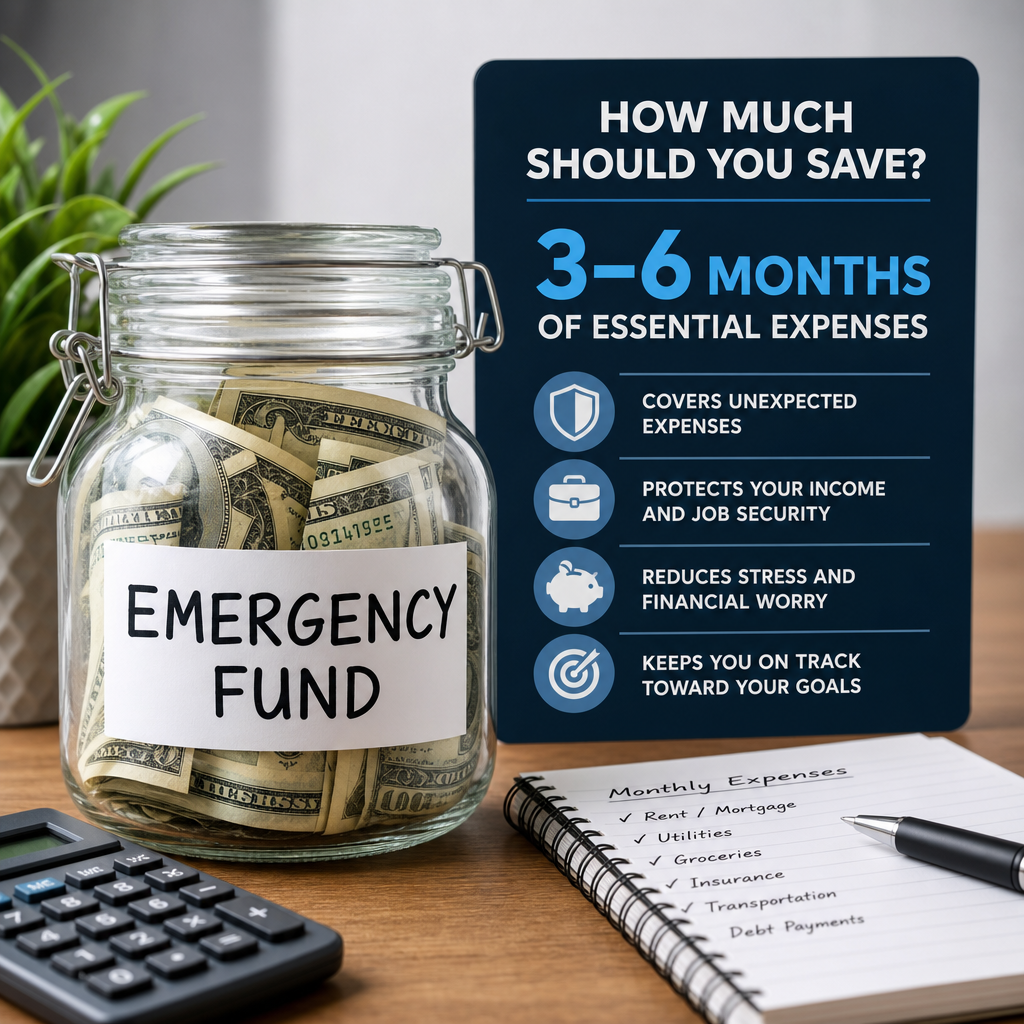
The common rule of thumb is to save 3 to 6 months of essential living expenses. That’s a helpful starting point, but it’s not the only answer.
Some people may only need a smaller starter fund at first. Others—especially those with irregular income, dependents, or limited job security—may want to save more.
A practical emergency fund range
Instead of thinking in terms of income, think in terms of monthly essentials:
Rent or mortgage
Utilities
Groceries
Transportation
Insurance
Minimum debt payments
Childcare or required family expenses
Multiply those essential costs by 3 to 6 months.
For example:
Essential monthly expenses: $2,500
3 months of savings: $7,500
6 months of savings: $15,000
If your life is more stable and your income is predictable, 3 months may be enough. If you freelance, run a business, support dependents, or work in a volatile industry, 6 months—or more—may be a better target.
How to Decide the Right Emergency Fund Size for You
Your emergency fund target should reflect your real life, not just a general formula. Here are the main factors to consider.
1. Income stability
If your paycheck arrives on a regular schedule and your job is secure, you may not need as much cash on hand as someone with variable income.
You may want a larger emergency fund if you:
Work freelance or contract jobs
Earn commissions or tips
Own a small business
Work in a field with layoffs or seasonal hours
2. Monthly expenses
The more you need to cover each month, the more you should save. A high-cost lifestyle requires a bigger cushion than a lean one.
Start by identifying your must-pay expenses:
Housing
Food
Transportation
Insurance
Utilities
Minimum debt payments
Child or elder care
3. Family responsibilities
If you’re financially responsible for children, a partner, or other relatives, your emergency fund should account for more than just your own needs.
4. Debt situation
If you carry high-interest debt, it can affect how you build your emergency fund. In some cases, it makes sense to start with a smaller emergency cushion while aggressively paying down debt. That way you still have a backup without delaying all progress on debt repayment.
5. Health and insurance coverage
A solid health insurance plan can reduce out-of-pocket risk, but it doesn’t remove it. Deductibles, copays, and uncovered costs can still create financial pressure. If you have medical conditions or depend on costly prescriptions, you may want more savings.
Starter Emergency Fund vs. Full Emergency Fund
If saving 3 to 6 months of expenses feels overwhelming, start smaller.
Starter emergency fund
A starter emergency fund is usually $500 to $2,000, depending on your situation. The goal is to cover common surprise expenses without going into debt.
This smaller target is useful if you:
Have no savings yet
Are paying off credit card debt
Need quick financial breathing room
Want momentum without delay
Full emergency fund
Once you’ve built a starter fund, you can keep going until you reach 3 to 6 months of essential expenses—or more if needed.
A two-step approach often works better than trying to save everything at once.
Where Should You Keep Your Emergency Fund?
Your emergency fund should be safe, accessible, and separate from your everyday spending money.
Best places to keep it
High-yield savings account
Traditional savings account
Money market account
Short-term certificate of deposit (CD) only if part of the fund remains accessible elsewhere
For most people, a high-yield savings account is a strong choice because it keeps the money liquid while earning some interest.
What to avoid
Avoid keeping your emergency fund in:
Checking accounts you use for daily spending
The stock market
Retirement accounts
Cash hidden at home
Assets that are hard to sell quickly
The money needs to be available fast when an emergency happens, and it should not be exposed to unnecessary risk.
How to Build an Emergency Fund Step by Step
Building an emergency fund is easier when you break it into simple actions. You do not need to save the full amount overnight.
1. Set a starting goal
Choose a realistic first milestone, such as:
$500
$1,000
One month of essentials
2. Automate your savings
Set up an automatic transfer from checking to savings every payday. Even small amounts add up when they happen consistently.
3. Cut one expense and redirect it
Look for a recurring expense you can temporarily reduce, such as:
Subscription services
Dining out
Delivery orders
Premium cable or streaming plans
Redirect that money to your emergency fund.
4. Use windfalls wisely
Tax refunds, bonuses, gifts, or side income can help you make faster progress. You don’t need to save all of it, but directing part of it to your fund can accelerate your timeline.
5. Rebuild after using it
If you dip into your emergency fund, make replenishing it a priority. That way it’s ready for the next unexpected event.
Should You Save an Emergency Fund or Pay Off Debt First?
This is one of the most common personal finance questions. The answer often depends on your situation.
In many cases, do both
A balanced approach can work well:
Save a small starter emergency fund
Make minimum payments on all debts
Put extra money toward high-interest debt
Continue building savings over time
This approach protects you from relying on credit cards when surprises happen.
When to prioritize the emergency fund
You may want to focus more on emergency savings if:
You have no cash reserves
Your income is unstable
You have dependents
Your expenses are highly variable
When debt payoff may come first
If you have a small, manageable emergency fund already and high-interest debt, extra debt payments may make sense because they reduce future interest costs.
The best strategy is the one you can actually stick with.
Common Mistakes to Avoid
Even with good intentions, people often make preventable emergency fund mistakes.
Don’t save too little
A tiny cushion is better than nothing, but it may not be enough for a serious emergency. If possible, aim beyond your first $500 or $1,000 milestone.
Don’t save too much in the wrong place
Your emergency fund should be liquid. Putting all of it in investments that can lose value may leave you short when you need cash quickly.
Don’t treat it like a spending account
If you use emergency savings for non-urgent purchases, you weaken the purpose of the fund. Keep the boundaries clear.
Don’t ignore inflation and life changes
As your rent, family size, or expenses change, your emergency fund target should change too. Revisit it at least once a year.
Emergency Fund Examples by Situation
Here are a few simple examples to show how the math works.
Example 1: Single renter with stable income
Monthly essentials: $2,000
3 months: $6,000
6 months: $12,000
A 3-month target may be reasonable if the person has a stable job and low debt.
Example 2: Family with one income and children
Monthly essentials: $4,500
6 months: $27,000
A larger fund may be wise because the household depends on one income and supports children.
Example 3: Freelancer with variable income
Monthly essentials: $3,000
6 months: $18,000
9 months: $27,000
Someone with unpredictable income may choose a larger cushion for added stability.
Frequently Asked Questions
1. What is the best amount for an emergency fund?
A common recommendation is 3 to 6 months of essential living expenses. The right amount depends on your income stability, expenses, and family situation. If you have variable income or higher financial responsibilities, a larger fund may be more appropriate.
2. Is $1,000 enough for an emergency fund?
$1,000 is a strong starting point, but it may not cover a major emergency. It can help with smaller surprises like car repairs or medical copays. After reaching $1,000, keep building until you have a larger cushion.
3. Should I keep my emergency fund in a checking or savings account?
A savings account is usually better because it keeps the money separate from daily spending while still making it easy to access. A high-yield savings account is often a good option if you want the money to remain liquid and earn a bit of interest.
4. Can I invest my emergency fund to make it grow faster?
It’s usually not a good idea to invest emergency savings in stocks or other volatile assets. Emergency money should be stable and available when you need it. Market losses could leave you short during a real crisis.
5. What counts as a real emergency?
A real emergency is an unexpected, necessary expense or income disruption. Examples include job loss, urgent medical bills, major car repairs, or essential home repairs. A vacation, sale item, or planned holiday spending does not count.
An emergency fund is not just a finance buzzword—it’s a practical defense against the unpredictability of everyday life. Whether you’re dealing with a surprise repair, a medical bill, or a temporary loss of income, having cash set aside can keep a bad situation from becoming a financial crisis.
The best emergency fund is the one that fits your actual life. For some people, that means starting with $500 or $1,000. For others, it means saving 3 to 6 months of essential expenses, or even more. The key is to begin with a clear target, build consistently, and keep the money in a safe, accessible place.
If you’re not sure where to start, focus on one small milestone and automate your savings. Progress matters more than perfection. Over time, your emergency fund can become one of the most valuable parts of your financial plan, giving you security, flexibility, and peace of mind when you need it most.
Mary S, CFP®, is a Certified Financial Planner with over 12 years of experience in personal finance, retirement planning, and wealth management. She writes educational content that helps readers understand financial concepts and make informed decisions based on reliable information.