How to Pay Off Debt Faster with Avalanche and Snowball Methods
Learn how debt payoff methods like the avalanche and snowball strategies can help you take control of your balances and make faster progress. Whether you want to save the most on interest or stay motivated with quick wins, the right plan can make debt repayment feel far more manageable.
By: Mary Mitchell on July 24, 2026
How to Pay Off Debt Faster Using the Avalanche and Snowball Methods
Paying off debt can feel overwhelming, especially when balances are spread across credit cards, personal loans, medical bills, or student loans. The good news is that there are proven ways to make progress without guesswork. Two of the most popular debt repayment strategies—the avalanche method and the snowball method—can help you pay off debt faster while staying motivated and organized.
The right approach depends on your personality, cash flow, and financial goals. Some people want to save the most money on interest. Others need quick wins to stay encouraged. Either way, a clear plan can turn debt repayment from a stressful burden into a manageable project.
What the Avalanche and Snowball Methods Actually Mean
Both strategies help you focus extra payments instead of spreading them evenly across all debts. That matters because minimum payments alone often keep you stuck for years.
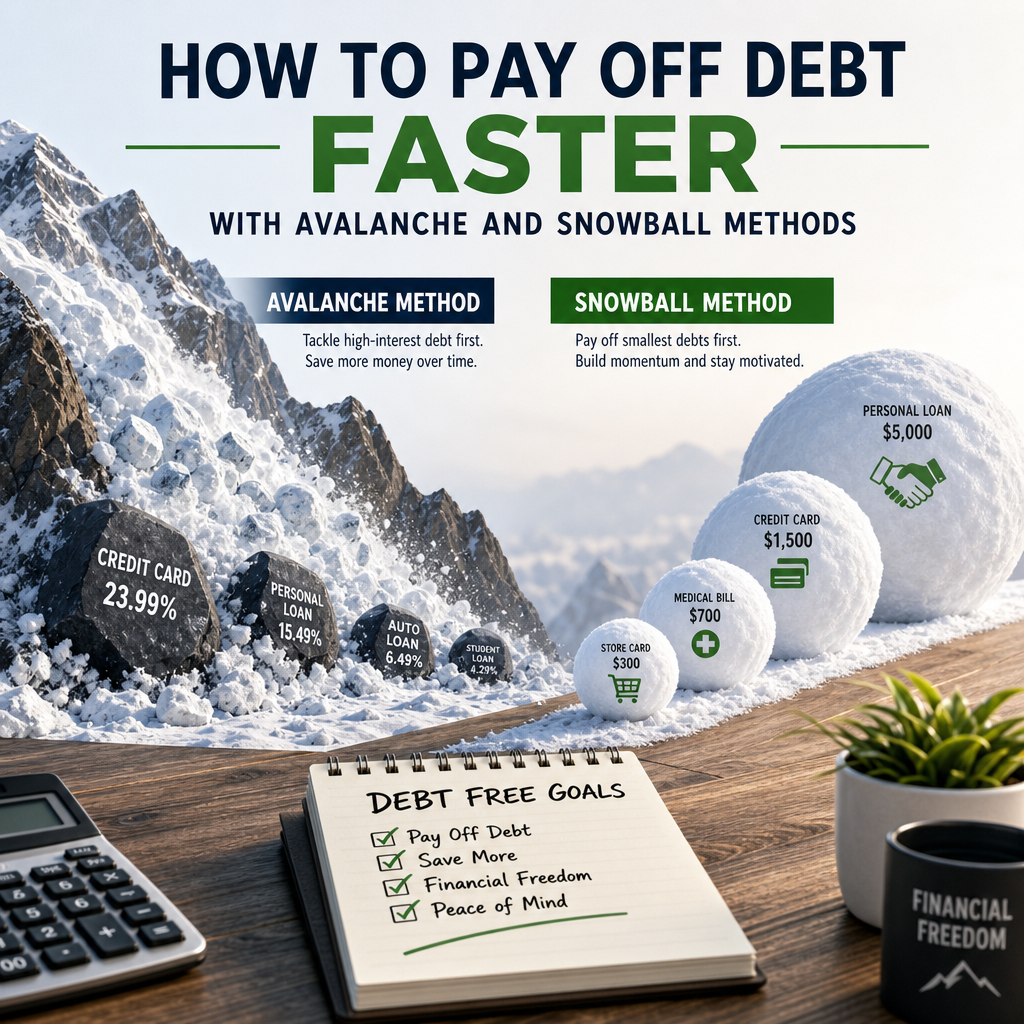
The avalanche method
With the avalanche method, you:
List all debts by interest rate, from highest to lowest.
Make minimum payments on every debt.
Put all extra money toward the debt with the highest interest rate.
Once that debt is paid off, roll the freed-up payment into the next highest-rate debt.
This method is designed to reduce the total amount of interest you pay over time.
The snowball method
With the snowball method, you:
List all debts by balance, from smallest to largest.
Make minimum payments on every debt.
Put all extra money toward the smallest debt first.
After that debt is paid off, apply its payment to the next smallest balance.
This method creates fast psychological wins, which can help you stay committed.
How to Pay Off Debt Faster with the Avalanche Method
If your main goal is to save money and become debt-free efficiently, the avalanche method is usually the strongest option.
Why the avalanche method works
High-interest debt grows quickly. Credit card balances, in particular, can become expensive if you carry them month after month. By attacking the highest-rate debt first, you slow the growth of your total balance and reduce future interest charges.
That means more of each payment goes toward principal instead of interest.
Example of the avalanche method
Imagine you have these debts:
Credit card A: $3,000 at 24% APR
Personal loan: $5,000 at 12% APR
Student loan: $8,000 at 6% APR
Under the avalanche method, you would:
Pay minimums on all three
Put extra money toward the $3,000 credit card first
Then move to the $5,000 personal loan
Finally attack the student loan
Even if the student loan is larger, the avalanche method targets the debt costing you the most.
Best for people who:
Want to minimize total interest
Have steady income and good budget discipline
Prefer a numbers-based approach
Can stay motivated without quick emotional wins
How to Pay Off Debt Faster with the Snowball Method
If you need momentum, the snowball method can be a powerful way to build confidence and stay on track.
Why the snowball method works
Small wins matter. Paying off a debt completely—even a small one—can reduce stress and make the process feel less endless. When you eliminate one balance, you also free up a monthly payment to apply toward the next debt.
That growing payment can accelerate your progress over time.
Example of the snowball method
Imagine you owe:
Store card: $900
Medical bill: $2,400
Credit card: $6,000
Car loan: $10,000
With the snowball method, you would:
Pay minimums on all debts
Put extra money toward the $900 store card first
After it’s paid off, use that payment toward the $2,400 medical bill
Continue rolling payments into the next debt
The early wins help you stay motivated, even if the interest savings are not always the absolute lowest.
Best for people who:
Need motivation and visible progress
Feel overwhelmed by multiple debts
Prefer a simpler emotional payoff
Have struggled to stick with repayment plans in the past
Avalanche vs. Snowball: Which Method Is Better?
There is no universal winner. The better choice depends on what keeps you consistent.
Choose the avalanche method if:
You want to pay less interest overall
You’re comfortable waiting longer for your first debt payoff
You like optimizing with spreadsheets or calculators
You tend to stick with plans once they are set
Choose the snowball method if:
You need quick wins to stay motivated
You feel discouraged looking at large balances
You want a more encouraging process
You’ve tried and quit repayment plans before
A practical rule of thumb
If motivation is your biggest challenge, start with snowball. If math efficiency matters most, choose avalanche. The best debt payoff strategy is the one you can stick with long enough to finish.
How to Set Up Your Debt Repayment Plan
No matter which strategy you choose, the setup process is similar. A clear system makes it much easier to pay off debt faster.
Step 1: List every debt
Create a simple list with:
Creditor name
Balance
Interest rate
Minimum monthly payment
Due date
You can use a notebook, spreadsheet, budgeting app, or a simple table. The goal is to see the full picture.
Step 2: Separate needs from wants in your budget
Look for money you can redirect toward debt repayment. That might come from:
Dining out less often
Canceling unused subscriptions
Lowering utility costs where possible
Using cash for discretionary spending
Temporarily pausing nonessential purchases
Even small changes can add up when applied consistently.
Step 3: Decide on your extra payment amount
Figure out how much extra you can realistically pay each month. Be honest. A plan that is too aggressive can lead to burnout.
For example:
Minimum payments: $640
Extra debt payment: $200
Total monthly debt payment: $840
That extra $200 is what creates momentum.
Step 4: Automate minimum payments
Set up autopay for at least the minimum amount on each debt. This helps you avoid late fees and protects your payment history.
Then make one manual extra payment toward your target debt each month.
Step 5: Reassign payments as debts disappear
When one debt is paid off, do not let that payment vanish. Roll it into the next debt in your repayment order. This “payment snowball” effect is what helps you pay off debt faster over time.
Common Mistakes That Slow Down Debt Payoff
Even a good plan can lose momentum if you make a few avoidable mistakes.
Paying only the minimums
Minimum payments keep accounts current, but they rarely help you make meaningful progress. If possible, add something extra every month.
Taking on new debt while repaying old debt
If you keep using credit cards while paying them down, your progress can stall. Try to pause unnecessary borrowing until you regain control.
Forgetting to build a small emergency fund
An unexpected car repair or medical bill can force you back into debt. Even a modest emergency fund can help you avoid setbacks.
Not reviewing your interest rates
Rates change. Promotional APRs expire. Variable rates can increase. Check your statements so you know where your money should go first.
Giving up after a setback
A missed payment or unexpected expense does not mean you failed. Adjust the plan and keep going. Consistency matters more than perfection.
Ways to Speed Up Debt Repayment Even More
The avalanche and snowball methods work best when paired with other smart habits.
Increase income temporarily
You may be able to accelerate repayment by:
Picking up freelance work
Working overtime
Selling unused items
Taking on a side job
Using bonuses or tax refunds strategically
Put this extra income directly toward debt instead of letting it disappear into everyday spending.
Use windfalls wisely
When you receive unexpected money, resist the urge to spend it all at once. Consider applying at least part of it to your targeted debt. Even one larger lump-sum payment can shorten your timeline.
Negotiate lower interest rates
If you have a strong payment history, you may be able to ask creditors for a lower APR. It is not guaranteed, but it is worth trying, especially with credit cards.
Consolidate carefully
Debt consolidation can simplify payments, but it is not automatically the right move. Compare:
Interest rate
Fees
Loan terms
Risk of extending repayment
A lower monthly payment may feel helpful, but a longer term can cost more over time.
How to Stay Motivated During Debt Payoff
Staying motivated is often the hardest part. Debt repayment is a marathon, not a sprint.
Track your progress visually
Use a chart, app, or spreadsheet to mark balances as they shrink. Seeing progress makes the process feel real.
Celebrate milestones
Small rewards can help you stay focused without derailing your budget. For example:
A favorite homemade dinner
A low-cost outing
A relaxing day off
A new book from the library
Keep rewards modest and intentional.
Remind yourself why you started
Write down your reasons for paying off debt, such as:
Lower stress
More freedom
Saving for a home
Building an emergency fund
Preparing for retirement
When motivation dips, revisit that list.
Avalanche and Snowball in Real Life: Which One Fits You?
Here are a few quick scenarios.
If you’re highly disciplined
You may do well with the avalanche method because you can stay focused on the biggest financial win, even if it takes longer to see a debt disappear.
If you’re feeling overwhelmed
The snowball method may be a better fit because early victories can reduce anxiety and create momentum.
If your debts have similar interest rates
The difference between methods may be small. In that case, choose the strategy that feels easier to follow.
If you have mixed goals
Some people start with snowball for motivation, then switch to avalanche once they get into a rhythm. The most important thing is making steady progress.
Frequently Asked Questions
1. Is the avalanche method always better than the snowball method?
Not always. The avalanche method usually saves more on interest, but the snowball method can help you stay motivated. If motivation is the reason you tend to quit, the snowball method may be more effective for you in real life.
2. Can I combine the avalanche and snowball methods?
Yes. Some people use a hybrid approach. For example, you might start with snowball to eliminate one or two small balances, then switch to avalanche to focus on high-interest debt. The best method is the one you can sustain.
3. Should I pay extra on one debt or split it between several?
If you want to pay off debt faster, it’s usually better to focus all extra payments on one target debt while making minimum payments on the rest. Splitting extra payments often slows down the payoff process.
4. What if I have an emergency while paying off debt?
That’s why a small emergency fund can help. If an unexpected expense comes up, use your emergency savings first if possible. If not, adjust your budget temporarily and resume your repayment plan as soon as you can.
5. How do I know which debt to attack first?
For avalanche, choose the highest interest rate. For snowball, choose the smallest balance. If you have a strong preference between saving money and getting quick wins, let that guide your choice.
If you want to pay off debt faster, the most important step is choosing a strategy you can follow consistently. The avalanche method helps you reduce interest costs by targeting the highest-rate debt first. The snowball method gives you early wins by knocking out the smallest balances first. Both approaches work because they replace scattered effort with a clear repayment order and focused extra payments.
The right plan is not the one that looks best on paper—it’s the one that fits your habits, income, and motivation. Start by listing every debt, building a realistic budget, and deciding where your extra money will go. Then automate minimum payments, stay out of new debt, and roll freed-up payments into the next balance. Progress may feel slow at first, but each payment moves you closer to financial freedom.
Debt payoff is not just about math. It is also about momentum, patience, and consistency. Pick your method, commit to the process, and keep going.
Mary S, CFP®, is a Certified Financial Planner with over 12 years of experience in personal finance, retirement planning, and wealth management. She writes educational content that helps readers understand financial concepts and make informed decisions based on reliable information.