Education Grants vs Student Loans: Understanding Your Funding Options
Choosing between education grants vs student loans can have a big impact on how much you pay for school now and after graduation. Grants may lower your costs without repayment, while loans can fill the gap when you need extra funding—but they come with a future obligation.
By: Jennifer on July 24, 2026
Paying for college or career training can feel overwhelming, especially when you’re comparing education grants vs. student loans for the first time. Both can help cover tuition and related costs, but they work in very different ways. Grants are typically free money that doesn’t need to be repaid, while student loans must be paid back with interest under agreed terms.
Understanding the difference between these funding options can help you make smarter decisions, borrow less when possible, and avoid financial stress after graduation. Whether you’re a student, parent, or adult learner returning to school, knowing how grants and loans work is an essential part of planning your education.
What Are Education Grants?
Education grants are funds provided to help students pay for school-related expenses without requiring repayment, as long as the recipient meets the grant’s rules. In many cases, grants are based on financial need, but some are awarded for academic achievement, field of study, or personal background.
Common types of education grants
Here are a few examples of grant programs students often encounter:
Federal Pell Grants for undergraduate students with exceptional financial need
Federal Supplemental Educational Opportunity Grants (FSEOG) for students with the greatest need at participating schools
State grants offered by individual states to residents attending eligible institutions
Institutional grants funded directly by colleges and universities
Private grants from nonprofits, foundations, and professional organizations
Why grants are so valuable
Grants are often the most student-friendly form of aid because they can reduce how much you need to borrow. If you qualify for grants, you may lower your total education cost and graduate with less debt.
That said, grants usually come with conditions. Some require you to:
Stay enrolled at least half-time
Maintain a minimum GPA
Complete your degree within a certain time
Use the funds for approved educational expenses
If you fail to meet those conditions, you may have to repay the grant or lose future eligibility.
What Are Student Loans?
Student loans are borrowed money used to pay for education expenses. Unlike grants, loans must be repaid, usually with interest. They can come from the federal government, private lenders, or occasionally state agencies and schools.
Main types of student loans
Federal student loans
Federal loans are issued by the U.S. Department of Education and often offer borrower protections that private loans do not. Common federal loan types include:
Direct Subsidized Loans
Direct Unsubsidized Loans
Direct PLUS Loans
Subsidized loans are especially useful for eligible undergraduate students because the government pays the interest while the student is enrolled at least half-time and during certain deferment periods.
Private student loans
Private loans are offered by banks, credit unions, and other lenders. Approval often depends on credit history, income, or a cosigner. These loans may have variable or fixed interest rates, and they usually offer fewer repayment protections than federal loans.
Education Grants vs. Student Loans: The Core Differences
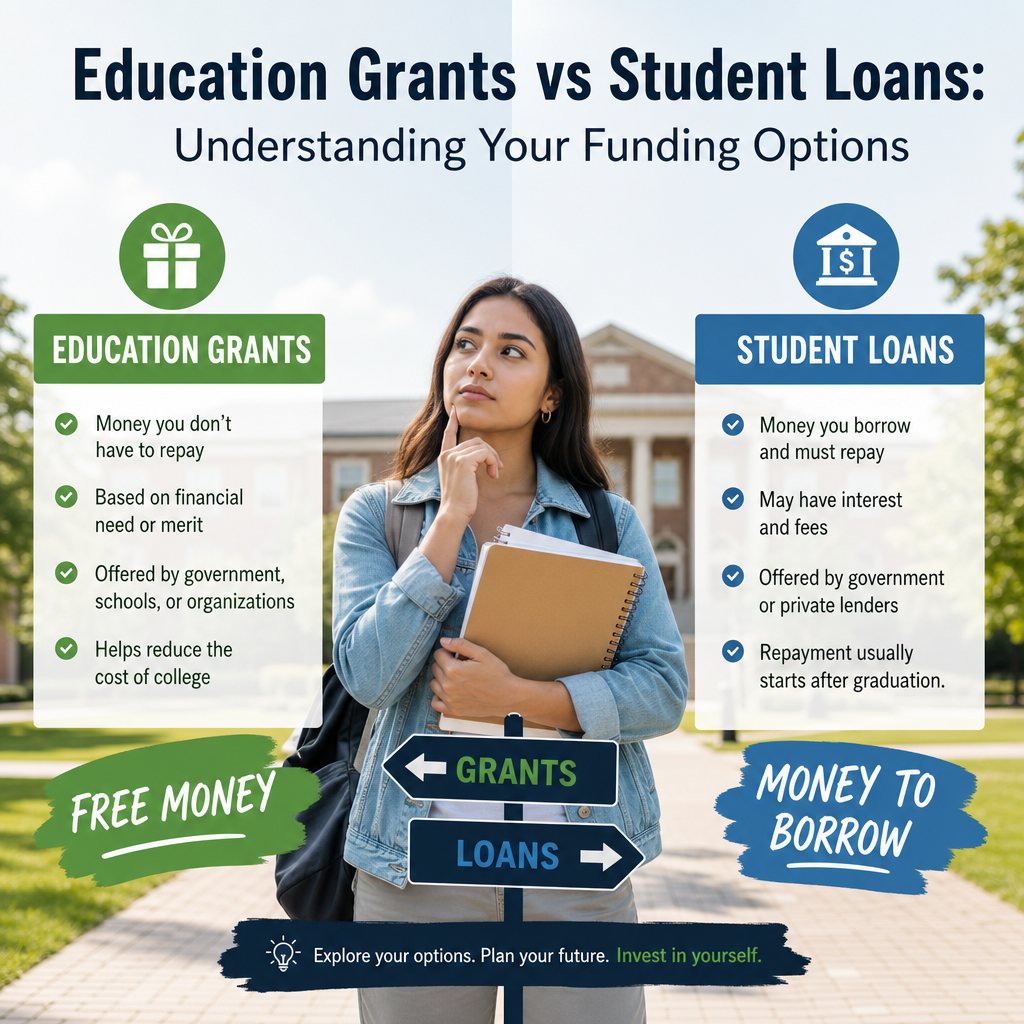
When comparing education grants vs. student loans, the biggest difference is simple: grants do not typically need to be repaid, while loans do. But that’s only the beginning.
1. Repayment
Grants: Usually no repayment required if you follow the terms
Loans: Must be repaid with interest after a grace period or according to the loan agreement
2. Eligibility
Grants: Often based on financial need, academic merit, or special criteria
Loans: Federal loans are generally available to eligible students; private loans depend on creditworthiness and lender rules
3. Cost over time
Grants: Reduce the overall cost of attendance
Loans: Can increase the total cost because of interest and fees
4. Risk
Grants: Lower financial risk for the student
Loans: Higher risk if monthly payments become difficult after school
5. Flexibility
Grants: Usually tied to specific rules or funding limits
Loans: Offer more predictable access to funds, especially federal loans, but require repayment planning
How Grants and Loans Fit Into a Financial Aid Package
Most students use a mix of funding sources to cover the full cost of attendance. Your aid package may include grants, scholarships, work-study, and loans. Schools usually apply free aid first, then loans if needed.
Typical order of aid
Scholarships and grants
Work-study or student employment
Federal student loans
Private student loans, if necessary
This order matters because it helps reduce the amount you borrow. A smart financial aid strategy starts with grants and scholarships before turning to loans.
When Grants Make the Most Sense
Grants are ideal whenever you qualify, especially if you want to minimize debt. They are often the best option for students with financial need or those enrolled in eligible academic programs.
Grants may be especially helpful if you:
Are pursuing an undergraduate degree
Have a low or moderate household income
Attend a public college or community college
Qualify for state-based aid
Are studying a high-need field like teaching, nursing, or public service
Example
A first-generation college student with limited family income might qualify for a Pell Grant and a state grant. Those funds could cover a large portion of tuition, leaving only a small gap that may be filled with part-time work or a modest federal loan.
When Student Loans Become Necessary
Even with grants, many families still face a funding gap. Tuition, housing, textbooks, transportation, and fees can add up quickly. Student loans can help bridge that gap when grants and savings aren’t enough.
Loans may be appropriate if you:
Need to cover remaining education expenses after grants and scholarships
Are enrolled in a program with strong career outcomes
Have a clear plan for repayment after graduation
Qualify for federal loans before considering private ones
A practical example
Suppose your school’s total cost of attendance is higher than the grants you received. A federal direct loan can help you pay the difference without requiring immediate repayment. If you borrow responsibly, the loan can be a manageable investment in your future earnings.
How to Decide Between Grants and Loans
A thoughtful approach to education grants vs. student loans starts with understanding your actual need and your long-term repayment comfort.
Ask yourself these questions:
How much free aid have I already received?
What expenses still need to be covered?
Can I reduce costs by attending in-state, living at home, or choosing a less expensive program?
How much debt can I reasonably handle after graduation?
Have I completed the FAFSA and explored all grant opportunities?
A simple decision framework
Use this process to guide your choices:
Apply for every grant and scholarship you qualify for
Compare the total cost of each school, not just tuition
Use federal student loans before private loans
Borrow only what you need
Review repayment terms before accepting any loan
Tips for Maximizing Grant Aid
Because grants do not need to be repaid, it’s worth spending time on the application process. Many students miss out on aid simply because they don’t apply early or fully.
Ways to improve your chances
Submit the FAFSA as early as possible
Check state deadlines carefully
Complete all requested paperwork promptly
Maintain strong academic standing
Look for department-specific or major-specific grants
Reapply every year if required
Don’t overlook smaller awards
A smaller grant may not cover tuition on its own, but several modest awards can add up. A few $500 or $1,000 grants can significantly reduce the amount you need to borrow.
How to Borrow Responsibly
If you need loans, borrowing wisely matters. The goal is not just to get through school, but to keep your future payments manageable.
Smart borrowing habits
Start with federal loans before private loans
Borrow only the amount needed after other aid
Track how much you’ve borrowed each year
Understand when repayment begins
Estimate your monthly payment before accepting the loan
Questions to ask before taking out a loan
What is the interest rate?
Is the rate fixed or variable?
Are there origination fees?
When does repayment start?
What repayment plans are available?
Are deferment or forbearance options offered?
Being informed now can help you avoid surprises later.
The Long-Term Impact of Your Choice
The choice between grants and loans can shape your financial life after school. Grants can help you graduate with less debt, which may make it easier to save, rent an apartment, buy a car, or build an emergency fund. Loans, on the other hand, can be useful and sometimes necessary, but they create a future obligation that must be managed carefully.
Why this matters
If you rely too heavily on loans, your monthly payments may limit flexibility after graduation. That doesn’t mean loans are bad. It means they should be used strategically, not casually.
Common Mistakes Students Make
Understanding education grants vs. student loans also means knowing what to avoid.
Frequent errors include:
Waiting too long to apply for aid
Assuming grants are only for low-income students
Ignoring state and school-based funding
Choosing private loans before exploring federal options
Borrowing more than necessary
Not reading the terms of loan repayment
Avoiding these mistakes can save time, money, and stress.
Frequently Asked Questions
1. What is the main difference between an education grant and a student loan?
The main difference is repayment. Education grants are usually free money that does not need to be paid back if you meet the terms of the award. Student loans must be repaid, usually with interest.
2. Can I receive both grants and student loans at the same time?
Yes. Many students receive a combination of grants and loans. In fact, that is very common. Grants and scholarships are usually applied first, and loans cover any remaining eligible costs.
3. Are federal student loans better than private student loans?
For most students, federal student loans are the better first choice because they often offer more flexible repayment plans and borrower protections. Private loans can be useful in some cases, but they usually have stricter approval requirements and fewer safeguards.
4. Do I have to pay back a grant if I drop out of school?
Sometimes. If you do not meet the grant’s requirements, such as staying enrolled or completing a certain portion of the term, you may have to return part of the funds. The exact rules depend on the grant program.
5. How can I find out what grants I qualify for?
Start with the FAFSA, then check your state’s higher education agency, your college’s financial aid office, and trusted scholarship databases. Many grants are tied to financial need, academic program, or special eligibility criteria.
Choosing between education grants vs. student loans is one of the most important financial decisions you’ll make as a student. Grants offer the clear advantage of free money that can lower your education costs without adding debt. Loans can fill the gap when grants and scholarships aren’t enough, but they come with repayment obligations that deserve careful attention.
The best strategy is usually to start with grants, scholarships, and other forms of free aid, then use federal student loans only as needed. Compare schools based on total cost, not just tuition, and pay close attention to deadlines, eligibility rules, and repayment terms. A little planning now can make a big difference later by helping you borrow less and graduate with greater financial confidence.
If you’re preparing for college or returning to school, take the time to review your aid options thoroughly. The more you understand your funding choices, the better equipped you’ll be to make decisions that support both your education and your long-term financial health.
Jennifer, M.Ed., holds a degree in Higher Education Administration, with
a focus on U.S. college financial aid, admissions policy, and student
support systems. She researches and writes about scholarships, federal
aid programs, and the college planning process to help students and
families make informed, well-supported decisions.