How to Improve Your Credit Score Without Paying for Credit Repair
Your credit score affects more than just loan approvals. It can influence your interest rates, apartment applications, insurance premiums in some cases, and even how much financial flexibility you have day to day. The good news is that how to improve your credit score without paying for credit repair is not a mystery, and you do not need to hire an expensive company to do it.
In many cases, the same strategies used by paid credit repair services are actions you can handle yourself. By understanding what affects your score and building better credit habits, you can make steady progress on your own. The process takes time, but it is practical, affordable, and often more effective because you stay in control.
How to Improve Your Credit Score Without Paying for Credit Repair
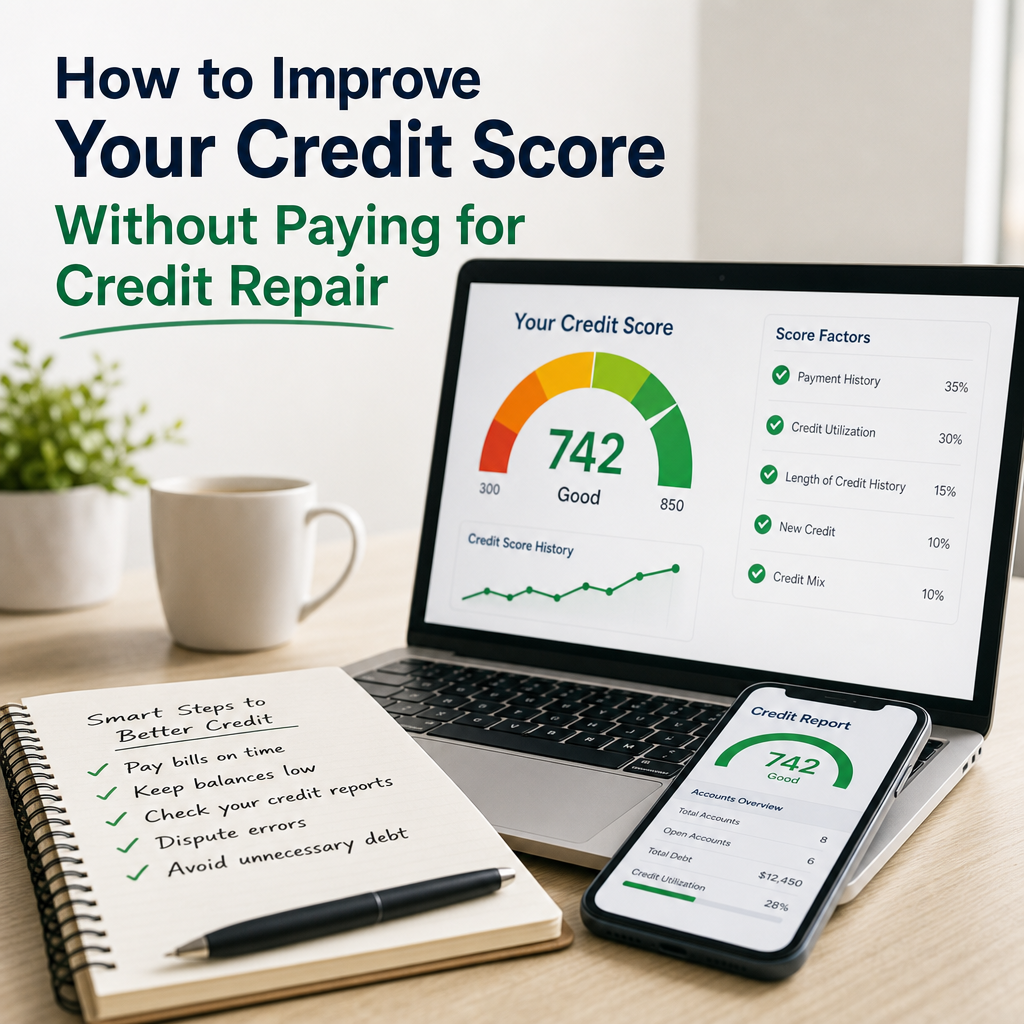
If you want to improve your credit score without paying for credit repair, start with the basics: check your reports, correct errors, pay bills on time, and reduce balances. Credit scores are built from information in your credit reports, so the fastest improvements usually come from fixing mistakes and changing the behaviors that hurt your score.
Paid services may help some people stay organized, but they cannot remove accurate negative information. That means the real work still comes down to the same core credit-building habits you can do yourself.
Understand What Affects Your Credit Score
Before you make changes, it helps to know what lenders are looking at. While scoring models vary, most credit scores are influenced by a few common factors:
- Payment history: Whether you pay on time
- Credit utilization: How much of your available credit you are using
- Length of credit history: How long your accounts have been open
- Credit mix: The types of credit you use, such as credit cards and installment loans
- New credit inquiries: How often you apply for new credit
Why this matters
If you focus only on one area, such as opening a new card, you may not see much progress. A better approach is to target the parts of your profile that matter most, especially payment history and credit utilization.
Check Your Credit Reports for Free
One of the smartest first steps in how to improve your credit score without paying for credit repair is reviewing your credit reports. Errors are more common than many people realize, and even one inaccurate late payment or account balance can drag your score down.
You can access free credit reports from the major credit bureaus through the official annual credit report site. Review each report carefully for:
- Accounts you do not recognize
- Incorrect balances
- Late payments that were actually on time
- Closed accounts listed as open
- Duplicate accounts
- Wrong personal information
How to review your report effectively
Read through each section line by line. Make notes about anything that looks off. If you find an error, gather documentation such as account statements, payment confirmations, or letters from the lender.
Then dispute the error with the credit bureau that reported it. You can usually do this online, by mail, or by phone depending on the bureau. If the item is inaccurate, it should be corrected or removed after investigation.
Dispute Errors on Your Own
You do not need a credit repair company to challenge inaccurate information. In fact, disputing errors yourself is often the most direct way to protect your score.
Steps to dispute a credit report error
- Identify the inaccurate item.
- Collect supporting documents.
- Submit a dispute to the credit bureau.
- Keep copies of everything you send.
- Follow up after the investigation period.
What to include in your dispute
Be clear and specific. State exactly what is wrong and what correction you want. For example:
- “This payment was made on time, and I am attaching the bank confirmation.”
- “This account does not belong to me.”
- “The balance reported is incorrect based on the attached statement.”
If the bureau cannot verify the information, it must be updated or removed. That is one of the most valuable ways to improve your credit score without paying for credit repair.

Pay Every Bill on Time
Payment history usually has the biggest impact on your score. Even one missed payment can cause damage, especially if it becomes 30 days late or more.
Simple ways to stay current
- Set up automatic payments for at least the minimum amount due
- Use calendar reminders for due dates
- Turn on account alerts through your bank or card issuer
- Review your due dates once a month
If you are struggling to keep up, contact creditors before you miss a payment. Some may offer hardship programs, due date changes, or payment plans.
Example
If you have three credit cards and one personal loan, missing the smallest payment can still hurt your score. Paying at least the minimum on all accounts on time protects your payment history and helps prevent late fees and penalties.
Lower Your Credit Utilization
Credit utilization is the amount of revolving credit you use compared with your total available credit. If your cards are close to maxed out, your score may suffer.
A practical target
Many people aim to keep utilization below 30%, but lower is often better if you can manage it responsibly. You do not need to carry a balance to build credit. In fact, paying cards down before the statement closes can help lower the amount reported.
Ways to reduce utilization
- Pay down balances aggressively
- Make extra payments during the month
- Ask for a credit limit increase, if appropriate
- Spread spending across multiple cards instead of maxing out one
- Avoid charging large purchases right before statement closing dates
Example
If your card has a $5,000 limit and your balance is $4,000, your utilization is 80%. That can hurt your score. Bringing the balance down to $1,000 lowers utilization to 20%, which is much more favorable.
Avoid Opening Too Many New Accounts at Once
Applying for new credit can help in some situations, but too many applications in a short period can create hard inquiries and make you look risky to lenders.
Be strategic about new credit
Only apply when you have a clear reason, such as:
- You need a credit card with better terms
- You are building credit for the first time
- You want to diversify your credit mix responsibly
If you are shopping for a mortgage, auto loan, or student loan, multiple inquiries within a limited window are often treated as one inquiry for scoring purposes, depending on the model. Still, avoid unnecessary applications.
Keep Old Accounts Open When Possible
The age of your credit accounts matters. Older accounts can help show a longer history of responsible borrowing. Closing an old account may also reduce your total available credit, which can raise utilization.
When to keep an account open
Consider keeping an old card open if:
- It has no annual fee
- You can use it occasionally
- It helps your total credit history
- Closing it would raise your utilization too much
When closing may make sense
You may want to close an account if:
- It has a high annual fee you no longer want to pay
- It creates temptation to overspend
- The benefits no longer justify keeping it
In most cases, though, it is wise to leave older accounts open if they are in good standing.
Build Credit with Smart Everyday Habits
Improving your score is not just about fixing problems. It also means building positive patterns that work over time.
Credit-building habits that help
- Use a credit card for small, recurring purchases
- Pay the full statement balance when possible
- Keep a low balance during the billing cycle
- Track spending carefully
- Review all account activity for accuracy
If you are new to credit or rebuilding after setbacks, a secured credit card can be a useful option. These cards require a refundable deposit and can help you establish a positive payment history.
Negotiate With Creditors When You Need Help
If you are behind on payments or facing financial hardship, talk to your creditor before the situation worsens. A proactive conversation can sometimes lead to a more manageable solution.
Possible outcomes
- Temporary reduced payments
- Fee waivers
- Payment plans
- Hardship programs
- Due date adjustments
While not every creditor will agree, asking early can make a big difference. It is always better than ignoring the problem.
Watch Out for Credit Repair Scams
A major part of learning how to improve your credit score without paying for credit repair is avoiding services that promise unrealistic results. No company can legally remove accurate, verified negative information from your credit report just because you paid them.
Red flags to avoid
- Guaranteed score increases
- Requests for upfront fees before any work is done
- Instructions to dispute everything, even accurate items
- Advice to create a “new identity” or use an Employer Identification Number instead of a Social Security number
- Pressure to stop communicating with creditors
If a service sounds too good to be true, it probably is.
Create a Simple Credit Improvement Plan
A clear plan makes the process less overwhelming. You do not need to fix everything in one week. Focus on consistent progress.
A practical 30-day plan
- Pull all three credit reports.
- Highlight errors or unfamiliar accounts.
- Set up automatic minimum payments.
- Pay down one or two high-utilization cards.
- Reduce unnecessary applications for new credit.
- Create reminders for due dates and statement closing dates.
A 90-day focus
- Correct report errors
- Lower revolving balances
- Keep all payments on time
- Avoid opening new accounts unless necessary
- Monitor your progress monthly
Small wins build momentum. As balances drop and positive payment history accumulates, your score can begin to improve.
How Long Does It Take to See Results?
The timeline depends on your credit profile and the changes you make. Some improvements, like lowering credit card balances or correcting an error, may show up relatively quickly after updated information is reported. Other changes, such as building a longer payment history, take more time.
The most important thing is consistency. Credit scores reward steady, responsible behavior over time.
Frequently Asked Questions
1. Can I improve my credit score without hiring a credit repair company?
Yes. You can improve your credit score on your own by checking your credit reports, disputing errors, paying bills on time, lowering credit card balances, and avoiding unnecessary new credit applications. These are the same core actions that matter most for your score.
2. What is the fastest way to improve my credit score on my own?
The quickest improvements often come from paying down high credit card balances and correcting errors on your credit reports. If your utilization is high, lowering it can make a noticeable difference. Fixing inaccurate negative items can also help if they are hurting your score.
3. Will paying off collections raise my credit score?
It depends on the scoring model and the type of collection. Paying a collection may not remove it from your report, but it can still be beneficial in some cases, especially if the debt is updated to show a paid status. Always ask the collection agency how they will report the account before paying.
4. Does closing a credit card help my score?
Usually, closing a credit card does not help and can sometimes hurt your score. It may reduce your available credit and raise your utilization rate. If the card has no annual fee and is in good standing, it is often better to keep it open.
5. How often should I check my credit reports?
A good habit is to review your credit reports at least once a year, and more often if you are actively improving your credit or suspect identity theft. You should also check before applying for a major loan, such as a mortgage or auto loan, so you can catch and correct problems early.
Official Resources
- AnnualCreditReport.com — Free official access to credit reports from the major bureaus
- Consumer Financial Protection Bureau: Credit Reports and Scores — Trusted guidance on understanding and improving credit
- Federal Trade Commission: Credit Repair Scams — Tips for avoiding misleading credit repair services
- MyFICO: Understanding Credit Scores — Educational resource from a recognized scoring company
- Federal Deposit Insurance Corporation: Credit Reports — Official consumer information on credit reports and scores
Conclusion
Improving your credit does not have to involve expensive services or complicated strategies. In many cases, the most effective path is also the simplest: review your credit reports, dispute mistakes, pay bills on time, lower your utilization, and avoid habits that create new damage. If you stay consistent, these steps can gradually strengthen your profile and open the door to better financial opportunities.
The key is to treat credit improvement like a long-term habit rather than a quick fix. Focus on what you can control today: one on-time payment, one lower balance, one corrected error at a time. That approach not only helps your score, but also builds the kind of financial discipline that supports your goals well beyond credit.
If you are ready to take the next step, start with your credit reports and create a simple plan for the next 30 days. Small actions done consistently can lead to meaningful progress.