How to Apply for Housing Assistance Through HUD Programs
If you’re wondering how to apply for housing assistance through HUD programs, the process starts with checking your eligibility and finding the right local agency to work with. From there, you’ll gather your documents, submit an application, and take the next step toward more stable, affordable housing.
By: Emilly Adams on July 25, 2026
Finding safe, affordable housing can feel overwhelming, especially when rent keeps rising or a financial setback makes it hard to stay current. The good news is that how to apply for housing assistance through HUD programs is more straightforward than many people expect once you understand the process, eligibility rules, and where to start.
The U.S. Department of Housing and Urban Development (HUD) helps millions of households access stable housing through programs like Housing Choice Vouchers, public housing, and multifamily housing assistance. While each program works a little differently, the application process usually follows the same core steps: check eligibility, gather documents, apply through the right agency, and wait for follow-up.
This guide breaks down the process in plain English so you can move forward with confidence.
What HUD Housing Assistance Covers
HUD does not usually give housing directly to individuals. Instead, it funds programs administered by local public housing agencies (PHAs), private landlords, and nonprofit organizations. That means your application path depends on the specific program you want to use.
Common HUD-related housing assistance includes:
Housing Choice Voucher Program (Section 8)
Helps eligible households pay part of their rent in private housing.
Public Housing
Offers subsidized rental units owned and managed by local housing authorities.
Project-Based Rental Assistance
Ties assistance to a specific apartment or building, not the tenant.
HUD Multifamily Housing Programs
Support affordable housing in privately owned properties with HUD-backed assistance.
Emergency and Homelessness Resources
Connect people in crisis with shelters, rapid rehousing, and supportive services.
Understanding which program fits your situation is the first step in learning how to apply for housing assistance through HUD programs.
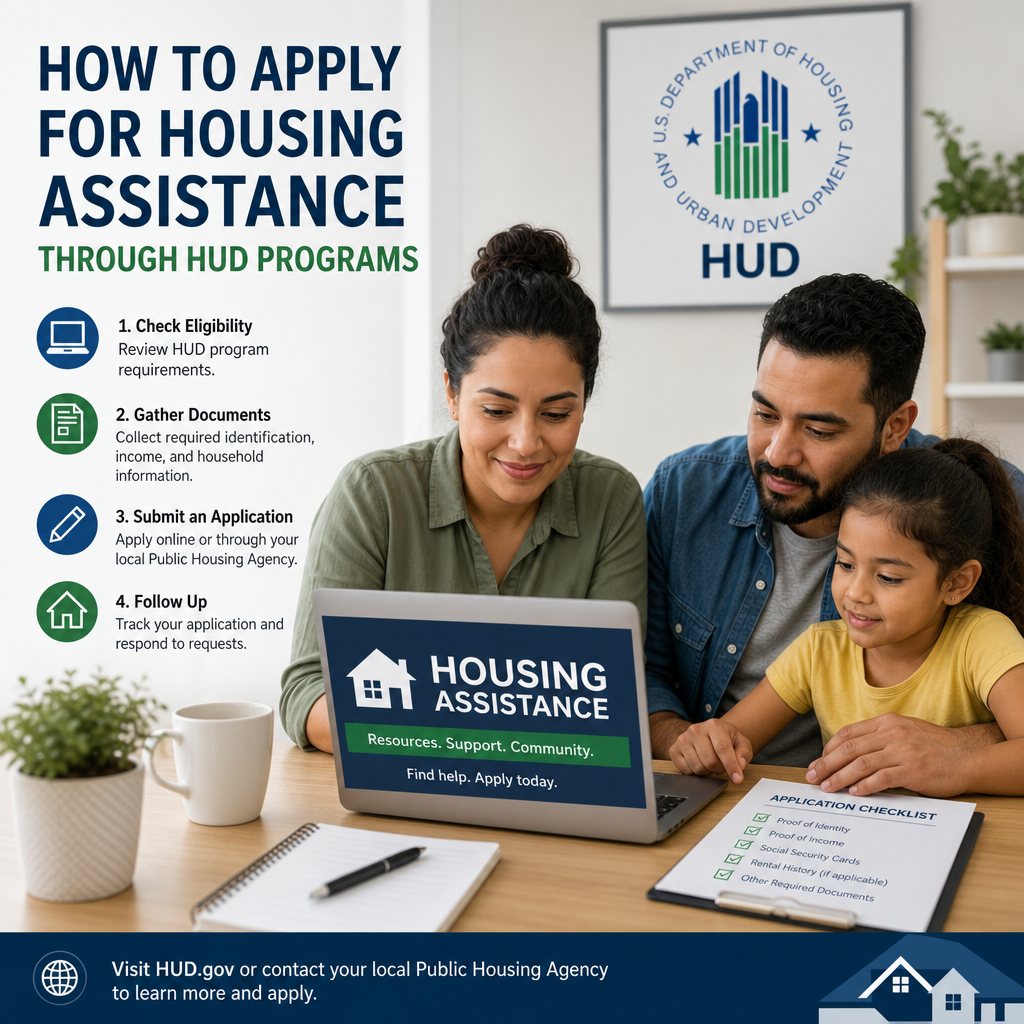
How to Apply for Housing Assistance Through HUD Programs
The application process can vary by state and city, but most applicants follow a similar path. In many cases, you apply through a local housing authority or property management office rather than directly through HUD.
Step 1: Find the Right Program
Start by deciding which type of assistance matches your needs.
Ask yourself:
Do you need help paying rent in a private apartment?
Are you looking for affordable public housing?
Do you need immediate emergency shelter or homelessness services?
Do you already live in a HUD-assisted property and need help maintaining eligibility?
If you are unsure, visit HUD’s local resources page or contact your local housing authority. They can point you toward the right program and explain whether there is a waiting list.
Step 2: Check Eligibility Requirements
Eligibility rules differ by program, but most HUD housing assistance considers the following:
Household income
Family size
Citizenship or eligible immigration status
Rental history
Criminal background or eviction history, depending on program rules
Disability or age-related eligibility factors in some programs
HUD programs often prioritize households with very low income, seniors, veterans, people with disabilities, or families experiencing homelessness. However, priorities are set locally, so the rules can vary from one housing authority to another.
Step 3: Gather the Documents You’ll Need
Having your paperwork ready can save time and prevent delays. Most applications ask for documentation that verifies your identity, income, and household composition.
Common documents include:
Government-issued photo ID
Social Security cards or numbers for household members
Birth certificates for children
Proof of income, such as:
Pay stubs
Benefit letters
Unemployment records
Pension statements
Child support records
Recent tax returns, if requested
Proof of current address
Lease agreement or rental history
Bank statements, if required
Disability documentation, if you are requesting reasonable accommodations
Keep copies of everything. If you submit an application in person, ask for a receipt or confirmation number.
Step 4: Apply Through the Correct Agency
This is the most important part of how to apply for housing assistance through HUD programs: submit your application to the agency that actually administers the program.
For Housing Choice Vouchers
Apply through your local public housing agency. Some PHAs accept online applications, while others use paper forms or in-person intake.
For Public Housing
You usually apply through the local housing authority that manages public housing in your area. Each authority has its own application process and waiting list.
For Project-Based Assistance
Apply directly to the property manager or housing provider listed on the HUD-assisted property’s notice or website.
For Emergency Housing Help
Contact a homeless assistance provider, coordinated entry system, local shelter, or community nonprofit. These programs often work through referral networks rather than a standard housing application.
If your area uses an online portal, fill it out carefully and save a copy of your submission. Small mistakes can lead to delays.
Step 5: Be Ready for Screening and Follow-Up
After you apply, the agency may review your household information, verify your income, and check program-specific criteria. You might be asked to complete an interview or submit additional documents.
Be prepared to:
Respond to requests quickly
Update your address and phone number
Explain any gaps in income or rental history
Provide clarification if your household changes while you wait
Many programs have long waiting lists. Staying organized and responsive can help keep your application active.
Tips for a Stronger HUD Application
A complete application does not guarantee immediate approval, but it can help you avoid unnecessary setbacks. The following tips can make the process easier.
Submit Accurate Information
Mistakes or missing information are among the most common reasons applications get delayed. Double-check:
Names and dates of birth
Income totals
Household member information
Contact details
Signatures and dates
If your circumstances change, report the updates promptly.
Apply to More Than One Program
You do not need to rely on only one option. In many communities, applicants submit forms for:
Housing Choice Vouchers
Public housing
Project-based properties
Local rental assistance or emergency programs
Applying to multiple programs can increase your chances of finding help sooner.
Keep Your Contact Information Current
Housing agencies often contact applicants when a spot opens up. If they cannot reach you, you may lose your place on the list. Update your:
Phone number
Email address
Mailing address
Emergency contact information
Ask About Preferences or Priority Status
Some agencies give preference to households that meet certain criteria, such as:
Homelessness
Domestic violence survivorship
Disability
Veteran status
Displacement due to natural disaster
Very low income
If you qualify for a preference, ask how to document it.
Watch for Scams
Legitimate housing assistance programs do not usually require large upfront fees or promise guaranteed placement for payment. Be cautious if someone asks for money to “skip the line” or claims to have special access to a waiting list.
What Happens After You’re Approved
Approval does not always mean you can move in right away. The next steps depend on the program.
Housing Choice Voucher Program
If you receive a voucher, you typically need to find a rental unit that meets HUD standards and is within the allowed rent range. The landlord must accept the voucher and complete program paperwork.
Public Housing
If you are approved for public housing, the housing authority will offer a unit when one becomes available. You may need to complete a final eligibility review before move-in.
Project-Based Assistance
You may be placed in a specific building or unit tied to the subsidy. Once approved, you’ll sign a lease with the property owner or manager.
Ongoing Responsibilities
After you receive assistance, you must usually:
Report income changes
Recertify annually or as required
Follow lease rules
Allow inspections when needed
Notify the agency before moving
Staying in compliance helps you keep your housing assistance.
Where to Start if You Need Help Right Now
If you are facing an urgent housing situation, don’t wait for a long-term application alone. Use local and national resources to get immediate support.
Helpful starting points include:
Your local public housing agency
HUD’s online housing search tools
Community action agencies
Homeless shelters and coordinated entry systems
Legal aid organizations
Faith-based and nonprofit housing counseling groups
If you are at risk of eviction, contact your landlord, local legal aid office, and community rental assistance programs as soon as possible. Early action can make a major difference.
Frequently Asked Questions
1. How do I know which HUD program to apply for?
Start with your housing need. If you need help paying rent in the private market, the Housing Choice Voucher Program may be a good fit. If you want an affordable apartment owned by a housing authority, public housing may be better. If you need immediate help due to homelessness or eviction risk, emergency housing and coordinated entry services are often the fastest route.
2. Can I apply for HUD assistance online?
In many areas, yes. Some public housing agencies offer online applications for vouchers or public housing, while others require paper forms or in-person submissions. Project-based properties may also have their own application systems. Check your local housing authority’s website for instructions.
3. How long does it take to get approved?
There is no single timeline. Some applicants wait weeks, while others wait months or longer, depending on the program and local demand. Long waiting lists are common, especially for Housing Choice Vouchers and public housing. Keep your contact information updated so you don’t miss a notice.
4. What income do I need to qualify?
HUD programs usually serve low-income and very low-income households, but exact limits depend on your area and household size. Eligibility is often based on local median income figures. Your local housing authority or program administrator can tell you the current income limits for your household.
5. What should I do if my application is denied?
If your application is denied, ask for the reason in writing. You may be able to appeal, submit missing documents, or reapply later. If the denial involves income, household status, or criminal history concerns, legal aid or a housing counselor may be able to help you understand your options.
Learning how to apply for housing assistance through HUD programs can feel like a lot at first, but the process becomes much more manageable when you break it into steps. Start by identifying the right program, checking eligibility, gathering your documents, and submitting a complete application through the correct local agency. If you are on a waiting list, stay responsive and keep your contact information current so you do not lose your place.
HUD housing assistance can make a meaningful difference for households facing high rent, unstable income, or urgent housing challenges. Whether you need help through a voucher, public housing, or a project-based program, preparation matters. The more organized and informed you are, the better your chances of moving through the process smoothly.
If you need help today, begin with your local public housing agency and trusted housing resources in your area. Taking that first step now can put you closer to stable, affordable housing and a more secure future.
Emily A, holds a Master's degree in Public Administration (MPA) and has over 7 years of experience researching federal and state assistance programs. She writes educational content focused on government benefits, public policy, and community resources, using information from official agencies to help readers understand available programs and eligibility requirements.